Home / Editorial guide

How this guide was prepared: This article was prepared by the Redika editorial team after reviewing guidance from the American Academy of Dermatology, DermNet, Mayo Clinic and relevant research sources. It has been rewritten for general educational use. The purpose of this article is to provide everyday skincare information and it is not a substitute for personalized medical diagnosis or treatment.
Last scientific source review: August 2026
Quick answer: What is the best body skincare routine?
For most people, the best body skincare routine has four basic steps: a gentle cleanser, a targeted treatment when needed for dryness or acne, a moisturizer applied to slightly damp skin, and sunscreen on areas exposed to sunlight. Dry skin generally needs more support for the skin barrier, acne-prone skin needs control of clogged follicles and inflammation, and skin with dark spots first requires control of whatever is causing ongoing inflammation. The number of products matters less than whether those products actually suit your skin concern.
| Step | Dry and Rough Skin | Acne-Prone Skin | Skin with Dark Spots |
|---|---|---|---|
| Cleansing | Gentle and preferably fragrance-free cleanser | Gentle cleanser or a suitable acne body wash | Non-irritating cleanser |
| Targeted treatment | Urea, lactic acid or ingredients that support the skin barrier, depending on your needs | Salicylic acid, benzoyl peroxide or another appropriate acne treatment | Control acne or inflammation first, then use suitable ingredients for dark spots |
| Moisturizer | Richer cream or balm | Lightweight, non-comedogenic moisturizer | Compatible moisturizer to help reduce irritation |
| Daily protection | Sunscreen on exposed areas | SPF 30 or higher on exposed skin | Sunscreen to help prevent exposed dark spots from becoming more noticeable |
Redika’s Four-Step Method for Body Skincare
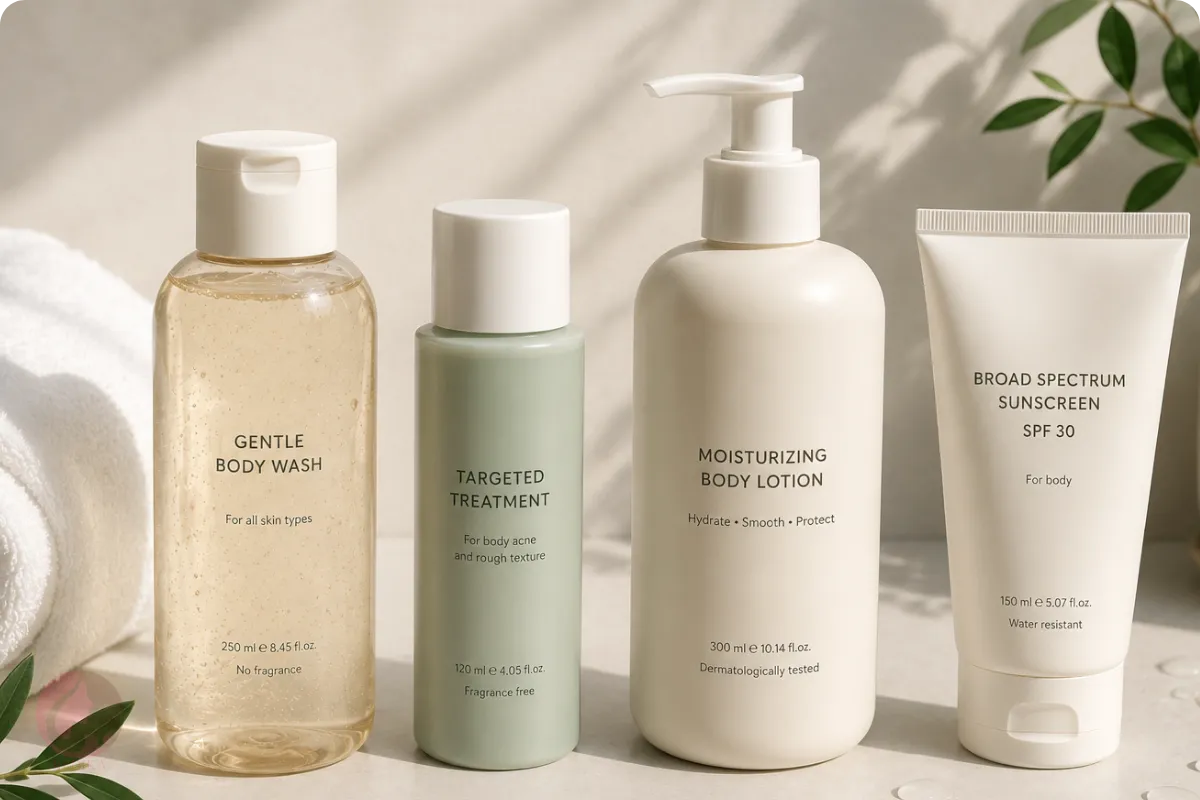
To keep your body care routine from becoming confusing among dozens of products and active ingredients, use a simple framework: cleanse, treat the active concern, support the skin barrier and protect the skin. These four steps form the core of the Redika body skincare method used throughout this guide. If you do not have a specific concern that requires treatment, you may not even need the second step; a gentle cleanser, moisturizer and sunscreen on sun-exposed areas may be enough.
- 1. Cleanse: Remove sweat, dirt and excess oil without excessively drying the skin.
- 2. Treat the active concern: Add a targeted active only when you actually have significant dryness, roughness, acne or dark spots.
- 3. Support the skin barrier: Use an appropriate moisturizer to help limit water loss and irritation caused by treatments.
- 4. Protect: Apply sunscreen to areas of the body that are exposed to sunlight.
This approach also fits the philosophy behind a simple and minimalist skincare routine. More products do not automatically mean better results, especially when several exfoliating acids and active ingredients are introduced at the same time and push the skin barrier into a cycle of dryness, irritation and discoloration.
Identify Your Body Skin Concern Before Buying Products
One of the most common reasons body skincare routines fail is that products are chosen based only on how a skin concern looks rather than what may actually be causing it. Not every bump is acne, not every dark mark is a post-acne spot, and not every rough area improves with scrubbing. It is also possible to have different concerns on different parts of the body; for example, your back and chest may be acne-prone while your upper arms have keratosis pilaris and your lower legs are dry and flaky.
For this reason, it is often better to think of body skin area by area. The acne cleanser you use on your back does not necessarily need to be used on very dry lower legs, and the heavy cream you use on your feet may not be ideal for an acne-prone chest. A zone-based routine can reduce unnecessary irritation while also preventing you from spending money on products your skin does not actually need.
Dry Body Skin: When the Skin Barrier Becomes Weakened
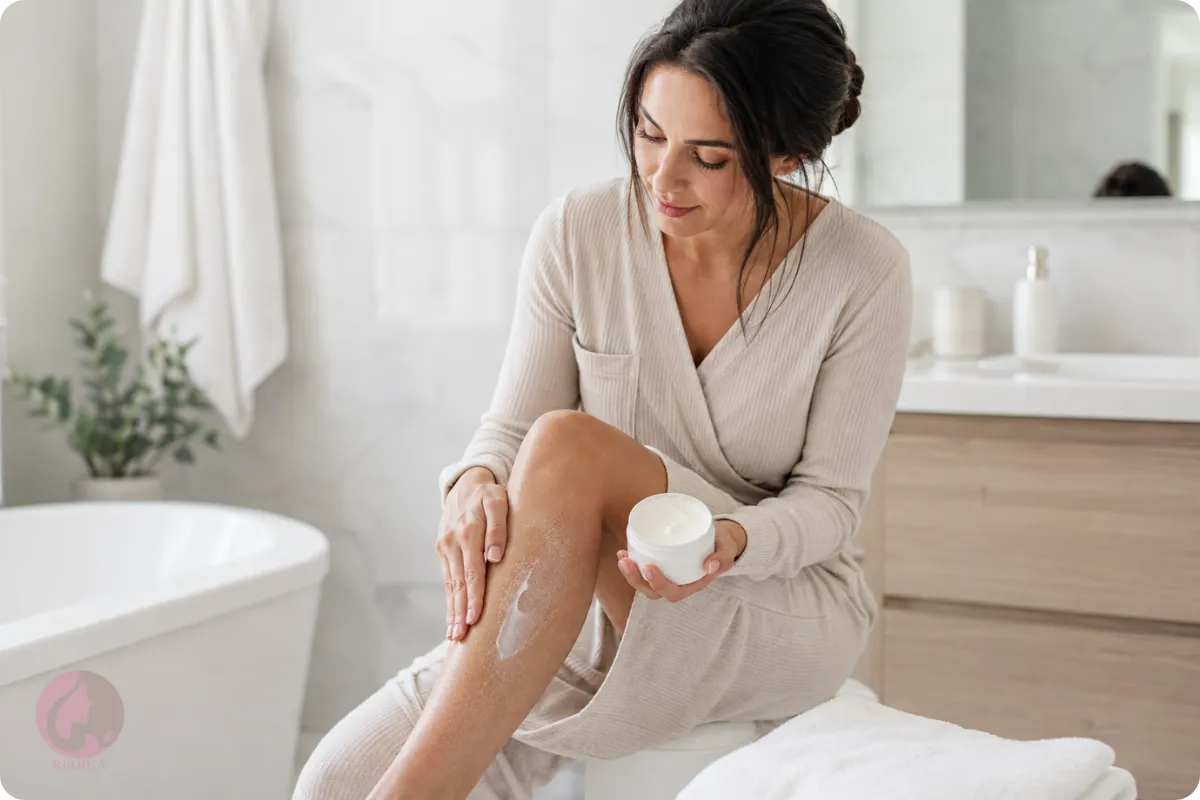
Dryness does not simply mean that the skin “does not have enough water.” When the skin barrier cannot effectively limit water loss, the skin may feel tight, itchy, rough or flaky. Very hot showers, long bathing times, harsh soaps and cleansers, dry weather and frequent use of exfoliating ingredients can all make the problem worse.
For dry skin, a few simple changes are often more useful than adding several complicated serums:
- Keep showers shorter and use lukewarm water rather than very hot water.
- Choose a gentle cleanser and avoid over-cleansing extremely dry areas of the body.
- If your skin is sensitive, prioritize fragrance-free products.
- Do not rub the skin aggressively with a towel after showering; gently pat it dry.
- Apply moisturizer while the skin still retains a small amount of moisture.
A lotion may be enough for mild dryness, while thicker creams and balms are generally more suitable when the skin is very dry or flaky. If dryness is accompanied by deep cracks, bleeding, discharge, severe itching or widespread inflammation, it should no longer be viewed as only a cosmetic concern.
Body Acne: Why Are the Back, Chest and Shoulders Commonly Affected?

Body acne commonly develops on areas such as the upper back, chest and shoulders, where hair follicles and sebaceous glands are more active. The term truncal acne is also used for acne affecting the torso, including the back and chest. Oil, accumulated dead skin cells, clogged follicles and inflammation all contribute to acne, while friction, heat and sweat can make it worse.
An important point to remember is that body acne is not a sign of dirty skin. Aggressively scrubbing the skin with a rough loofah, brush or grainy scrub does not “deep clean” the pores and may actually increase irritation. For people who tend to break out after exercise, quickly changing out of sweaty clothing, showering as soon as possible and reducing friction from clothing or sports equipment are usually more helpful than aggressive scrubbing.
Body Dark Spots: The Difference Between Post-Inflammatory Marks, Redness and Scars
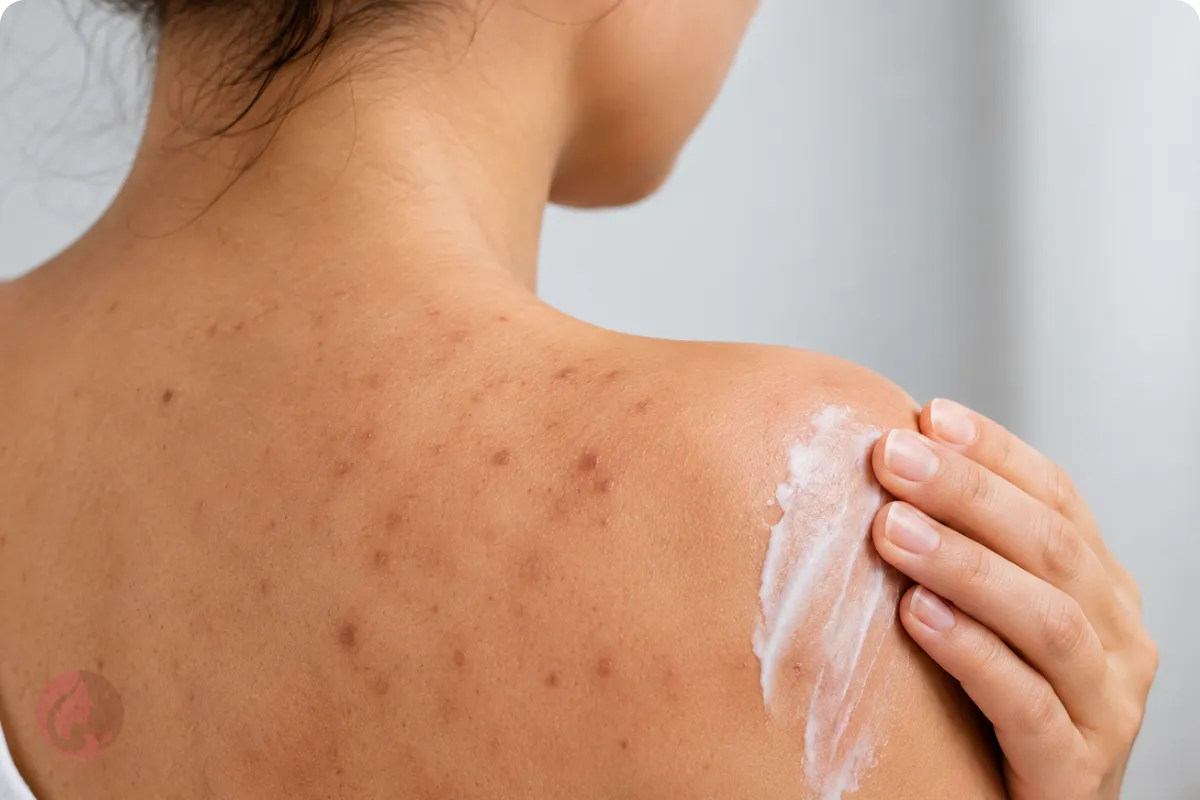
After a breakout heals, a flat brown, gray or dark mark may remain on the skin. This can be PIH (post-inflammatory hyperpigmentation), which refers to increased pigmentation following inflammation. It is different from a true acne scar because the surface of the skin generally remains flat and the main problem is a change in color.
In some people, acne marks remain red or pink for a long time instead of turning brown. This is sometimes referred to as PIE (post-inflammatory erythema) and is more closely related to vascular changes than increased pigment. A persistent indentation, raised firm area or keloid, on the other hand, is not simply a dark spot and falls into the category of scarring.
| Appearance | Possible Concern | General Approach |
|---|---|---|
| Flat brown or dark mark | Post-inflammatory hyperpigmentation | Control new inflammation, protect from sun exposure and gradually treat discoloration |
| Flat red or pink mark | Post-inflammatory erythema | Reduce inflammation and avoid further irritation |
| Persistent indentation or raised area | Scar | Consider professional evaluation if it is bothersome |
If new breakouts are still appearing regularly, focusing only on a dark spot treatment is unlikely to solve the problem. Managing discoloration should start by controlling the underlying cause of inflammation; otherwise, every fading mark may simply be replaced by a new one.
Not Every Body Bump Is Acne: Do Not Confuse Folliculitis and Keratosis Pilaris with Acne
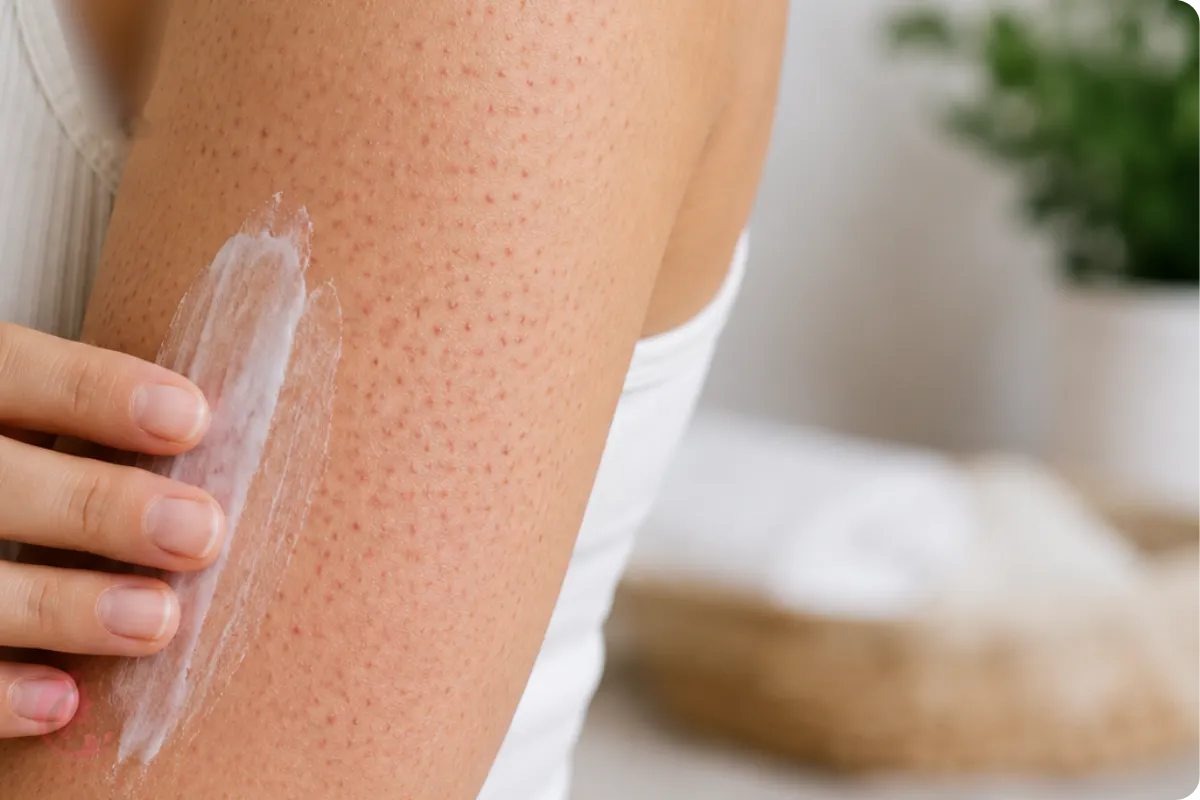
Body bumps are not always acne. Folliculitis is inflammation of a hair follicle and can sometimes look similar to acne. In some cases, the bumps form around hairs, itch more noticeably or become worse after shaving, sweating or friction. Folliculitis does not always have the same cause as acne, so continuing an acne routine for a long period without improvement is not a good strategy.
Keratosis pilaris, often called “chicken skin,” usually appears as small rough bumps, especially on the backs of the upper arms and thighs. These bumps result from keratin building up around hair follicles and are different from pus-filled pimples. Aggressive rubbing or picking usually does not solve the problem and can make redness and discoloration worse.
Redika practical rule: If body bumps are very itchy, look almost identical to one another, repeatedly appear after shaving, are concentrated around hairs or have not improved after several weeks of a typical acne routine, it is better to get a more accurate diagnosis before adding more active ingredients.
The Correct Order of a Body Skincare Routine, from Shower to Daily Care
The basic order of body skincare products is simple: cleanse, use a targeted treatment, moisturize and protect from sun exposure. The important thing is to introduce an active ingredient only when you have a clear reason to use it. If you start three new products at the same time and your skin becomes red and irritated, it will be much harder to identify which product caused the problem.
If you want to better understand the general logic of skincare layering, you can also read Redika’s guide to the correct order of skincare products.
Step One: Choose the Right Body Cleanser

A cleanser should remove sweat, dirt and excess oil; it should not strip so much oil from the skin that you feel tight and uncomfortable after showering. For dry and sensitive skin, gentle and preferably fragrance-free cleansers are usually a better choice. Even if your skin is normal, there is generally no need to use a very harsh soap or cleanser simply to achieve a stronger feeling of “cleanliness.”
For acne-prone skin, some cleansers can play a treatment role in addition to cleansing. Ingredients such as salicylic acid and benzoyl peroxide are used in acne products, but the appropriate concentration and frequency depend on the individual product and your skin’s tolerance. If your skin becomes extremely dry or irritated after starting an acne cleanser, using more of it will not necessarily produce faster results.
A note about benzoyl peroxide: In its guidance for back acne, the American Academy of Dermatology notes that allowing some benzoyl peroxide washes to remain on the skin for about 2 to 5 minutes before rinsing may help them work more effectively. Always prioritize the directions provided with the specific product you are using. Benzoyl peroxide can also bleach colored towels and clothing.
Step Two: Target the Specific Skin Concern
The treatment step is where one person’s routine begins to differ from another’s. Someone with only mild dryness may not need a separate serum or exfoliating acid at all, while rough skin, active acne or persistent dark spots may benefit from a targeted ingredient. The important point is not to layer several active ingredients together in one night simply because each of them is popular.
If you want to use more than one active ingredient, introduce them gradually and watch how your skin responds. Using several exfoliants at the same time, or combining them with retinoids on sensitive skin, can increase dryness and irritation. To understand this topic better, read Redika’s guide to skincare ingredients that should not be combined carelessly.
Which Ingredients Are Better for Dryness, Roughness and Keratosis Pilaris?
Dry skin generally benefits from ingredients that attract or retain water in the outer layers of the skin and help support the skin barrier. Glycerin, ceramides, urea and other moisturizing ingredients are commonly found in body-care formulations. When the skin is both dry and rough or flaky, some products containing urea or lactic acid may help moisturize while also softening thickened surface skin.
Ingredients such as urea, lactic acid and salicylic acid are also commonly discussed for keratosis pilaris, but that does not mean all of them should be used at the same time. Very cracked or inflamed skin may sting when these ingredients are applied, so calming and moisturizing the skin may need to come first.
- Glycerin: Helps attract and retain moisture in the outer layers of the skin.
- Ceramides: Help support the skin barrier.
- Urea: Depending on the formulation, it can help moisturize and soften thick, rough skin.
- Lactic acid: Can be useful for certain types of rough skin and keratosis pilaris.
- Salicylic acid: Is included in some keratosis pilaris products to help reduce the buildup of surface skin cells.
Which Ingredients Are Commonly Used for Back and Chest Acne?
Benzoyl peroxide, salicylic acid, topical retinoids and azelaic acid are among the better-known topical ingredients used for acne. The right choice depends on the type and severity of acne, how large an area is affected, skin sensitivity and any other treatments you are using. For large areas such as the back, acne body washes may be more practical than spot treatments.
| Ingredient | Common Use | Important Note |
|---|---|---|
| Salicylic acid | Helps reduce clogged pores and dead skin buildup | May cause dryness or irritation in sensitive skin. |
| Benzoyl peroxide | Helps manage inflammatory acne | May dry the skin and bleach colored fabrics. |
| Azelaic acid | Acne and some post-inflammatory dark spots | It is generally better to introduce it gradually according to skin tolerance. |
| Topical retinoid | Helps prevent clogged follicles and treat acne | May cause irritation at first and should not be used during pregnancy without medical advice. |
If body acne is deep, painful, cystic or beginning to cause scarring, it is better not to delay professional treatment. Likewise, if there is no meaningful improvement after about six to eight weeks of consistently following an appropriate routine, endless trial and error with different products is usually not the best path.
What Should You Do About Post-Acne Dark Spots on the Body?
The first step in managing post-acne marks is preventing new breakouts and inflammation. If new lesions appear every week, even the best dark spot product will not address the problem at its source. Once inflammation is under control, ingredients such as azelaic acid and other skin-compatible brightening ingredients can gradually be introduced.
Azelaic acid is particularly interesting because it is used for acne and there is also evidence supporting its role in reducing post-inflammatory hyperpigmentation. However, a higher concentration or more frequent application does not automatically mean faster results. If a product significantly irritates the skin, that inflammation itself can worsen discoloration in people who are prone to it.
Be patient with body dark spots. Superficial post-inflammatory marks may take months to fade, while deeper pigmentation can last even longer. Instead of checking the mirror every day, taking a monthly photo in similar lighting can give you a more realistic way to track progress.
Step Three: Should You Apply Body Lotion or Cream After Showering?
One of the best times to apply moisturizer is shortly after a shower, while the skin has not yet become completely dry. Gently pat the body with a towel and apply lotion or cream while a small amount of moisture remains on the skin. This can help retain some of the water present in the outer layers of the skin.
The choice between a lotion, cream and balm depends mainly on the severity of dryness, the season, the body area and personal preference:
- Lotion: Lighter in texture and often more comfortable for mild dryness, warm weather or application over large body areas.
- Cream: Thicker and generally a better option for drier skin.
- Balm or ointment: Can be more useful for extremely dry, thickened or cracked areas.
If your back or chest is acne-prone, you do not have to use the same heavy cream there that you use on dry lower legs. On acne-prone areas, look for products labeled non-comedogenic. Acne-prone skin still needs moisture, especially if you are using salicylic acid, benzoyl peroxide or a retinoid and your skin is becoming dry.
Step Four: Sunscreen Is Not Just for Your Face
If your neck, shoulders, hands, forearms or legs are exposed to sunlight, protecting them should be part of your body skincare routine. For exposed skin, a broad-spectrum sunscreen with an SPF of at least 30 is a common recommendation. If the area is acne-prone, a non-comedogenic formula may be a better option.
This is especially important for people dealing with post-acne dark spots because light exposure can make some forms of discoloration more noticeable or persistent. However, there is no need to apply sunscreen underneath clothing to areas that remain fully covered throughout the day without a specific reason; focus on the areas that are actually exposed.
Practical Body Skincare Schedule: Morning, Night, After Showering and After Exercise

One of the most common questions is exactly when each product should be used. The table below offers a simple guide that you can adjust according to your skin’s needs. If your doctor has given you a different treatment plan, personalized medical advice should take priority.
| When | Suggested Action | Who May Benefit Most? |
|---|---|---|
| After showering | Apply moisturizer to slightly damp skin. | Especially dry and sensitive skin |
| Morning | Apply sunscreen to areas exposed to light. | Everyone, especially people with dark spots |
| Night | If needed, apply leave-on treatments according to the product directions. | Acne, roughness or dark spots |
| After exercise | Change out of sweaty clothes and shower as soon as possible. | Skin prone to back and chest acne |
| Days without a shower | Dry skin does not necessarily need to be cleansed again; reapply moisturizer if the skin feels tight. | Dry or dehydrated skin |
For dry and rough skin: Short lukewarm showers, a gentle cleanser and regular moisturizing form the foundation of the routine. If you have keratosis pilaris or significant roughness, a product containing urea or lactic acid may be introduced according to skin tolerance. Do not make aggressive scrubbing or picking at bumps part of your routine.
For oily and acne-prone skin: Change sweaty clothing quickly after exercise, avoid scrubbing the skin and use a suitable acne cleanser or treatment if needed. If an acne treatment dries the skin, do not automatically eliminate a lightweight non-comedogenic moisturizer. Avoid squeezing pimples because picking can increase inflammation, discoloration and the risk of scarring.
For skin with dark spots: First determine whether new acne or inflammation is still developing. Treating the active cause, keeping the skin moisturized and protecting exposed areas from sunlight are the foundation; a targeted dark spot treatment can then be introduced gradually. Using several acids at once in an attempt to speed up results can have exactly the opposite effect.
If we summarize Redika’s body skincare routine as simply as possible:
- Do not over-cleanse dry skin.
- Do not over-scrub acne-prone skin.
- Do not treat dark spots without controlling new inflammation.
- Do not introduce several active ingredients at the same time.
- Do not skip moisturizer simply because your skin is oily or acne-prone.
When Is a Home Body Skincare Routine Not Enough?
A body skincare routine can be helpful for simple dryness, mild acne or mild roughness, but certain signs suggest that you should stop relying on self-treatment alone. Getting professional care earlier can help reduce the risk of chronic inflammation, scarring or treating a condition incorrectly because it resembles acne.
- Breakouts are deep, very painful or cystic.
- Body acne is causing scars or keloids.
- Pus-filled lesions become widespread, hot or extremely painful.
- The bumps are intensely itchy or do not improve with standard acne treatment.
- Dryness is accompanied by deep cracks, bleeding, discharge or severe inflammation.
- Skin discoloration appears suddenly, spreads widely or has no clear cause.
- There is no meaningful improvement after about six to eight weeks of consistently following an appropriate acne routine.
- Skincare products repeatedly cause burning, redness or severe irritation.
Important pregnancy note: If you are pregnant or planning a pregnancy, discuss acne treatment ingredients with your doctor. Topical retinoids should not be used during pregnancy without medical guidance.
Conclusion: A Good Body Skincare Routine Is Simpler Than You Think
If there is only one principle you remember from this guide, let it be this: treat your body skin according to its actual concern, not according to how many products you see on social media. For most people, the foundation of a body skincare routine consists of a gentle cleanser, an appropriate moisturizer and sun protection for exposed areas, with a targeted treatment added only when needed for dryness, roughness, acne or dark spots.
Dry skin usually benefits from shorter showers, gentle cleansing and an appropriate cream. Acne-prone skin needs less friction, better sweat management and evidence-based acne care. Post-acne discoloration is generally easier to manage once new breakouts and inflammation have been brought under control. If a product continually makes your skin red, inflamed or painful, that does not mean it is simply “working harder.”
Consistency matters more than intensity. A simple routine you can follow for several weeks is usually more sensible than a routine where multiple acids, scrubs and treatments are layered together every night. The goal of body skincare is to make your skin calmer, smoother and more predictable, not to turn it into a new experiment every week.
Frequently Asked Questions About Body Skincare Routines
1. What is the correct order of body skincare products?
For most people, the basic order is cleanser, targeted treatment if needed, moisturizer and sunscreen on exposed areas. If your skin does not have a specific concern, you do not necessarily need a treatment step. New active ingredients are also best introduced one at a time so you can evaluate your skin’s tolerance.
2. What should you apply to your body after showering?
For most people, a moisturizer suited to their skin type is the best choice. Apply it while the skin is still slightly damp after drying. A lightweight lotion may be enough for mild dryness, while a thicker cream or balm is generally better for more severe dryness.
3. Can body lotion cause acne?
Not every body lotion causes breakouts. If your back and chest are acne-prone, choose a lightweight and preferably non-comedogenic moisturizer for those areas. Completely avoiding moisturizer is not always the best decision either, because many acne treatments can cause dryness and irritation.
4. Is salicylic acid or benzoyl peroxide better for back acne?
There is no single answer that works for everyone. Salicylic acid is commonly used to help reduce clogged pores and dead skin buildup, while benzoyl peroxide is used for inflammatory acne. The better choice depends on the type and severity of acne, skin sensitivity and the other products in your routine.
5. How long does a body skincare routine take to show results?
The timeframe depends on the concern. Simple dryness may improve more quickly after changing shower habits and moisturizing consistently, while acne usually takes several weeks and post-inflammatory dark spots may require several months or longer to fade. If pain, severe inflammation or scarring develops instead of improvement, simply giving the same routine more time may not be the best approach.
- American Academy of Dermatology: Dermatologists’ tips for relieving dry skin
- American Academy of Dermatology: Back acne guidance
- American Academy of Dermatology: Acne clinical guidelines
- American Academy of Dermatology: Dark spots and post-inflammatory discoloration
- American Academy of Dermatology: Acne marks versus acne scars
- DermNet: Emollients and moisturizers
- DermNet: Keratosis pilaris
- DermNet: Urea in skincare
- Mayo Clinic: Folliculitis
- PubMed: Study of azelaic acid for post-acne discoloration
About the author

Join the conversation
Share your experience or question with REDIKA readers.
Your email stays private. Please avoid sharing personal or sensitive details.


