Home / Editorial guide


Face and body acne develops when hair follicles become clogged with sebum and dead skin cells, with inflammation contributing to breakouts. Hormonal changes, inherited susceptibility and the activity of the skin bacterium Cutibacterium acnes are involved. Acne is not limited to teenagers: adults can develop lesions on the face, chest, shoulders and back.
This Redika guide covers the causes of acne, the differences between whiteheads, blackheads, papules, pustules and nodules, evidence-based skincare, and when to see a dermatologist. The location of a pimple on your forehead or cheeks cannot by itself diagnose disease in internal organs.
How does acne develop?
Acne involves the hair follicle and its oil gland. Four important processes are increased sebum production, buildup of cells inside the follicle, the activity of acne-associated microorganisms, and inflammation. Acne does not mean that someone’s skin is dirty, and harsh washing can make irritation worse.

What causes acne on the face and body?
Hormones and genetics
During puberty, androgen hormones can stimulate the oil glands. Some people notice changes around menstruation. Family history also influences susceptibility. Persistent acne accompanied by other signs of hormonal change warrants a medical discussion.
Friction, sweat and unsuitable products
Close-fitting sportswear, helmets, masks and prolonged friction can worsen certain breakouts. Some oily hair and cosmetic products may clog pores in susceptible people. Look for products labeled non-comedogenic: a high price or luxury branding does not guarantee suitability.
Stress, medicines and diet
Stress can exacerbate existing acne but is not the sole cause. Certain medicines are associated with acne-like breakouts; contact the prescriber if symptoms begin after a medication change, rather than stopping the medicine yourself. Diet evidence is nuanced: high-glycemic-load eating patterns and some dairy foods may affect some people, but a single fatty meal is not proven to cause immediate acne in everyone.
Acne types: a practical comparison
| Lesion | Typical appearance | What matters |
|---|---|---|
| Closed comedone (whitehead) | Small, pale raised bump | Do not squeeze or routinely extract at home |
| Open comedone (blackhead) | Dark spot within an open pore | The color reflects oxidation, not trapped dirt |
| Papule | Red inflamed bump without visible pus | Avoid picking |
| Pustule | Inflamed lesion with visible pus | Squeezing can increase staining and scarring |
| Nodule or cyst | Deep, large or painful lesion | Higher scarring risk; seek professional assessment |
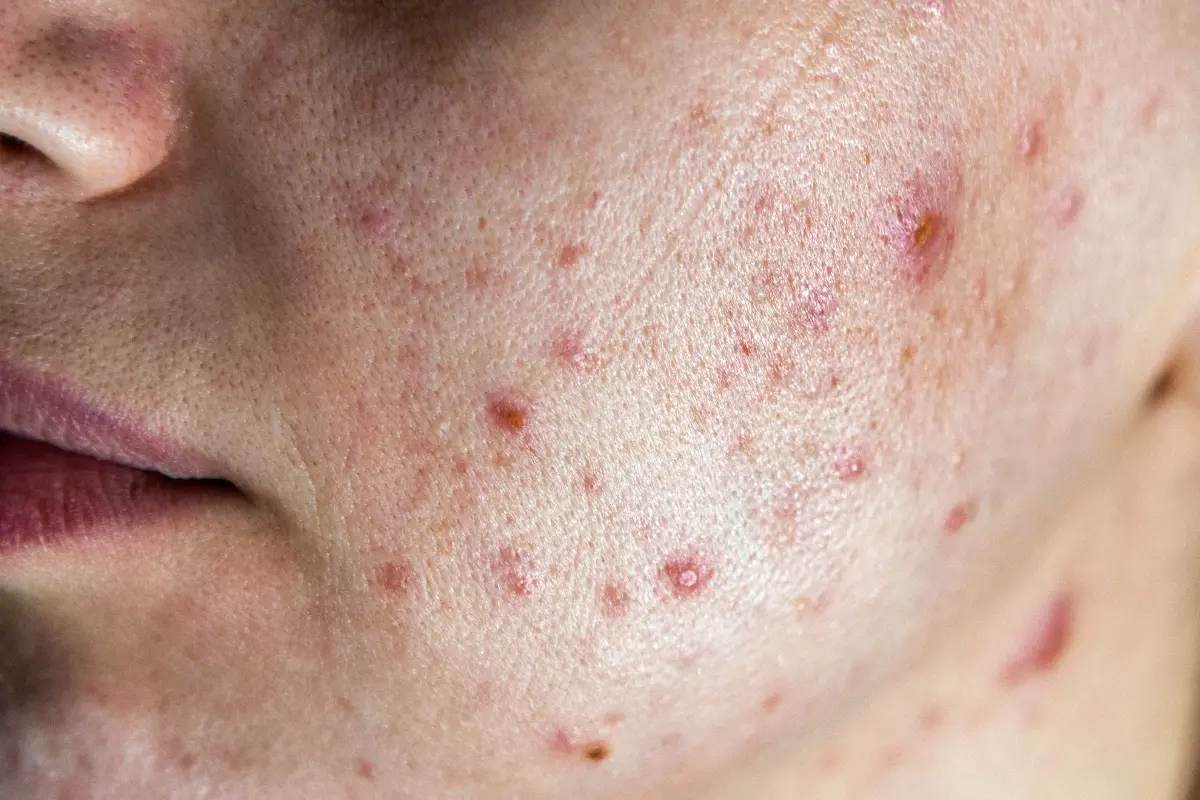
Does pimple location reveal the cause?
Location may suggest friction from clothing, contact with hair products or a possible hormonal pattern, but a face map is not a validated method for diagnosing liver, stomach or other organ disorders. Lesion type, medical history and associated symptoms are more informative.
Why do breakouts appear on the back and chest?
The upper back and chest contain many oil glands. Sweat, tight clothing and repeated friction may worsen breakouts. Change out of sweaty clothes, shower after exercise and use a gentle cleanser. Not every itchy or inflamed bump is acne: folliculitis and other skin conditions can look similar.
For site-specific guidance, read Redika’s back acne causes, care and prevention guide.
Must blackheads and whiteheads be extracted?
No. Routine squeezing with fingernails or metal tools can cause inflammation, discoloration and scars. If extraction is appropriate, a trained professional should decide how and whether to perform it. Evidence-based topical treatments are often an important starting point for comedonal acne.
Learn more about comedones in Redika’s blackheads and sebaceous filaments guide.
Which acne ingredients have evidence?
| Ingredient | Common purpose | Important caution |
|---|---|---|
| Benzoyl peroxide | Targets acne-associated bacteria and inflammatory lesions | Can irritate skin and bleach fabric |
| Topical retinoids such as adapalene | Help prevent clogged follicles | Can cause dryness; avoid in pregnancy or when trying to conceive unless a clinician advises otherwise |
| Salicylic acid | Supports unclogging pores | Overuse may dry or irritate skin |
| Azelaic acid | Supports acne management and some post-acne marks | May sting, especially on sensitive skin |
Treatment choices depend on severity, age, pregnancy status and skin tolerance. Antibiotics should not be used indiscriminately or as a long-term standalone acne treatment because of resistance concerns. Severe or scarring acne may require prescription treatment, including clinician-supervised isotretinoin.
A simple acne-prone skincare routine
- Cleanse gently in the morning and evening, and after heavy sweating.
- Use a lightweight, non-comedogenic moisturizer even if the skin is oily.
- Apply broad-spectrum sunscreen SPF 30 or higher during the day.
- Introduce new active treatments one at a time, following product directions and professional advice.
- Avoid picking and give treatment time: visible improvement may take several weeks.
For a deeper explanation of skin oil, see Redika’s guide to sebum and oily skin.
When should you see a dermatologist?
- Deep painful nodules, cysts or signs of developing scars
- Severe, widespread or treatment-resistant acne
- A sudden outbreak accompanied by other medical or hormonal symptoms
- Significant effects on wellbeing or mental health
- Uncertainty about whether bumps are acne or another condition
NICE guidance recommends specialist evaluation for nodulocystic acne and consideration of referral when scarring or persistent distress occurs.
Frequently asked questions
Does greasy food always trigger pimples?
No. Diet-acne relationships are complex; one fatty meal is not proven to cause immediate breakouts for everyone.
Is acne caused by not washing your face enough?
No. Acne involves follicular processes, oil, microbial activity and inflammation. It is not simply a hygiene failure.
Does squeezing pimples help them heal faster?
Usually not; picking can worsen inflammation and increase the risk of marks or scars.
How long do acne treatments take to work?
Initial improvement may take six to eight weeks, with many treatment plans reviewed at about 12 weeks.
Redika’s takeaway
Managing acne starts with understanding its causes and lesion types, not relying on face-mapping myths or unverified product claims. Gentle skincare and appropriate evidence-based treatment can help, while deep painful lesions and scarring need medical attention.
Medical references
- NICE — Acne vulgaris management, updated 2026
- American Academy of Dermatology — Acne treatment guideline
- AAD — Acne diagnosis and treatment
Educational information only; it does not replace medical diagnosis or treatment.
About the author

Join the conversation
Share your experience or question with REDIKA readers.
Your email stays private. Please avoid sharing personal or sensitive details.


