Home / Editorial guide

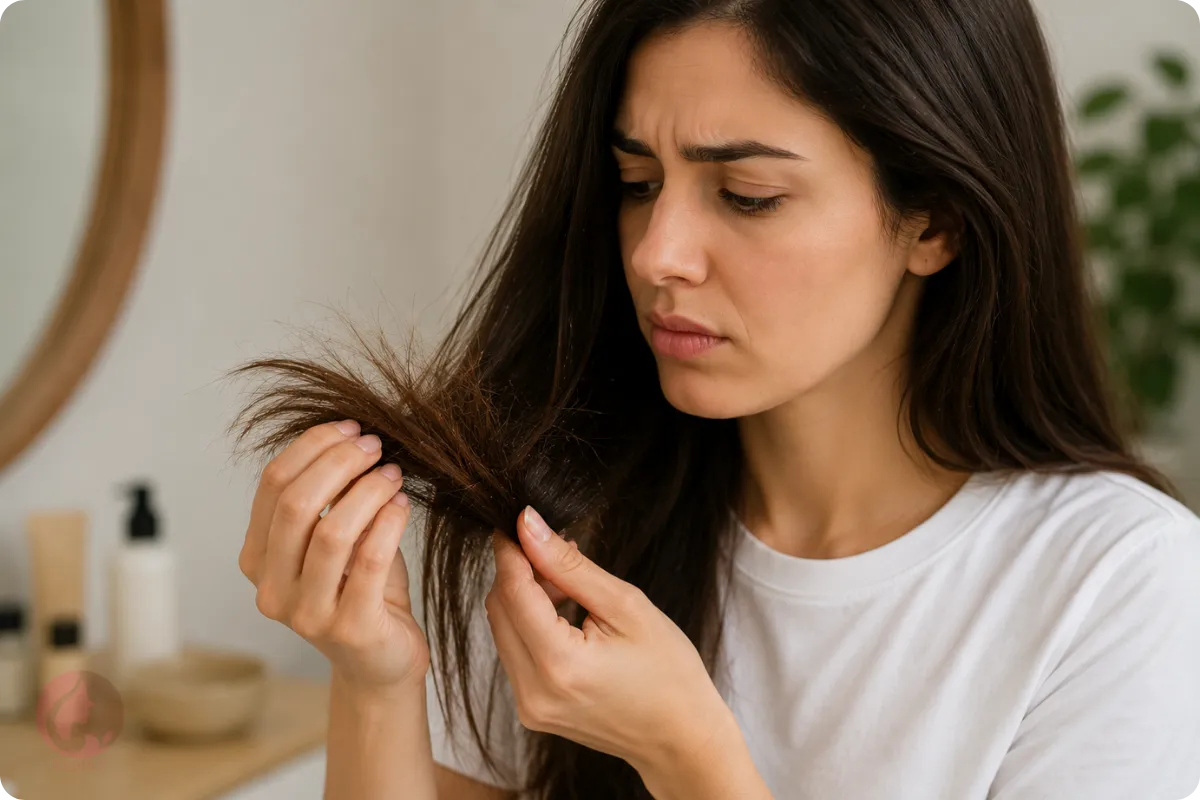
Has your hair become dry, stiff, and brittle instead of softer after a few weeks of using keratin masks, strengthening products, or protein treatments? While searching for the cause, you have probably come across the term Protein Overload. This term is widely used in the hair-care world, but there is an important distinction: protein overload is not an officially recognized medical condition or diagnosis. What people usually describe with this term is a combination of signs such as stiffness, roughness, reduced flexibility, and increased hair breakage after excessive or poorly balanced use of protein-containing products.
The challenge is that the same symptoms can also appear with dry hair, insufficient conditioning, bleaching, frequent coloring, heat damage, or even product buildup on the hair shaft. So dry hair alone does not automatically mean you are experiencing protein overload. In this Redika guide, you will learn how to distinguish between these conditions, read product labels more effectively, and adjust your hair-care routine without damaging trial-and-error.
If you only have 30 seconds:
- Protein overload is not an official medical diagnosis; it is primarily a commonly used hair-care term.
- Dryness, stiffness, and breakage that develop after increasing protein-based products may suggest that these products are contributing to the problem.
- Dry hair alone is not evidence of excessive protein.
- If the problem started after introducing new keratin, protein, or strengthening products, simplify your routine first.
- The goal is not to eliminate protein permanently; it is to find a routine that keeps your hair soft, flexible, and manageable.
Quick Answer: What Is Hair Protein Overload?
Protein Overload is an informal term used to describe hair that feels stiffer, drier, rougher, or more brittle than usual after frequent or poorly balanced use of products containing protein, keratin, peptides, or amino-acid-based ingredients. The most important clue is not simply how the hair looks; when the problem started and whether it coincided with a change in your routine matter much more.
For example, if your hair had felt relatively soft for months but suddenly became dry and less flexible after you added a keratin mask, strengthening shampoo, and protein spray within a short period, it makes sense to investigate the role of those products. On the other hand, if the problem began immediately after bleaching or frequent high-heat styling, chemical or heat damage may be a more likely explanation.
Is Hair Protein Overload a Scientifically Recognized Condition?
No. In scientific and dermatological literature, Protein Overload is not defined as an independent disease with standardized diagnostic criteria. For this reason, it is more accurate to say, “the hair may be reacting negatively to a protein-heavy routine” rather than stating that the hair has definitely been diagnosed with protein overload.
What has stronger scientific support is our understanding of how proteins and hydrolyzed peptides interact with the hair shaft. Research suggests that the molecular size of protein-based ingredients can influence the way they interact with damaged hair. This also means that not all protein-containing products behave in exactly the same way.
Important: If a page or video claims to diagnose protein overload simply because your hair looks “dry and frizzy,” do not treat that conclusion as definitive. Dryness and breakage are common signs of many different types of hair damage.
What Do Protein and Keratin Do in Hair-Care Products?
The hair shaft is composed largely of protein-based structures, particularly Keratin. However, the portion of hair that has emerged from the scalp is not living tissue, so a mask or serum cannot biologically “heal” it in the same way that living skin repairs a wound. Hair-care products can instead temporarily improve the surface condition of the strand, reduce friction, improve softness and combability, and in some circumstances influence the mechanical properties of damaged hair.
When the cuticle becomes damaged by bleaching, friction, sunlight, or heat, certain ingredients in repair products can provide conditioning or protective effects on damaged areas. This is why protein is not inherently harmful. What matters most is the formulation, the condition of your hair, frequency of use, and the combination of products used in the same routine.
How Do Keratin and Hydrolyzed Proteins Interact with Hair?
The term Hydrolyzed Protein means that a protein has been broken down into smaller components such as peptides. The size of these components matters because smaller and larger molecules do not necessarily behave in the same way on the surface or within the hair fiber. Laboratory research on hydrolyzed keratins has also suggested that molecular weight can affect where and how these substances interact with processed hair.
Therefore, the common statement that “protein simply sits on the hair and blocks its pores” is an oversimplification. Some ingredients may act mainly on the surface, while certain smaller peptides may interact with internal areas of the hair shaft under specific conditions. The final effect also depends on the complete product formulation, the degree of hair damage, and how the product is used.
What Are the Signs of Hair Protein Overload?
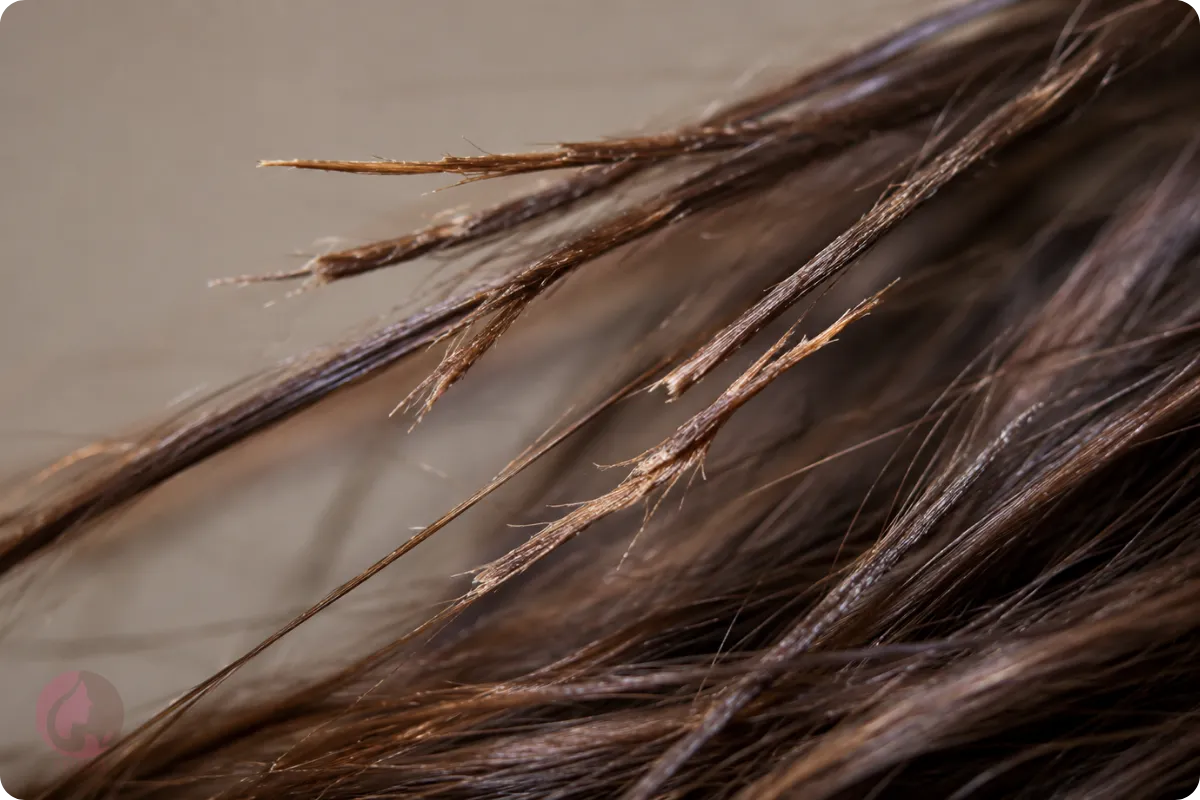
The signs commonly associated with protein overload are not specific to protein overload alone. However, if several of them appear after you increase your use of protein-based products, reviewing your routine may be worthwhile. Always compare your hair’s current behavior with its own normal condition rather than comparing it with someone else’s hair on social media.
- Your hair feels stiffer and less flexible than before.
- The hair shaft feels dry or rough to the touch.
- Hair breaks more easily during brushing or styling.
- Tangling and friction between strands have increased.
- Your usual conditioner no longer creates the same level of softness.
- The problem began after adding several keratin- or protein-containing products.
- The lengths and ends feel brittle and dry even though the roots may still feel normal or oily.
Hair Breakage Is Not the Same as Hair Loss
Hair Breakage occurs when a strand breaks somewhere along the hair shaft. As a result, you may notice shorter hairs of different lengths on your clothing, brush, or around the areas you style most often. In contrast, Hair Loss involves hair shedding from the follicle and can have very different causes.
If your main concern is a noticeable increase in shedding from the root, sudden thinning, or patchy hair loss, protein overload does not adequately explain the entire problem. To better understand hair shaft breakage and other forms of damage, read Redika’s guide to hair damage and breakage.
Can a Hair Elasticity Test Diagnose Protein Overload?
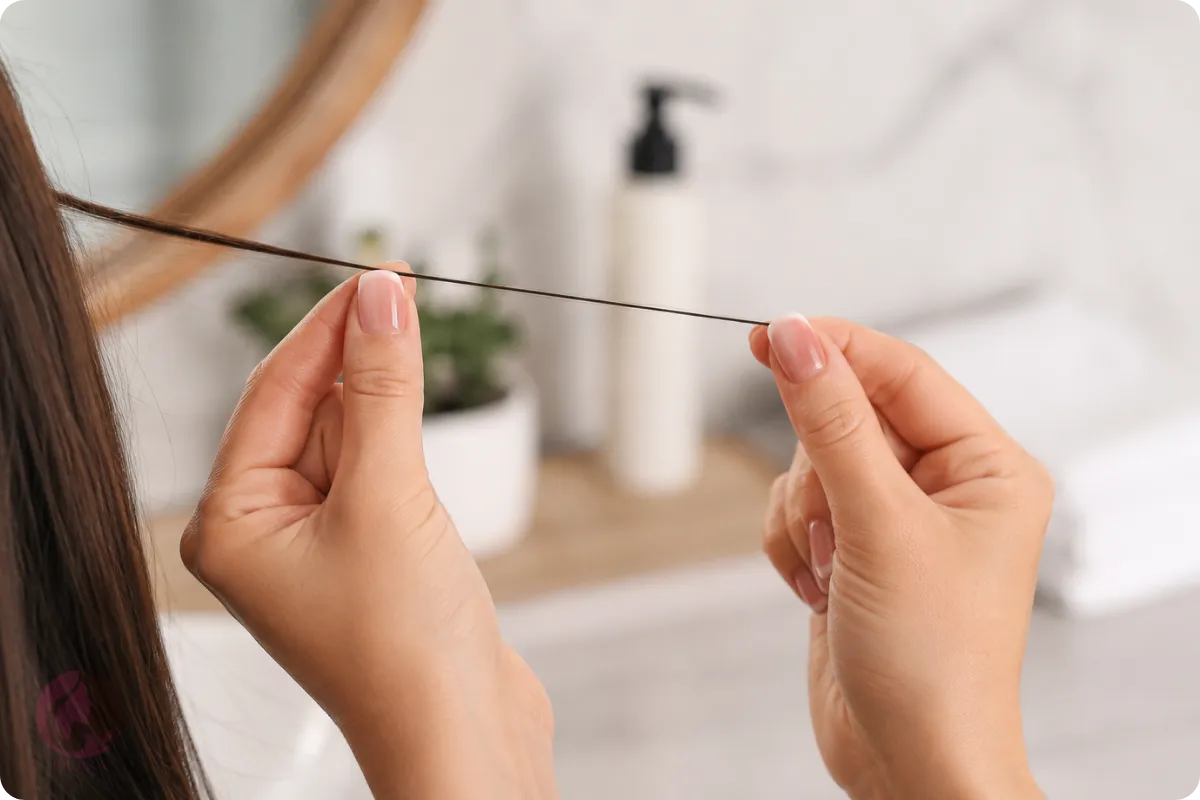
A hair elasticity test can provide limited information about the mechanical behavior of an individual strand, but it is not a diagnostic test for protein overload. Hair elasticity is influenced by the amount of moisture inside the fiber, environmental humidity, the degree of damage, hair diameter, and previous chemical treatments.
Research on moisture and the mechanical properties of hair has also shown that changes in relative humidity can alter water uptake and hair elasticity. This means that rules such as “if your hair barely stretches, it has too much protein” or “if it stretches a lot, it definitely needs protein” are not reliable diagnostic methods.
What Is the Difference Between Protein Overload, Dry Hair, and Moisture Deficiency?
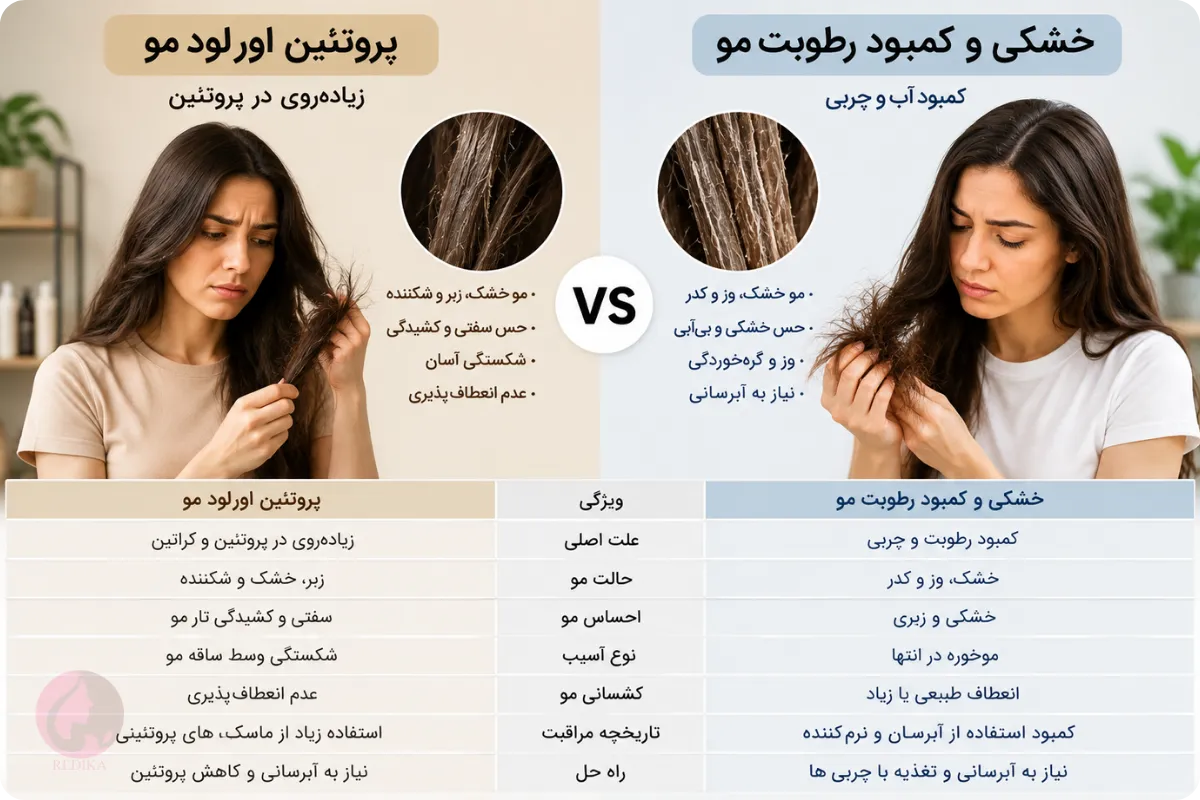
This is one of the most important parts of evaluating your hair at home because the symptoms of these conditions overlap considerably. Dry hair may become rough, frizzy, tangled, and brittle, and these are also commonly reported by people who believe they are experiencing protein overload. The main difference is more often found in your routine history, the trigger that started the problem, and how your hair responds when products are changed.
With ordinary dryness, unsuitable cleansers, excessive washing, dry weather, friction, insufficient conditioning, or heat can all play major roles. With suspected protein overload, there is usually a clearer relationship between the onset of stiffness and breakage and an increase in products containing keratin, hydrolyzed protein, or strengthening ingredients.
Quick Comparison Table: Protein Overload, Dryness, or Hair Damage?
| Criteria | Possible Protein Overload | Dryness or Moisture Deficiency | Heat or Chemical Damage |
|---|---|---|---|
| When it starts | Often after increasing protein-based products | May develop gradually or seasonally | Often after bleaching, coloring, flat ironing, or chemical straightening |
| How the hair feels | Stiff, dry, rough, and less flexible | Dry, dull, frizzy, or tangled | Weak, uneven, rough, or highly brittle |
| Breakage | May increase | Can occur when dryness becomes severe | Very common |
| Connection with a new product | Often an important clue | Not necessarily present | More closely associated with the damaging treatment or process |
| Response to conditioner | May be limited or short-lived | Usually produces more noticeable softness | Can improve appearance, but structural damage remains |
| Best first step | Reduce multiple protein products and simplify the routine | Improve conditioning and reduce drying factors | Reduce or stop the damaging factor and use protective care |
No single row in this table can provide a definitive diagnosis. If your only symptom is dryness and you have not introduced any new protein products, investigate more common causes of dryness first. If the problem appeared soon after adding several strengthening products and improves when those products are removed, the likelihood that your protein-heavy routine is contributing becomes greater.
Protein Overload vs. Heat and Chemical Damage
Excessive heat does more than simply evaporate water from the surface of the hair. Under severe conditions, it can damage the structure of the hair shaft. Bleaching, chemical straightening, and certain salon procedures can also alter the cuticle and internal structures of the fiber. If dryness and breakage begin immediately after one of these processes, it is not reasonable to blame the entire problem on protein.
Interestingly, damaged hair may benefit from products containing hydrolyzed proteins in certain situations. Protein is therefore neither always the cause of the problem nor always the solution; the outcome depends on the type of damage and the product formulation. To learn more about heat and chemical damage, read our guide to hair damage and how to care for damaged hair.
Salon Protein Treatments Are Not the Same as At-Home Protein Products
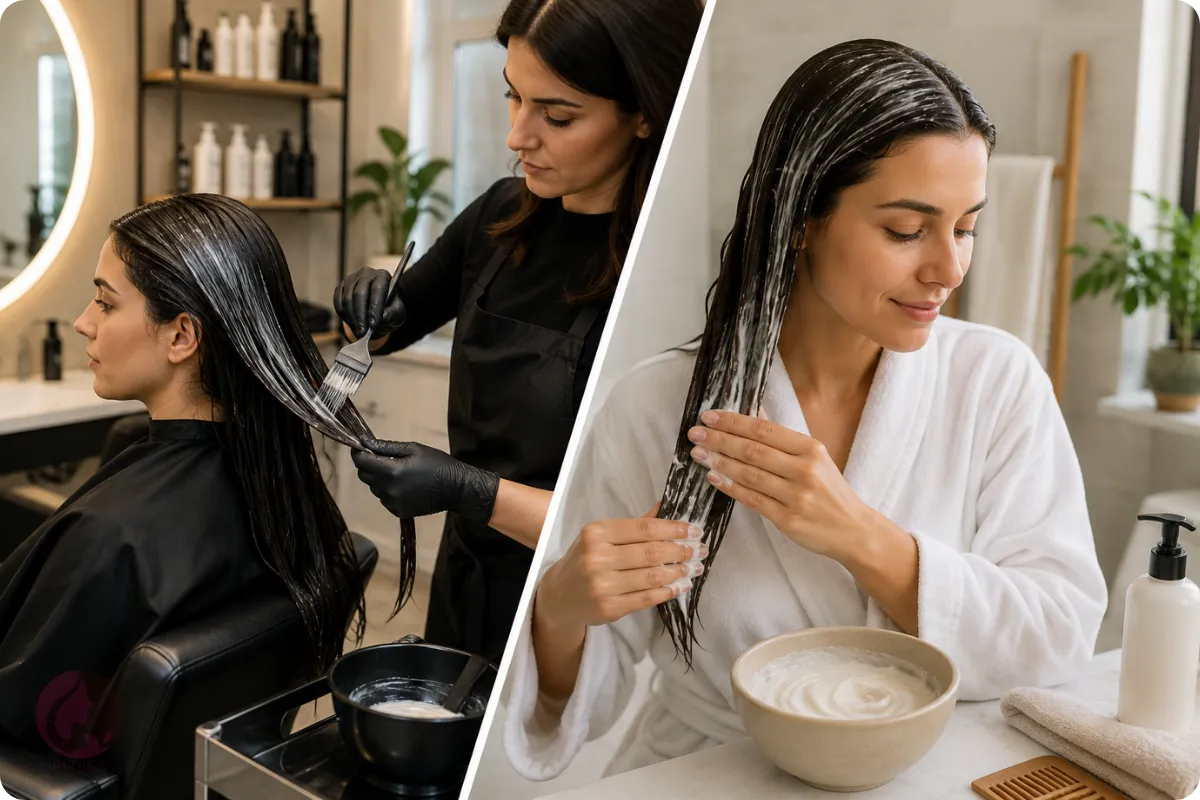
One common mistake in hair-care content is treating every protein-containing product and every salon service marketed as a “protein treatment” as though they were the same thing. An at-home mask may contain a certain amount of hydrolyzed protein, conditioning agents, and oils, while a professional salon treatment may involve multiple stages, different formulations, and heat.
So when someone says, “My hair became dry after a protein treatment,” it is important to clarify what kind of treatment was actually performed. If high-temperature flat ironing was part of the salon process or the formula contained additional active ingredients, the resulting dryness cannot automatically be attributed to protein alone. To learn about a related salon process, see Redika’s guide to hair keratin treatment (in Persian).
Why Does Some Hair Become Dry and Brittle After a Protein Treatment?
Dryness after a protein treatment can have several causes, and a single ingredient is not always responsible. Rather than immediately adding more masks and treatments, review what happened to your hair during the days and weeks before the problem appeared.
- Product formulation: Protein is not the only ingredient in a mask or treatment, and other components also affect how the hair feels.
- Frequency of use: Using a strengthening shampoo, mask, spray, and leave-in product at the same time can make a routine unnecessarily complicated.
- Heat: Frequent use of a flat iron or very hot blow dryer can itself be a major cause of dryness and breakage.
- Previous damage: Bleached or highly porous hair may respond differently from relatively healthy hair.
- Product buildup: Styling agents, polymers, oils, and other ingredients can also change the feel of the hair surface.
- Over-cleansing: Trying to remove buildup with an excessively harsh shampoo can make dryness worse.
Which Ingredients on a Label Suggest That a Product Contains Protein?
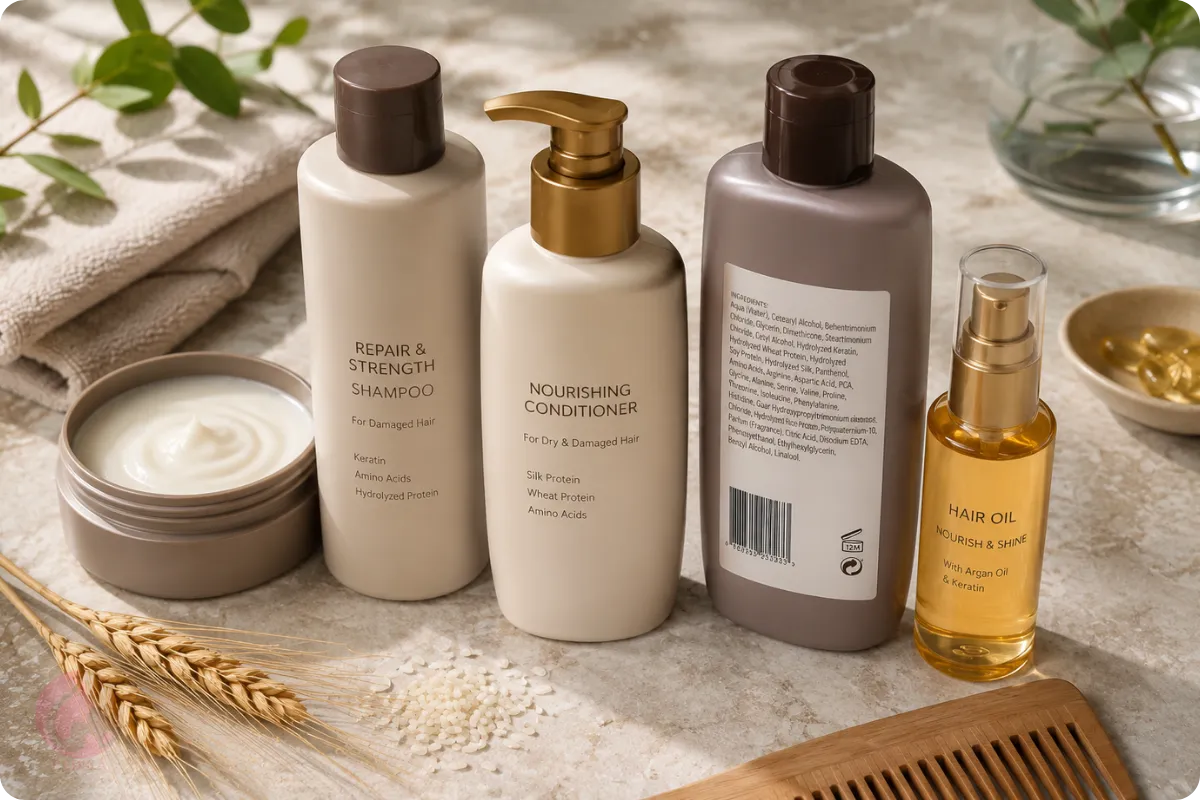
To evaluate your routine, look at the official ingredient list on the packaging rather than relying only on marketing claims on the front of the product. The presence of a protein-based ingredient does not automatically mean that a product is “high in protein,” because consumers generally do not know the exact concentration of each ingredient.
| Ingredient on the Label | What It Means | Important Note |
|---|---|---|
| Hydrolyzed Keratin | Keratin broken into smaller components | Commonly found in repair-focused hair products |
| Hydrolyzed Wheat Protein | Hydrolyzed protein derived from wheat | May be part of a product’s conditioning system |
| Hydrolyzed Rice Protein | Hydrolyzed protein derived from rice | Its presence alone does not make a product unsuitable |
| Hydrolyzed Soy Protein | Hydrolyzed protein derived from soy | Should be considered in the context of the complete formulation |
| Hydrolyzed Silk | Protein-derived fragments from silk | Found in some conditioning and shine-enhancing products |
| Amino Acids | The building blocks of proteins | Not all amino acids or formulations behave the same way |
How Should You Read the Ingredient List?
Instead of hunting for a single “bad ingredient,” write down your entire routine. Your shampoo might contain keratin, your mask may contain wheat protein, and your daily spray may also contain amino acids. In that situation, looking at the complete routine tells you far more than focusing on one bottle alone.
To understand common terminology used on hair products, visit Redika’s hair-care and hair-product glossary (in Persian). You can also read everything you need to know about hair products for an overview of the different product categories.
Is Low-Porosity Hair More Likely to Experience Protein Overload?
Social media frequently claims that “low-porosity hair should never use protein.” This is not an absolute scientific rule. Hair Porosity can be one characteristic that influences how water and products interact with the hair shaft, but it cannot independently determine whether someone will respond well or poorly to a protein-containing product.
Cuticle condition, chemical damage, strand diameter, product formulation, frequency of use, and the rest of your routine can all influence the outcome. If you know your hair’s porosity, treat it as one piece of the puzzle rather than the final answer.
Redika’s 60-Second Check: Could Protein Products Be Contributing?
- Did the dryness and stiffness begin after you added a protein-based product?
If not, investigate ordinary dryness, heat, bleaching, and mechanical damage first. - Does your hair feel stiffer and less flexible than it used to?
If it is simply frizzy but still soft and flexible, ordinary dryness may be more likely. - Are you using several strengthening products at the same time?
Review your shampoo, mask, spray, and leave-in products together. - Have you recently bleached, colored, or frequently flat-ironed your hair?
If yes, heat or chemical damage may be an important part of the problem. - Does your hair improve when you simplify your routine?
Gradual improvement after removing unnecessary products can provide an important clue about the role of your previous routine.
Redika check result: If three factors occur together — the problem began after increasing protein products, the hair became stiffer and less flexible, and it improves when the routine is simplified — the possibility that your protein-heavy routine is contributing becomes stronger. This is a practical home decision-making tool, not a medical diagnostic test.
A Moisture and Softness Recovery Routine for Hair Suspected of Protein Overload
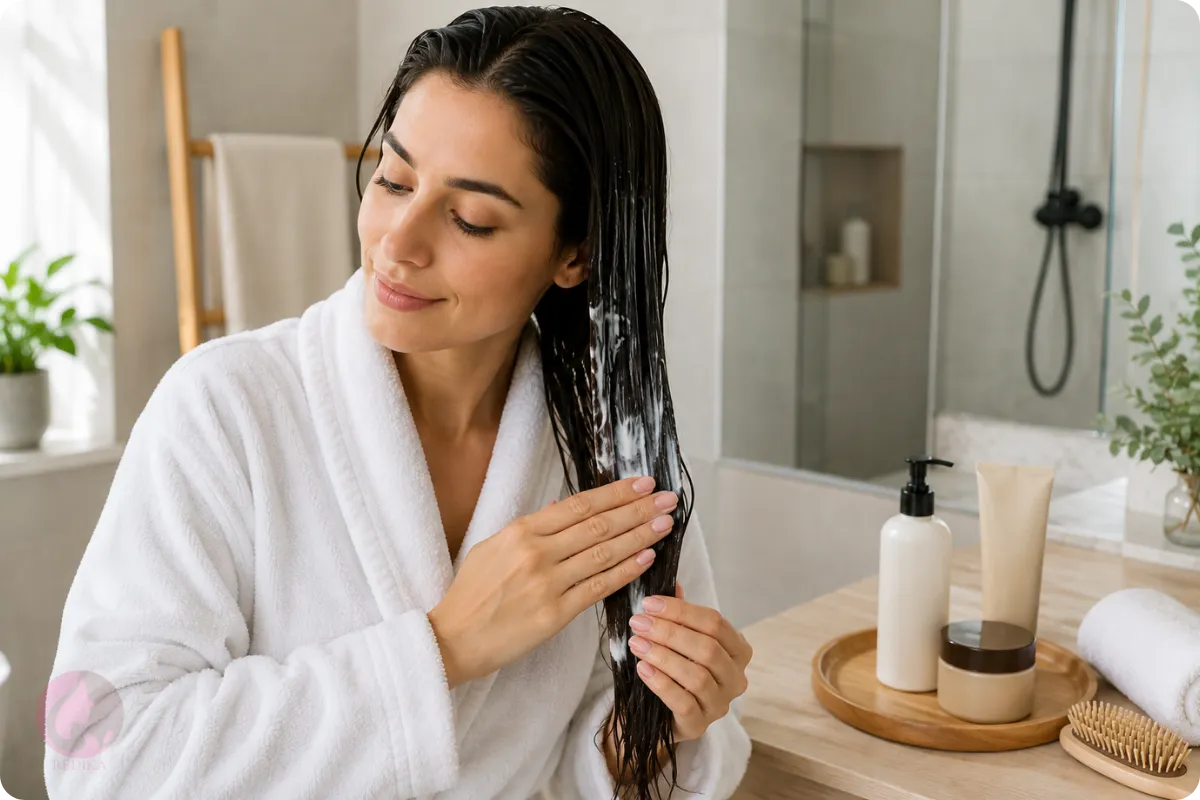
If your current routine is clearly overloaded with strengthening products, the first step is not to buy another treatment. The more variables you introduce, the harder it becomes to determine what is helping or worsening your hair. For several wash cycles, return to a simple routine that allows you to observe changes clearly.
A Three-Step Routine Reset
| Step | What to Do | Goal |
|---|---|---|
| 1. Simplify | Temporarily stop using multiple protein masks and strengthening sprays | Reduce the number of variables in your routine |
| 2. Condition | Use a shampoo suitable for your scalp and a conditioner appropriate for the hair lengths | Reduce friction, tangling, and roughness |
| 3. Reintroduce | Once your hair improves, reintroduce one protein product at a time if needed | Assess your hair’s actual tolerance |
During this period, reduce unnecessary heat as well. If you need to blow-dry your hair, use controlled heat and avoid frequent flat ironing. The goal is to prevent another factor from continuously stressing the hair shaft while you evaluate your product routine.
Do You Need a Clarifying Shampoo for Protein Overload?
Clarifying Shampoo can help reduce certain residues and product buildup on the surface of the hair, but it does not “remove all protein from inside the hair shaft.” This is one of the exaggerated claims commonly repeated in social-media hair-care content.
If your hair feels coated, heavy, or dull because of multiple products, appropriate clarifying may help. However, frequent use of an overly strong cleanser can itself cause dryness and roughness. The idea that “the more often you clarify, the faster the protein comes out” can therefore have the opposite effect.
4 Common Myths About Hair Protein Overload
- Myth 1: All dry hair has protein overload.
Dryness may be caused by cleansing, weather, heat, bleaching, or insufficient conditioning. - Myth 2: An elasticity test provides a definite diagnosis.
Elasticity is also affected by water content, environmental humidity, and the degree of damage. - Myth 3: Clarifying shampoo removes all protein from the hair.
Clarifying shampoo is mainly useful for reducing certain forms of surface buildup. - Myth 4: Low-porosity hair should never use protein.
Porosity is only one factor that can affect the hair’s response and does not create an absolute rule.
Common Mistakes When Trying to Fix Protein Overload
The biggest mistake is moving from one extreme to another. Some people use strengthening products for several weeks, notice dryness, stop everything, and then introduce several heavy masks, oils, serums, and moisturizing products all at once. Once again, it becomes impossible to determine which product is helping and which may be making the situation worse.
- Using a strong clarifying shampoo every day to “remove protein”
- Adding several new masks at the same time
- Continuing frequent high-heat flat ironing while trying to address dryness
- Relying entirely on the glass-of-water porosity test or a single hair strand
- Ignoring recent bleaching or chemical treatments
- Assuming every product labeled “keratin” must be unsuitable for your hair
- Expecting permanently damaged hair fibers to be biologically rebuilt
When Should You Avoid Blaming Everything on Protein Overload?
If your symptoms go beyond ordinary roughness and hair-shaft breakage, it is better not to explain the entire problem simply by changing your mask or shampoo. Scalp problems and hair loss from the root require a different type of evaluation.
- Sudden, noticeable shedding from the root
- Rapid thinning or visible bald areas
- Patchy hair loss
- Scalp itching, inflammation, sores, or pain
- Severe breakage immediately after bleaching or chemical straightening
- Problems that continue despite several weeks of simplifying your routine
- A sudden, unusual change in hair condition without any change in products
In these situations, the underlying cause should be evaluated separately, and consulting a dermatologist or qualified hair and scalp specialist may be appropriate. Hair-care products can improve the appearance and manageability of the hair shaft, but they cannot replace medical assessment of follicle or scalp conditions.
Key Hair-Care Terms You Should Know
| Term | Simple Definition |
|---|---|
| Protein Overload | An informal term for stiffness, roughness, or breakage that may be associated with an imbalanced protein-heavy routine |
| Hydrolyzed Protein | Protein that has been broken down into smaller components such as peptides |
| Hair Breakage | Breakage of the hair fiber along the shaft rather than shedding from the follicle |
| Hair Porosity | A characteristic related to how the hair shaft interacts with water and other substances |
| Clarifying Shampoo | A stronger-cleansing shampoo designed to reduce certain residues and product buildup |
| Conditioning | Reducing friction and improving softness, combability, and manageability of the hair shaft |
Conclusion: Your Hair’s Real Balance Matters More Than Protein vs. Moisture Labels
Hair protein overload is best understood as a practical term describing stiffness, roughness, reduced flexibility, or increased breakage after a protein-heavy hair-care routine rather than as an independent medical condition. Proteins and hydrolyzed keratins are not inherently harmful to hair and, in appropriate formulations, may even be useful components of damaged-hair care.
If your hair becomes dry and brittle after adding several strengthening products, simplify your routine before buying more treatments. Reducing heat, using an appropriate conditioner, checking product ingredient lists, and monitoring how your hair responds over several wash cycles can provide much more useful information than random online hair tests.
Most importantly, dry hair alone does not equal protein overload. If your problem is associated with bleaching, heat, scalp inflammation, or shedding from the root, other causes must also be considered. For more guides, explore the hair-care section of Redika Magazine.
Frequently Asked Questions About Hair Protein Overload
How can I tell if my hair has protein overload?
There is no definitive at-home test for protein overload. If stiffness, roughness, and breakage began after increasing protein- or keratin-containing products and improve when you simplify your routine, the possibility that protein-heavy products are contributing becomes stronger. Dryness or frizz alone is not enough to reach that conclusion.
What is the difference between protein overload and dry hair?
With dry hair, insufficient conditioning, unsuitable cleansing, dry weather, heat, and friction often play a larger role. With suspected protein overload, the timing between increased use of protein-based products and the onset of stiffness and breakage is a more important clue. Both conditions can produce similar symptoms.
Should I use a clarifying shampoo for protein overload?
If product buildup is present on the hair shaft, a Clarifying Shampoo may help remove some surface residues. It does not remove all protein from within the hair shaft, and excessive use can make dryness worse.
How long should I stop using protein products after suspected protein overload?
There is no fixed scientifically established period that applies to everyone. Temporarily remove multiple protein products for several wash cycles and monitor changes in softness, flexibility, and breakage. Once the hair improves, you can reintroduce one protein product at a time if needed.
Should low-porosity hair avoid protein?
No. There is no absolute rule stating that low-porosity hair must avoid protein. Porosity is only one factor that can influence how hair responds to a product; previous damage, strand diameter, protein type, formulation, and frequency of use also matter.
Scientific References
This article was prepared and scientifically reviewed using research and scientific reviews related to hair-shaft structure, hydrolyzed keratin, the influence of moisture on the mechanical properties of hair, and physical and chemical hair damage.
- Research on the penetration and behavior of hydrolyzed keratins with different molecular weights in hair
- Scientific review of hair-shaft structure, physicochemistry, and hair care
- Research on environmental humidity, water uptake, and hair elasticity
- 2025 study on hydrolyzed keratin and the mechanical properties of hair
- Scientific review of hair cosmetics and their effects on the cuticle and hair-shaft breakage
Note: This article is intended for educational purposes and to improve awareness of hair-shaft care. It is not a substitute for diagnosis or treatment by a dermatologist or qualified medical professional.
About the author

Join the conversation
Share your experience or question with REDIKA readers.
Your email stays private. Please avoid sharing personal or sensitive details.


