Home / Editorial guide


Video summary of the article
Author: Redika Health and Beauty Editorial Team
Last source review: July 14, 2026
Medical transparency: This article has not been written or reviewed by a physician. The content is based on official guidelines and scientific articles and is not a substitute for professional medical diagnosis or advice.
Quick answer
If your skin is very sensitive, suffers from rosacea or eczema, or if sunscreen stings your eyes, a fragrance-free mineral product is usually a more suitable starting point. If you want a lightweight texture, a transparent finish, and better compatibility with makeup, a chemical or hybrid sunscreen can be more practical. For acne-prone skin, a non-comedogenic formula is more important than whether it is mineral or chemical, and for spots and melasma, a tinted type containing iron oxide is the priority.
Quick selection: Which sunscreen is most suitable for you?
There is no one-size-fits-all answer; because what is soothing on sensitive skin might feel heavy on oily skin, and a product that sits perfectly under makeup might not have enough durability during exercise. The best choice is a product that provides broad-spectrum protection, is tolerated by your skin, and that you can use in sufficient amounts every day.
| Need or Concern | Initial Suggested Choice | Important Feature on the Label |
|---|---|---|
| Very sensitive skin, rosacea, or eczema | Simple mineral and fragrance-free | Fragrance-free (fragrance-free) |
| Oily or acne-prone skin | Lightweight mineral, chemical, or hybrid fluid | Non-comedogenic (non-comedogenic) and Oil-free (oil-free) |
| Dry skin | Moisturizing cream with any tolerable filter | Glycerin, ceramides, or hyaluronic acid |
| Melasma, spots, and post-acne hyperpigmentation | Tinted sunscreen that matches skin tone | Iron Oxides (Iron Oxides) |
| Daily makeup and concerns about white cast | Chemical, hybrid, or tinted mineral | Transparent texture or a color that matches the skin |
| Exercise, swimming, and heavy sweating | Any group that has tested water resistance | Water Resistant (Water resistant) for 40 or 80 minutes |
What is the real difference between physical and chemical sunscreen?
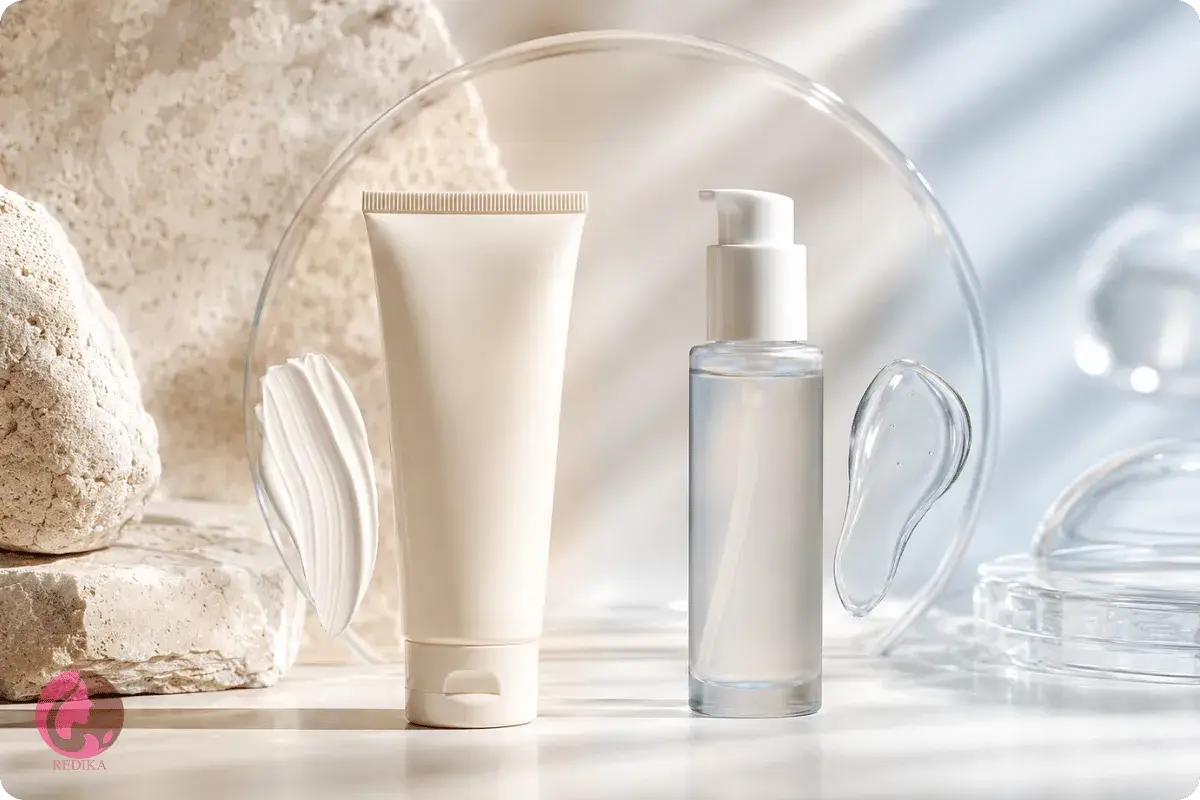
The term mineral or chemical sunscreen is common in everyday language, but the more scientific names for these two groups are “inorganic filters” and “organic filters.” Zinc oxide and titanium dioxide are also chemicals; therefore, phrases like “completely chemical-free” are more of a marketing message than a scientific definition.
Contrary to the outdated explanation on many websites, mineral filters do not just reflect light like a mirror. Research published in the American medical article database shows that zinc oxide and titanium dioxide also primarily absorb ultraviolet radiation, and the contribution of reflection and scattering is smaller.
Correcting an old belief
- Both groups primarily absorb ultraviolet radiation.
- Both must be used in sufficient amounts and applied evenly.
- Both need to be reapplied during prolonged outdoor exposure.
- The more important practical difference is the type of filter, skin tolerance, texture, and the final finish of the product.
How does mineral sunscreen work?
A product that contains only Zinc Oxide, Titanium Dioxide, or both as active sun protection ingredients is considered mineral. Zinc oxide provides good coverage across various parts of UVA and UVB rays, and titanium dioxide performs well against UVB and the shorter-wavelength part of UVA rays.
Mineral filters usually cause less irritation and sensitivity, but the name “mineral” does not guarantee that the entire formula is gentle. Fragrances, essential oils, alcohol, preservatives, or a heavy product texture can still irritate the skin or be unsuitable for acne-prone skin.
How do chemical and hybrid sunscreens work?

Chemical sunscreen uses organic filters that absorb specific wavelengths of ultraviolet radiation. Since a single filter does not always cover the entire spectrum with equal strength, manufacturers usually combine several filters to achieve stable, broad-spectrum protection.
- Avobenzone (Avobenzone): UVA filter
- Octocrylene (Octocrylene): UVB filter and stabilizer for certain formulas
- Octinoxate (Octinoxate), Octisalate (Octisalate) and Homosalate (Homosalate): Filters primarily associated with UVB rays
- Bemotrizinol (Bemotrizinol): A new-generation filter with UVA and UVB coverage, the approval of which varies by country
A hybrid product uses mineral and organic filters in a tested formula. These products may have less white cast or a lighter texture, but their suitability still depends on the final formula.
Mineral vs. Chemical Sunscreen Comparison Table
The table below shows common differences, not a definitive rule for all products. The cream base, amount of silicone, type of emulsion, moisturizing ingredients, and fragrance can make the user experience of two products with similar filters completely different.
| Criterion | Mineral | Chemical |
|---|---|---|
| Active ingredients | Zinc oxide and titanium dioxide | One or more organic filters |
| Primary function | Mainly absorption, along with some scattering and reflection | Absorption of ultraviolet radiation |
| Sensitive skin | Often less likely to cause irritation | Some filters or additives may cause a burning sensation |
| Appearance on skin | Higher chance of a white cast or gray tint | Usually more transparent |
| Common texture | Sometimes creamier or drier | Often allows for the production of lighter fluids |
| Acne-prone skin | Suitable if lightweight and non-comedogenic | Suitable if lightweight and non-comedogenic |
| Water resistance | Only with tested claims on the label | Only with tested claims on the label |
| Best advantage | Better tolerance for many sensitive skin types | Transparent appearance and possibility of lightweight formulas |
Choosing sunscreen based on skin type and needs
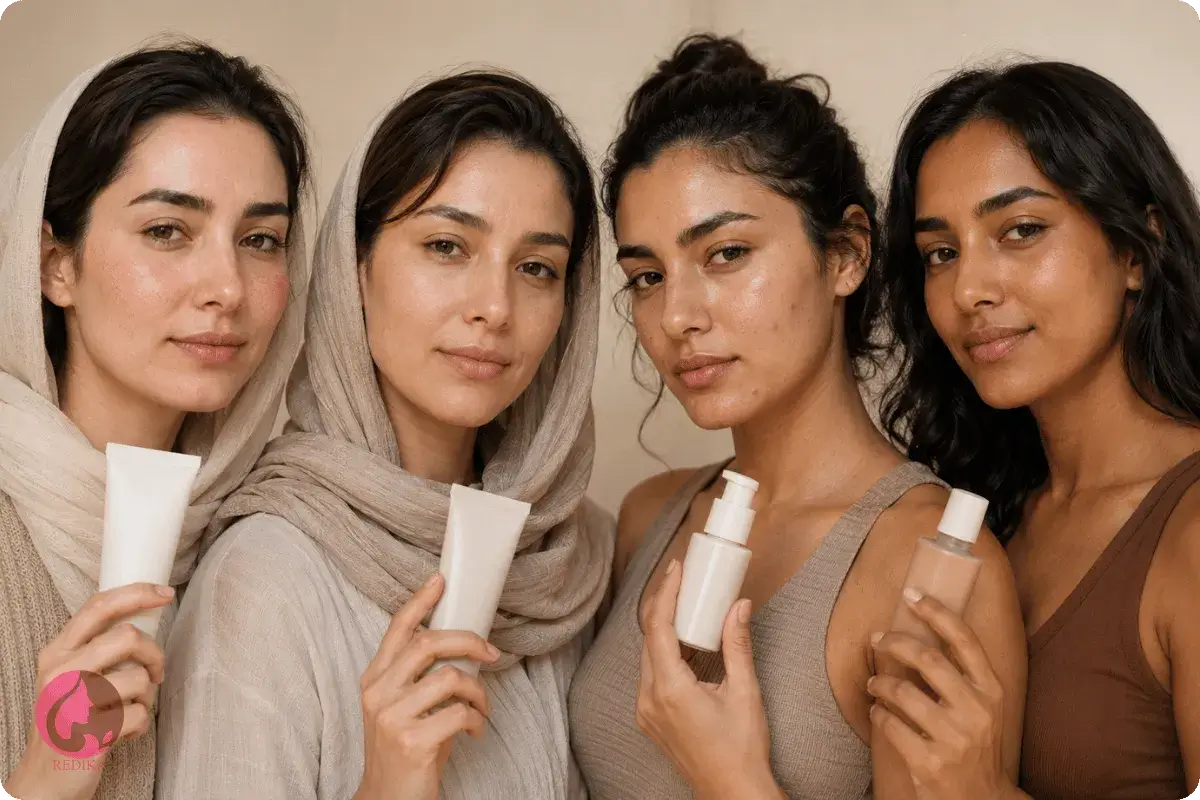
To make the right choice, first identify the main skin concern and usage conditions. The filter family name is only one criterion and should not replace checking the texture, fragrance, non-comedogenic status, and water resistance.
Sensitive skin, eczema, or rosacea
For sensitive skin, first try a mineral sunscreen that is fragrance-free and has limited additional ingredients. The American Academy of Dermatology inThe guide for rosacea-prone skin also suggests zinc oxide and titanium dioxide as less irritating options.
- Avoid products that are fragranced or contain multiple essential oils.
- Do not apply new products to inflamed or broken skin, or immediately after clinical treatments.
- Test the product on a small area on the side of your face for a few days.
- Itching, hives, swelling, or persistent lesions require discontinuation of use and medical evaluation.
If your skin is reactive, the guide to the best skincare routine for sensitive skin can also help simplify other care steps.
Oily, combination, and acne-prone skin
Being mineral-based does not mean it is anti-acne, and being chemical-based does not mean it clogs pores. For acne-prone skin, a fluid or gel texture, a non-comedogenic label, and compatibility with treatments such as retinoids or benzoyl peroxide are more important.
- If your skin gets shiny, go for a matte or natural finish.
- If anti-acne treatment has sensitized your skin, choose a product without fragrance or high alcohol content.
- At night, remove water-resistant sunscreen and makeup without harsh scrubbing.
- Persistent breakouts can be related to the product base, perspiration, or insufficient cleansing.
To adjust your care steps, also see the article the best skincare routine for oily skin.
Dry and normal skin
For dry skin, the moisturizing base is sometimes more important than the type of filter. A creamy product containing glycerin, ceramide, squalane, or hyaluronic acid usually sits better on dry skin than an ultra-matte fluid.
- Apply moisturizer separately and allow it to absorb.
- Do not mix sunscreen with moisturizer in the palm of your hand.
- To reduce pilling, spread the product with gentle pressure.
- If you have normal skin, ease of use and compatibility with makeup are your main criteria.
Redika guides on sunscreen for dry and sensitive skin and sunscreen for normal skin make choosing the texture easier.
Spots, melasma, and tan or dark skin
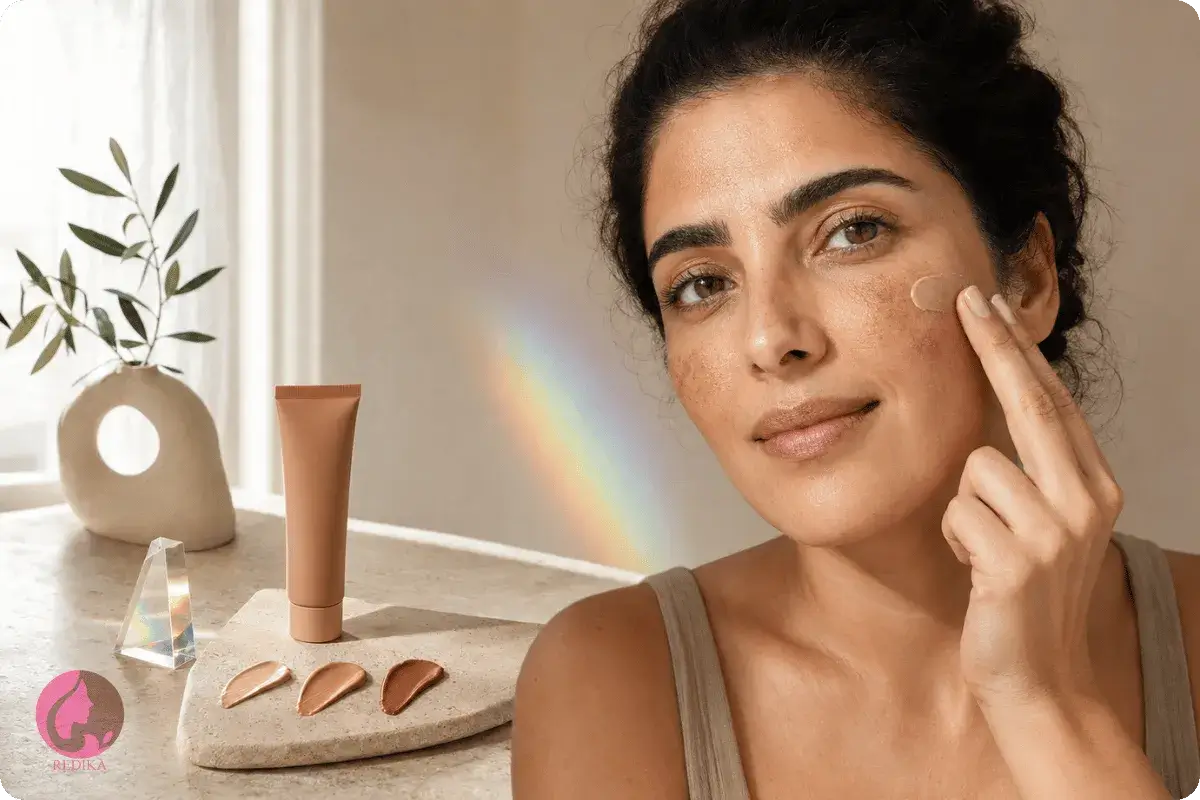
For melasma and post-acne hyperpigmentation, a tinted sunscreen containing iron oxide is a more targeted choice than many colorless products. Iron oxide helps reduce the effects of visible light while making the white cast of mineral filters less noticeable.
The American Academy of Dermatology, in its guide to managing dark spots, recommends using a tinted sunscreen with iron oxide, broad-spectrum protection, and an SPF of at least 30. The product’s shade should match your skin so you can apply enough without creating a gray or orange appearance.
Pregnancy, breastfeeding, and children
During pregnancy, mineral sunscreen is a cautious and usually less irritating choice; however, this recommendation does not mean that all organic filters have been proven dangerous. The American Academy of Dermatology, in its guide to pregnancy skincare, suggests a physical product containing zinc oxide or titanium dioxide.
- When breastfeeding, do not leave the product on the nipple or areas that come into direct contact with the baby’s mouth.
- For infants under six months, shade, protective clothing, and hats are the priority.
- For children six months and older, choose a broad-spectrum, water-resistant product with an SPF of at least 30.
- Do not spray directly near the child’s face and prevent inhalation.
How to read a sunscreen label?
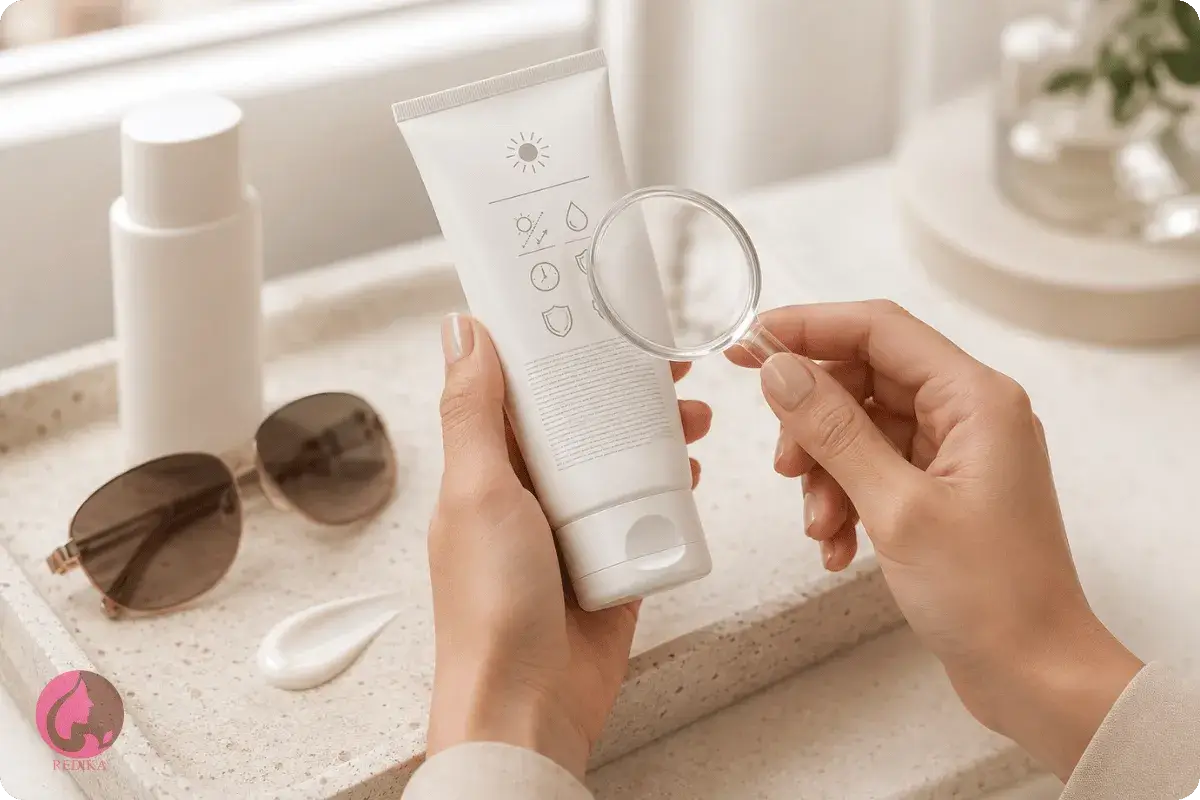
Do not rely solely on the marketing claims on the front of the packaging; check the Active Ingredients section or the INCI (International Nomenclature of Cosmetic Ingredients) list. If the active ingredients are only zinc oxide and titanium dioxide, the product is mineral; the presence of organic filters alongside them usually means the product is hybrid.
| Name on the ingredient list and Persian equivalent | Primary function | Group |
|---|---|---|
| Zinc Oxide (Zinc Oxide) | UVA and UVB radiation coverage | Mineral |
| Titanium Dioxide | Covers UVB and part of UVA rays | Mineral |
| Avobenzone | Covers UVA rays | Organic |
| Octocrylene | Covers UVB rays and helps stabilize some formulas | Organic |
| Octinoxate | Covers primarily UVB rays | Organic |
| Bemotrizinol | Covers UVA and UVB rays | New generation Ali |
| Iron Oxides | Helps reduce the effectiveness of visible light | Pigment that helps protect against visible light |
Three essential phrases on the packaging
- SPF 30 (Sun Protection Factor 30) or higher: Indicates the laboratory level of protection against sunburn caused by UVB rays.
- Broad Spectrum: Means the product targets protection against both UVA and UVB rays.
- PA (Protection Grade of UVA) or the UV symbol inside a circle: Provides additional information about UVA protection and should be read within the context of that country’s labeling system.
No sunscreen is truly waterproof. If the product states 40 or 80 minutes of water resistance, it must be reapplied after that time, or after swimming, heavy sweating, or towel drying.
Correct amount, timing, and reapplication of sunscreen
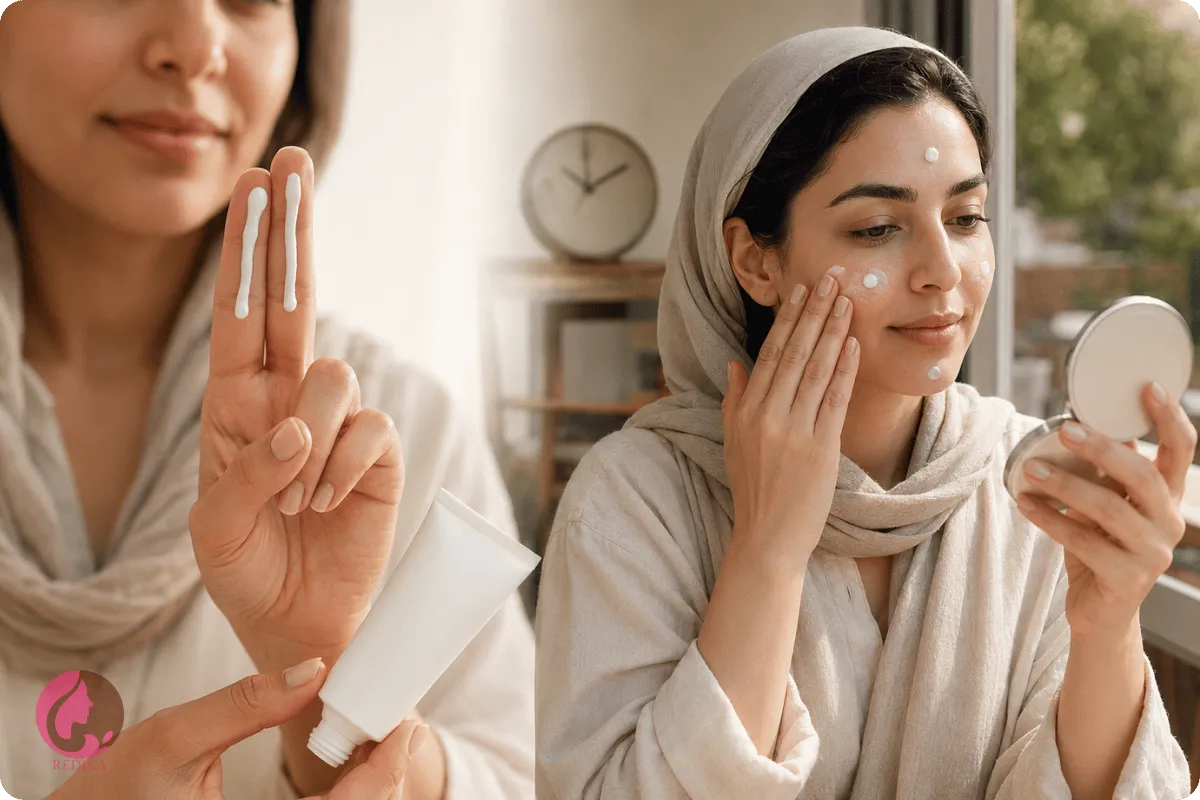
The level of protection on packaging is measured against a standard amount in a laboratory, and low usage significantly reduces actual protection. For the face and neck, two full lines of product along the length of the index and middle fingers is an approximate guide; the size of the face and the consistency of the product can slightly alter the necessary amount.
| Conditions | Recommended Method |
|---|---|
| Before going out | Apply to dry skin about 15 minutes beforehand. |
| Continuous outdoor presence | Reapply approximately every two hours. |
| Swimming, sweating, or towel drying | Reapply without waiting for the two-hour mark to pass. |
| Indoor environment away from windows | A constant two-hour reapplication is not always necessary; consider the time you will be going out and the amount of subsequent exposure. |
| By a window or long-distance driving | Because a portion of UVA rays passes through, protection and reapplication proportional to the duration of exposure are important. |
| Over makeup | Apply the measured lotion with a clean sponge using a dabbing motion; do not consider powder or spray as your primary layer of protection. |
Correct order in the morning routine
- Gentle face wash
- Serum or morning treatment if needed
- Moisturizer if needed
- Sufficient amount of sunscreen
- Makeup after the sunscreen layer has set
Do not mix sunscreen with moisturizer or foundation, as the uniform network of filters becomes diluted or irregular, and the stated protection factor can no longer be relied upon. To remove the product at the end of the day, read the guide on principles of facial skin cleansing.
The American Academy of Dermatology also emphasizes in its guide to proper sunscreen use applying it about 15 minutes before going out, reapplying approximately every two hours when outdoors, and reapplying after swimming or sweating.
Common mistakes when choosing and using
- Choosing solely based on the word ‘natural’: Being mineral does not mean organic, chemical-free, or hypoallergenic.
- Using a small amount to avoid a white cast: This reduces the actual level of protection.
- Trusting the SPF in foundation: Usually, the amount of makeup applied is not enough to achieve the stated protection.
- Adding up protection numbers: SPF 30 and 50 do not add up to SPF 80.
- Assuming higher SPF needs to be reapplied later: The reapplication time depends more on exposure, sweating, and the removal of the layer.
- Blaming all organic filters: Irritation may be related to fragrance, alcohol, preservatives, or a specific filter.
- Relying entirely on sunscreen: Shade, protective clothing, wide-brimmed hats, and sunglasses are also important parts of sun protection.
Conclusion: Should we buy mineral or chemical?
If you have very sensitive skin, rosacea, or eczema, try a fragrance-free mineral product first. If a transparent finish, lightweight texture, or better compatibility with makeup is important to you, a well-formulated chemical or hybrid sunscreen might be a better choice.
For acne-prone skin, being non-comedogenic; for dry skin, a moisturizing base; for melasma, being tinted and containing iron oxide; and for sports, tested water resistance are more important. Neither group is an absolute winner for everyone.
The Golden Rule: The best sunscreen is one that offers broad-spectrum protection, is well-tolerated by your skin, and can be reapplied in sufficient amounts and at the necessary times every day.
Frequently Asked Questions
Is mineral sunscreen always better than chemical sunscreen?
No. Mineral sunscreen is often better tolerated by sensitive skin, but it may leave a white cast or feel heavy and drying on some skin types. A lightweight chemical or hybrid product applied in sufficient quantity provides better practical protection than an unsuitable mineral sunscreen that you apply only a small amount of.
Does the absorption of chemical sunscreen mean it is carcinogenic?
No. A study in the Journal of the American Medical Association showed systemic absorption of several filters under maximum-use conditions, but the authors emphasized that this finding does not mean one should stop using sunscreen. The fact that a substance is measurable in the blood does not, by itself, prove risk or carcinogenicity and mostly indicates a need for further safety investigations.
Are the nanoparticles in mineral sunscreen dangerous?
Based on current evidence, zinc oxide and titanium dioxide nanoparticles in topical sunscreens, when used as directed, have a low potential for harm and are mainly limited to the surface layers of the skin. The Australian Therapeutic Goods Administration confirms this conclusion in its Sunscreen Ingredients Guide; however, it is best to avoid inhaling powders and sprays containing these particles.
Can mineral and chemical sunscreens be mixed?
Do not mix two separate products in the palm of your hand, as the protective layer may become uneven and the protection level may not be predictable. Using a pre-formulated hybrid product is fine because the entire formula is designed and tested as a single unit. If layering is necessary, apply the first product completely, and after it has set, add the next layer with minimal rubbing.
How can we reduce the white cast of mineral sunscreen?
A tinted version that matches your skin tone or a hybrid product usually creates less of a white cast. Properly moisturizing dry skin and applying the product in two or three sections also creates a more uniform appearance, but you should not reduce the amount used just to eliminate the white cast. If all mineral sunscreens look gray on your skin, a broad-spectrum chemical or hybrid sunscreen is a more logical choice.
Preparation Method and Content Transparency Policy
This article was written by the Redika editorial team, not by a physician. To prepare it, official guidelines from health organizations and peer-reviewed articles regarding filter performance, safety, sensitive skin, pregnancy, visible light, and application methods were reviewed.
- No specific product or brand has been declared a winner in this article.
- These are general information and are not sufficient for diagnosing sensitivities or skin conditions.
- Regulations for approved filters vary between countries and are subject to change.
- In case of severe sensitivity, active skin disease, high-risk pregnancy, or clinical treatment, a doctor’s opinion takes precedence.
To learn about the role of sunscreen in your daily regimen, read the article Why should we have a skincare routine?.
Selected Scientific References
- Sunscreen FAQs, American Academy of Dermatology
- Sun Protection Guide, U.S. Food and Drug Administration
- Study on the absorption, reflection, and scattering performance of mineral filters
- Scientific review of contact reactions and sensitivity to sunscreens
- Study on the protection of tinted sunscreen against visible light
- Skin Cancer Protection Guide, World Health Organization
- Safety Review of Zinc Oxide and Titanium Dioxide Nanoparticles
About the author

Join the conversation
Share your experience or question with REDIKA readers.
Your email stays private. Please avoid sharing personal or sensitive details.


