Home / Editorial guide

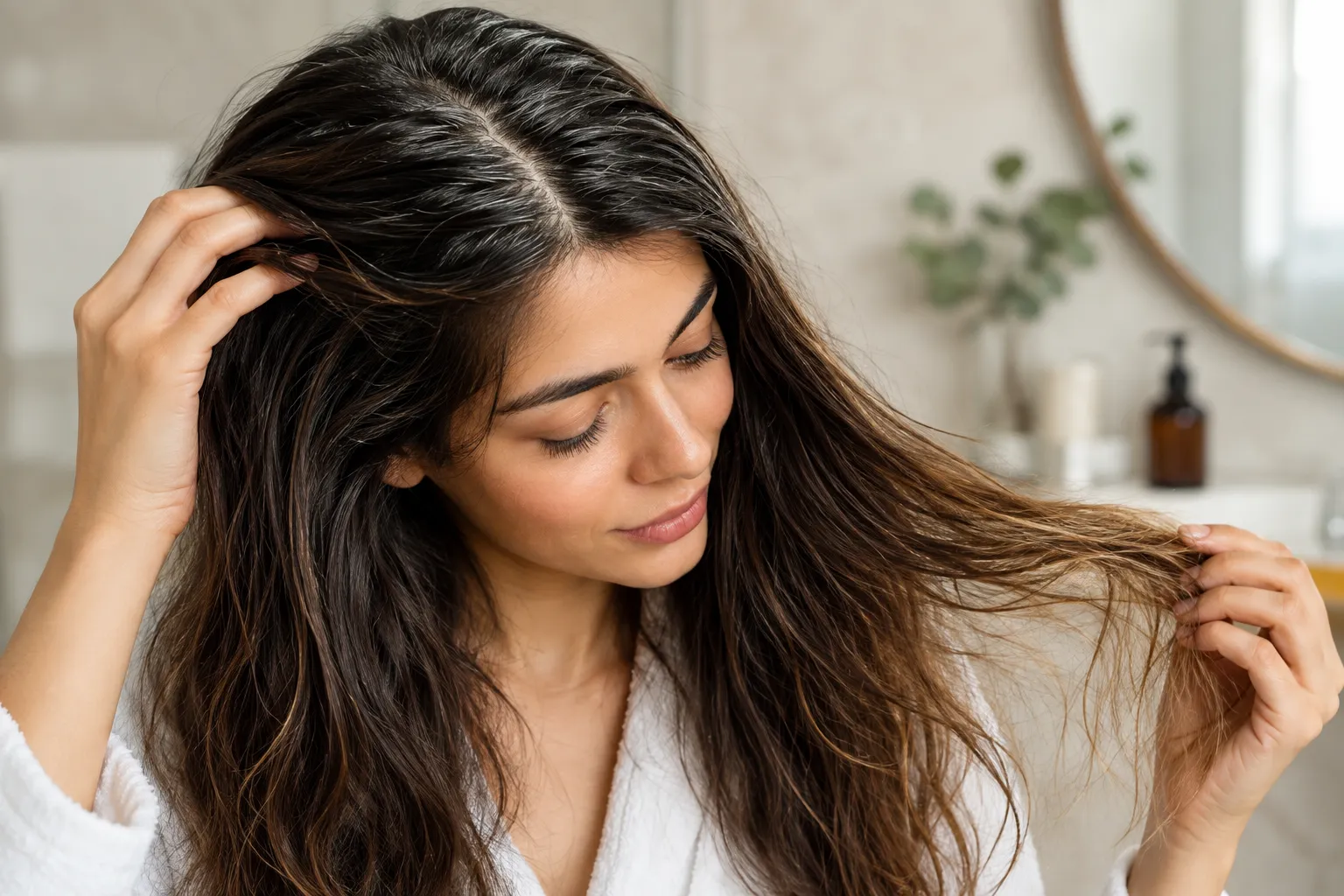
The problem usually becomes worse when we try to manage the entire head of hair with one single approach. For example, someone frustrated by oily roots may apply a cleansing shampoo all over the hair lengths, causing the ends to become progressively drier. They may then compensate by using more masks or oils, and if these products are applied too close to the roots, the hair may quickly feel heavy again. A more practical approach is to divide your routine according to where each type of care is actually needed: cleanse the scalp and protect the lengths. This is the principle behind what we call the Redika Dual Hair Routine in this guide.
Quick takeaway: If your roots are oily while your hair lengths are dry, use shampoo mainly on the scalp and apply conditioner, hair masks, or leave-in products to the mid-lengths and ends. The interval between washes should be based on how quickly your scalp actually becomes oily rather than a fixed number that applies to everyone. If oiliness is accompanied by severe itching, redness, thick or sticky flakes, pain, or unusual hair loss, the issue may be more than cosmetic and should be assessed by a dermatologist.
Quick Answer: What Should You Do for Oily Roots and Dry Ends?
The basic principle is simple: manage each part of your hair according to its own needs. Dermatologists generally recommend concentrating shampoo on the scalp to remove excess oil, dead skin cells, and product residue, while conditioner should be applied mainly to the hair lengths and ends depending on your hair type. This separation helps you control oily roots without repeatedly exposing dry lengths to direct cleansing and friction.
- Step 1: Thoroughly wet your hair and scalp with lukewarm water.
- Step 2: Distribute shampoo over several areas of the scalp instead of saturating the entire hair length.
- Step 3: Gently cleanse the scalp using your fingertips without scratching it with your nails.
- Step 4: During rinsing, let the lather flow down the hair lengths. In most routine washes, there is no need to rub the lengths separately.
- Step 5: Apply conditioner or a hair mask from the mid-lengths to the ends according to how dry your hair feels.
- Step 6: If necessary, use a small amount of leave-in conditioner or serum only on the lengths and ends.
- Step 7: Decide when to wash again based on the actual condition of your scalp rather than fixed rules such as “everyone should wash their hair twice a week.”
An important point is that washing less often is not necessarily the solution for an oily scalp. People with straight hair and a very oily scalp may even need to wash daily or every other day, while people with very curly, thick, or dry hair often need a different schedule. The goal is not to blindly increase or reduce the number of washes. The goal is to cleanse the scalp when it needs it while protecting the hair lengths from unnecessary dryness and damage.
What Does Having an Oily Scalp and Dry Ends Mean?

The terms “combination hair” or “oily roots and dry ends” are practical descriptions of how the hair behaves rather than independent medical diagnoses. Sebaceous glands in the scalp produce sebum, the skin’s natural oil. Sebum is part of the skin’s natural protective system and is not inherently a problem. What we perceive as excessive oiliness may result from a combination of sebum production, sweat, dead skin cells, styling products, hair density, and how quickly oil spreads along the strands.
The hair shaft, on the other hand, is not living tissue and cannot fully regenerate itself in the way skin can. The outer layer of the hair fiber, known as the hair cuticle, gradually experiences wear from brushing, contact with clothing and pillows, heat, coloring, bleaching, sunlight, and other environmental factors. This is why the oldest part of the hair—the ends—often shows the greatest degree of roughness and damage. As a result, your scalp may genuinely require frequent cleansing while the ends of the same hair need additional conditioning and protection from friction.
The Role of Sebum in Quickly Oily Hair Roots
How oily your hair appears is not determined by the amount of sebum alone. Hair type and thickness, sweating, physical activity, climate, washing frequency, wearing hats or head coverings, and styling products can all affect the appearance of the roots. On straight hair, oil can usually travel more easily along the strands, which can make the roots look shiny and heavy more quickly. With curly and tightly curled hair, sebum has more difficulty moving down the hair shaft, which means someone can have an oily or dandruff-prone scalp while the hair lengths remain extremely dry.
The goal of a good routine should not be to remove every trace of the scalp’s natural oils. Your scalp does not need to feel tight, irritated, or extremely dry after washing for it to be considered “completely clean.” The aim is to remove excess oil and buildup while keeping the scalp comfortable, clean, and free from excessive heaviness. If oiliness is accompanied by redness, itching, and sticky flakes, the problem may go beyond simple oiliness and conditions such as dandruff or seborrheic dermatitis may need to be considered.
Why Can the Hair Lengths and Ends Be Dry at the Same Time?
The ends are the oldest part of your hair. If your hair is long, these sections may have been exposed to washing, brushing, towels, pillows, sunlight, blow-drying, flat irons, coloring, and other environmental factors for months or even years. As surface damage increases, the normally smooth cuticle can gradually wear down and friction between hair strands may increase. The result is what you may notice in the mirror as frizz, tangling, dullness, breakage, or split ends.
Heat is another important contributor to dry and damaged hair lengths. Frequent use of very hot blow dryers, flat irons, and other heat-styling tools can affect the physical properties of the hair fiber and increase surface damage. In these situations, reducing heat exposure, using heat-protectant products correctly, and conditioning regularly become particularly important. Conditioners and products designed for the hair lengths cannot “heal” hair in the same way living tissue heals, but they can reduce friction, roughness, and tangling while improving the appearance and manageability of the hair.
How Can You Tell If You Really Have Combination Hair?
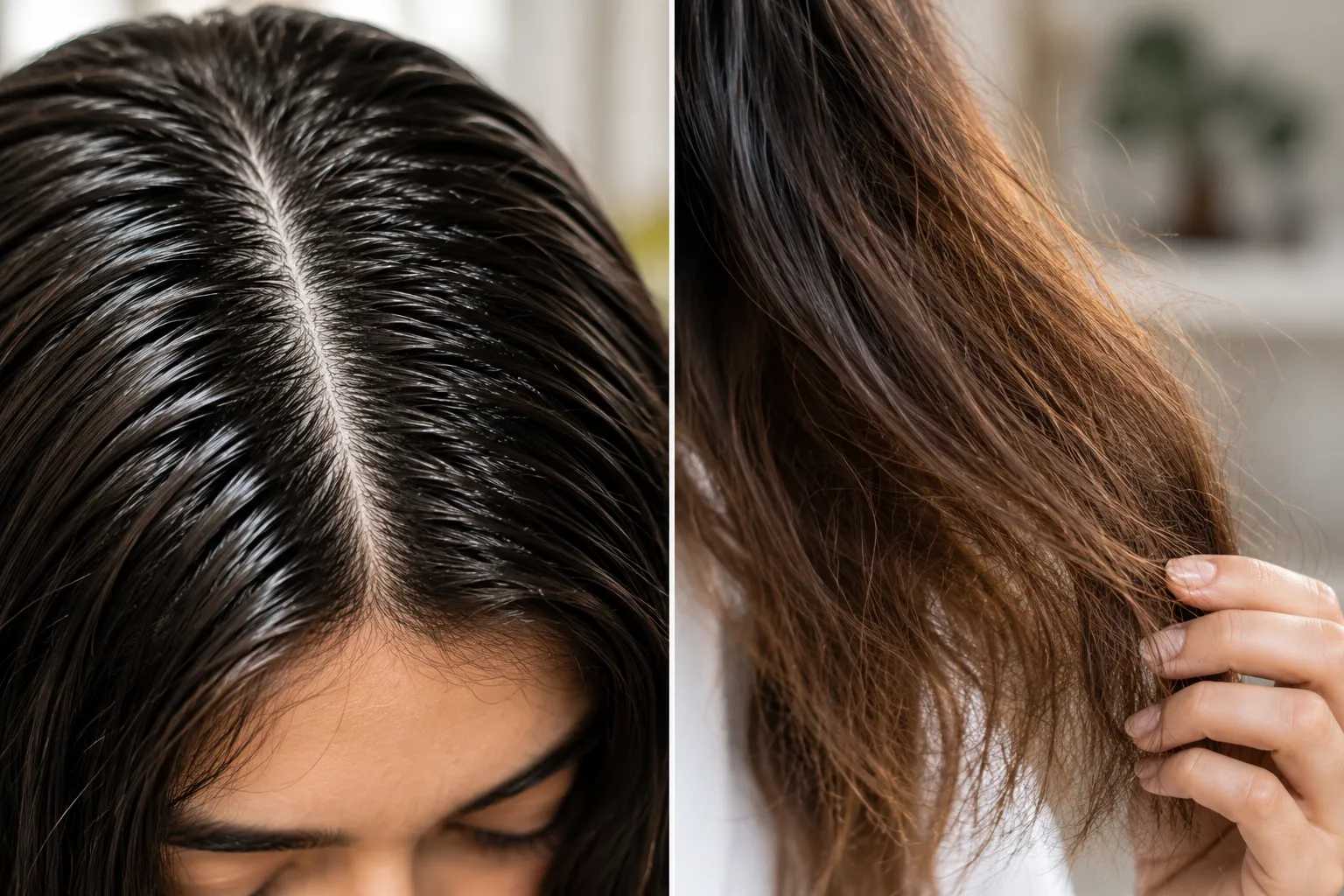
Before buying a new shampoo, assess the condition of your roots and lengths separately. The best time to evaluate your hair is usually several hours to one or two days after your normal wash, when you have not applied a large amount of oil, dry shampoo, or styling products. If your roots become shiny very quickly and strands begin sticking together near the scalp while the mid-lengths or ends remain rough, frizzy, and prone to tangling, you are more likely to have the classic oily-root and dry-end pattern.
| Area | Common Sign | Possible Explanation | First Step |
|---|---|---|---|
| Scalp | Quick oiliness and heaviness | Sebum, sweat, or product buildup | Adjust shampoo and washing frequency |
| Hair roots | Strands sticking together | Oil or product residue | Focus shampoo on the scalp |
| Mid-lengths | Slightly dry or normal | Moderate conditioning needs | Use conditioner suited to your hair type |
| Hair ends | Frizz, roughness, tangling, and breakage | Greater wear or damage to the hair shaft | Conditioning, reduced friction, and heat control |
| Flaky scalp | Itching, redness, or flakes | Possible dandruff or scalp condition | Identify the cause and choose suitable treatment |
| Split ends | Visible splitting of the hair fiber | Split ends and structural damage | Trim damaged ends and prevent further damage |
Another simple test is to observe how your hair reacts to conditioner. If the lengths become significantly softer and easier to manage after using an appropriate amount of conditioner, but applying the same product near the roots makes the hair lose volume or feel heavy more quickly, separating where you use each product is especially important. On the other hand, if your entire hair—from roots to ends—feels heavy and oily, the problem may be related more to excessive product use or insufficient cleansing than to the classic combination-hair pattern.
Oily Dandruff, Dry Flakes, or Product Buildup?
Not every flake you see on your shoulders is necessarily a sign of a dry scalp. Dandruff can also occur on an oily scalp, and seborrheic dermatitis commonly affects areas with a high concentration of sebaceous glands. If flakes are yellowish or oily, sticky, and accompanied by redness or itching, it is better not to describe the issue simply as “dry scalp.” For a more detailed comparison, you can also read Redika’s guide to choosing an anti-dandruff shampoo for an oily scalp.
On the other hand, product buildup can resemble oiliness or even flaking. Heavy use of sprays, waxes, oils, styling creams, and especially dry shampoo can change the appearance of the roots. Dry shampoo absorbs oil but does not replace washing with water and regular shampoo. Therefore, if you use dry shampoo for several days simply to improve the appearance of oily roots, your scalp will still need proper cleansing.
The Dual Routine for an Oily Scalp and Dry Ends
The Redika Dual Hair Routine is based on three principles: appropriate scalp cleansing, targeted conditioning of the hair lengths, and protecting the hair after washing. This framework is not designed to make you buy more products. In fact, it helps you use each product exactly where it provides the greatest benefit. Many people can create an effective routine with one suitable shampoo, one conditioner matched to the condition of their lengths, and, when necessary, one protective post-wash product.
| Hair Condition | Scalp Needs | Hair Length Needs | Redika Dual Routine Strategy |
|---|---|---|---|
| Very oily roots + normal lengths | Regular cleansing | Light conditioning | Shampoo the scalp + use a lightweight conditioner only on the ends |
| Oily roots + dry lengths | Balanced cleansing | Moderate conditioning | Shampoo the scalp + condition from the mid-lengths to the ends |
| Oily roots + colored or bleached hair | Adequate cleansing without rubbing the lengths | Greater protection and conditioning | Targeted scalp shampoo + richer conditioner + heat control |
| Oily roots + fine hair | Cleansing based on how quickly the scalp becomes oily | Lightweight products | Avoid heavy masks near the roots and use minimal leave-in product |
| Oily roots + curly or tightly curled hair | Cleansing suited to scalp needs and hair texture | More conditioning | Shampoo only the scalp + apply conditioner more extensively through the lengths |
| Oily roots + dandruff or inflammation | Manage the scalp condition | Protect the lengths from dryness | Use the appropriate anti-dandruff shampoo as directed + condition only the lengths |
Step One: Focus Shampoo on the Scalp
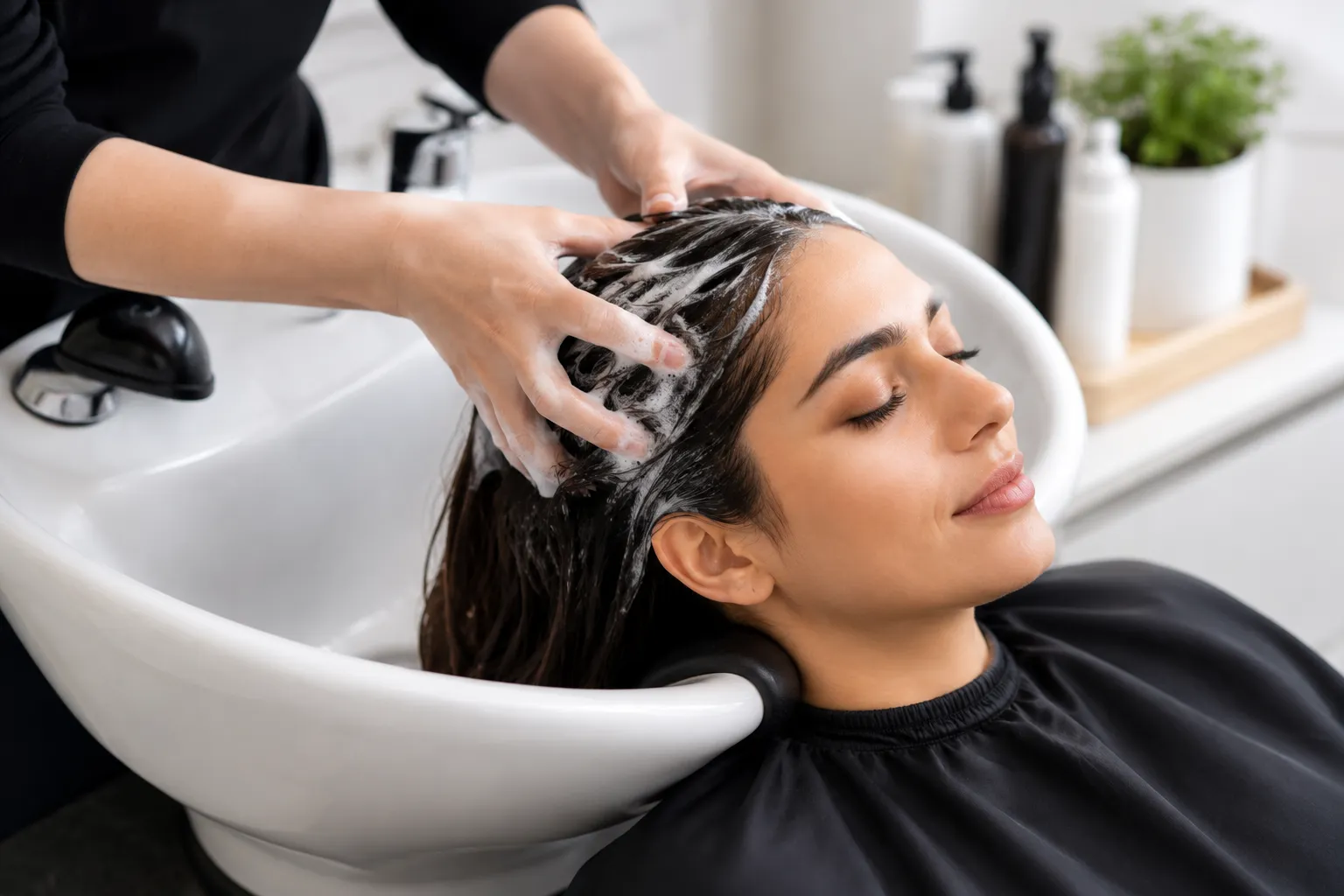
One of the most important changes for many people is to stop treating shampoo as a product designed to scrub the entire hair strand and instead see it primarily as a cleanser for the scalp. Thoroughly wet the hair first so the shampoo can spread more easily. Apply an appropriate amount to several areas of the scalp and massage gently with your fingertips. Scratching with your nails or aggressively rubbing the scalp is unnecessary and may increase irritation, especially if your skin is sensitive.
During most routine washes, you do not need to rub the ends of your hair between your hands. As you rinse, the shampoo lather passes over the lengths, and this contact is usually enough to remove everyday dirt from the hair shaft. If you have applied a large amount of oil, wax, or another heavy product directly to the lengths, the situation may be different. Under normal circumstances, however, aggressive washing of the lengths can contribute to greater dryness and friction.
Double shampooing is not a universal rule either. If one application cleans your scalp effectively, repeating it simply to create more foam is unnecessary. If a large amount of styling product or dry shampoo has accumulated on your scalp, a second cleanse may occasionally be useful. The right approach depends on the actual condition of your hair and the instructions for the product rather than the idea that everyone must shampoo twice.
Step Two: Choose Conditioner and Hair Masks for the Lengths

After rinsing your shampoo, it is time to target the needs of the hair lengths. Gently remove excess water without aggressively squeezing or twisting the hair, and apply conditioner to the areas that feel rough or become tangled most easily. For fine, straight hair, concentrating on the lower half and ends is often enough, while thick, dry, or curly hair may benefit from conditioner over a larger portion of the lengths.
Hair masks should also be selected according to how damaged or dry the lengths are. Having oily roots does not mean you have to avoid hair masks altogether; it simply means that placement matters. If a mask is designed for the hair lengths, applying it directly to the scalp in an attempt to achieve “extra hydration” is unnecessary and can quickly weigh down fine hair. Bleached, long, or very dry lengths, however, may benefit more from richer formulas.
An important point when choosing conditioner is that heavier does not always mean better. The goal is for your hair to feel smoother, less prone to friction, and easier to comb after rinsing without leaving a heavy coating behind. If the roots lose volume and your hair appears oily very quickly after conditioning, first adjust how much you use and where you apply it before deciding that you need a completely different product.
Step Three: Protect the Hair Lengths After Washing

A significant amount of damage to the hair shaft can occur outside the shower. Wet hair is more vulnerable, so aggressive towel rubbing, rough combing, and pulling on tangled strands can increase breakage. Instead of twisting and rubbing your hair with a towel, gently press out excess water and use tools suited to your hair type when detangling.
If the lengths still feel dry, frizzy, or prone to tangles after conditioning, a small amount of leave-in conditioner may help. It is usually best applied from the mid-lengths to the ends, and the amount should be adjusted according to hair thickness. Applying too much near the roots, especially on fine hair, can make the hair look oily and flat more quickly.
- Avoid aggressively rubbing your hair with a towel while drying it.
- Use your blow dryer at the lowest practical temperature that still gives you the desired result.
- Avoid using flat irons and other heat tools every day at their highest temperature.
- If you use heat, choose a heat-protectant product suited to your hair type.
- Start with a small amount of serum or oil on the ends; using more does not necessarily give better results.
- If the ends are genuinely split, products can only improve their appearance temporarily. The damaged section itself must be removed by trimming.
How Often Should You Wash Combination Hair?
There is no single number that works for everyone. Washing frequency should be based on how quickly your scalp becomes oily, your hair texture, sweating, physical activity, climate, and whether you have a scalp condition. Someone with straight hair and an oily scalp may need to wash daily or every other day, while people with very dry, curly, or thick hair may generally be able to leave more time between washes.
One study examining hair-washing frequency in an Asian population without a specific scalp disease reported the highest overall satisfaction with hair and scalp condition at around five to six washes per week. In the controlled part of the study, daily washing also produced better outcomes than weekly washing. This figure is not a universal recommendation for every hair type. The study involved a specific population, and factors such as curl pattern, sebum levels, hair damage, and scalp condition can all change the ideal washing schedule for an individual.
| Condition | Sign It May Be Time to Wash | Important Note |
|---|---|---|
| Straight hair + very oily scalp | Daily oiliness or heaviness | Frequent washing can be appropriate; avoid scrubbing the lengths directly. |
| Moderately oily scalp + dry lengths | Noticeable oiliness after several days | Set the interval based on the roots and condition the lengths after each wash. |
| Curly or tightly curled hair | The actual needs of the scalp | Do not copy a straight-hair washing routine; the lengths often need more conditioning. |
| Dandruff-prone scalp | According to the anti-dandruff shampoo schedule | Directions for the active ingredient and medical advice take priority over a general routine. |
If your roots genuinely feel oily, heavy, or have an unpleasant odor by the second day, forcing yourself to wait four or five days simply because of social media advice is not necessary. On the other hand, if your scalp still feels comfortable and clean on the third day, you do not need to wash simply to meet a particular number. The right routine is one that keeps the scalp clean without allowing incorrect washing techniques to progressively damage the lengths.
How to Choose Products for Oily Roots and Dry Ends
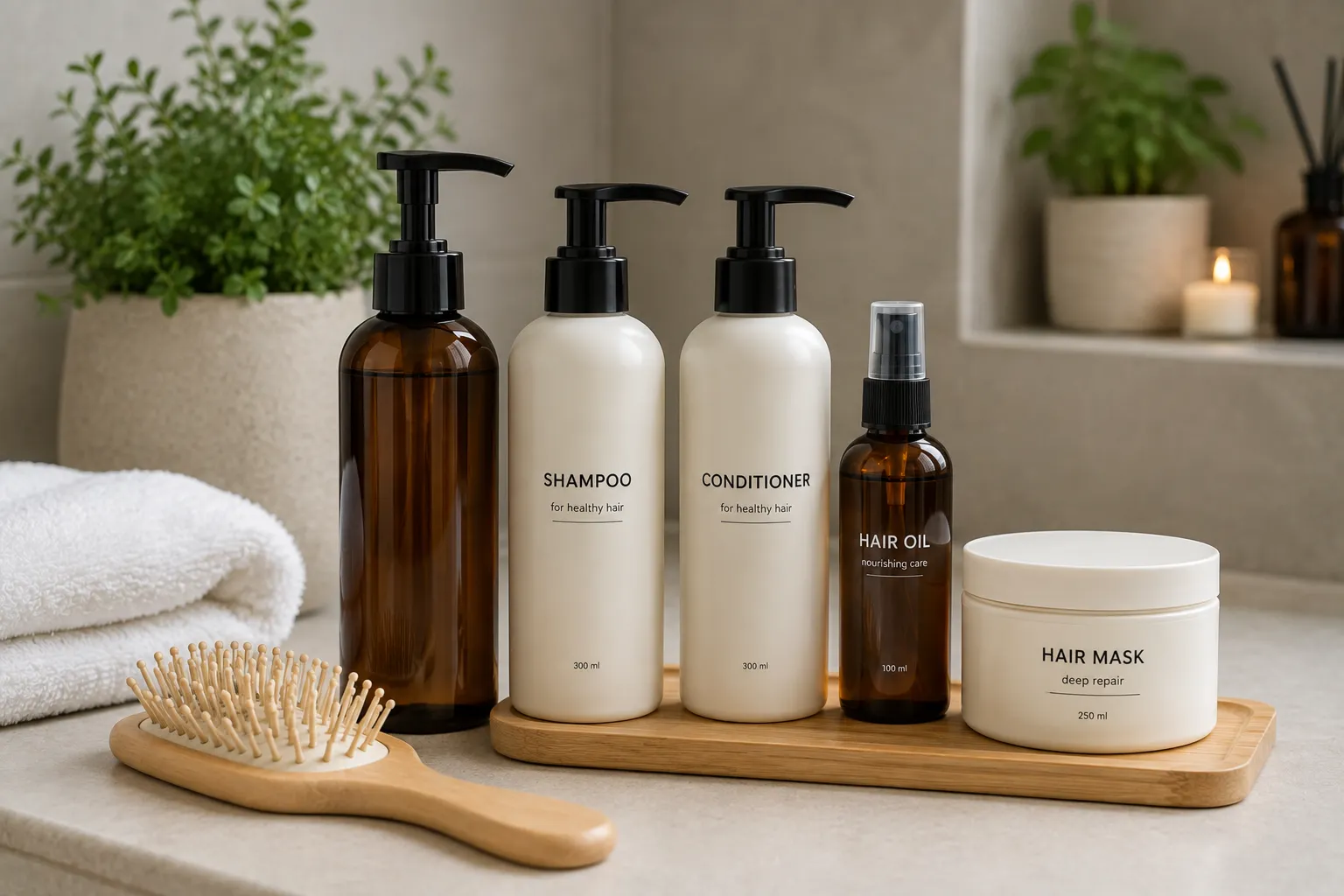
The easiest way to shop for this hair pattern is to stop looking for one magical bottle labeled “for oily and dry hair.” You actually have two different needs: one product should primarily cleanse the scalp, while another should help manage friction, roughness, and dryness through the hair lengths. Separating these needs makes product selection easier and helps you identify exactly which part of your routine needs changing if something is not working.
| Product | Main Purpose | Where to Use It | How to Choose |
|---|---|---|---|
| Shampoo | Remove excess sebum and buildup | Scalp | Choose according to scalp oiliness and sensitivity |
| Anti-dandruff shampoo | Manage dandruff and scalp problems | Scalp | Choose according to the active ingredient and type of concern |
| Conditioner | Reduce roughness and tangling | Mid-lengths to ends | Lightweight for fine hair, richer for dry hair |
| Hair mask | Provide deeper conditioning | Lengths and ends | Choose according to damage level and hair thickness |
| Leave-in conditioner | Reduce frizz and friction | Mid-lengths to ends | Use a small amount suited to your hair texture |
| Serum or heat protectant | Reduce damage during styling | Hair lengths | Choose according to your styling tools and hair type |
| Dry shampoo | Temporarily absorb oil | Oily roots | Use between washes, not as a replacement for shampoo and water |
What Shampoo Should You Choose for an Oily Scalp?
If oiliness is the main problem and your scalp does not have significant itching, inflammation, or flaking, prioritize a shampoo that removes excess oil and buildup effectively enough while remaining comfortable for your required washing frequency. Severe tightness after washing is not a reliable sign of “better cleansing.” A good shampoo should clean the scalp without repeatedly causing burning, irritation, or discomfort.
If you frequently use oils, styling products, or dry shampoo, you may occasionally benefit from deeper cleansing, but this does not mean you should use the strongest possible shampoo every day. Labels such as “sulfate-free,” “natural,” “oil-balancing,” or “hydrating” also do not automatically mean a shampoo is better for your scalp. The overall formula, cleansing ability, scalp tolerance, and actual results on your hair matter more than a single marketing claim on the label.
If oiliness occurs together with dandruff, your product choice should be based on the underlying scalp concern. Anti-dandruff shampoos may contain active ingredients such as ketoconazole, selenium sulfide, salicylic acid, or other compounds, and each may have different instructions and recommended frequencies of use. In this situation, follow the directions for the specific product and keep medicated shampoo focused on the scalp so the dry lengths are not unnecessarily exposed to it.
What Should You Look for in a Conditioner or Mask for Dry Ends?
When choosing conditioner or a hair mask, consider the thickness of your strands, degree of dryness, whether your hair is straight or curly, previous coloring or bleaching, and how often you use heat. Fine, straight hair usually responds better to lighter formulas because large amounts of rich product can make it look flat. Thick, curly, bleached, or very dry hair usually has a greater need and tolerance for richer products.
A suitable conditioner should allow a comb or your fingers to move through the hair with less friction after use while leaving the hair soft without making it excessively heavy. If the lengths still feel rough, check the amount you use, how long you leave the conditioner on, where you apply it, and how you dry your hair before buying several new products. Sometimes correcting these details provides a greater improvement than simply adding another mask.
Oil treatments should also be considered differently for the scalp and the lengths. A small amount of oil on dry ends may improve softness for some hair types, but having an oily scalp is not a reason to apply more oil directly to the scalp. If you also have itching or dandruff, it is better to identify the cause before routinely applying large amounts of oil to the scalp.
Mistakes That Can Make Roots Oilier and Ends Drier

Many people with this hair pattern unintentionally become trapped in a cycle: the roots get oily, so they apply more shampoo to the entire hair length; the ends then become drier, so they use more masks and oils; the products reach closer to the roots, and the roots begin to feel heavy again even faster. Breaking this cycle usually starts with changing where you apply each product.
- Applying shampoo directly to all of the hair lengths: During a normal wash, the main focus should usually be the scalp.
- Applying heavy masks or oils to the roots: On an oily scalp, this can make the hair feel heavy more quickly.
- Relying on dry shampoo for several days: It absorbs oil but does not replace proper cleansing.
- Forcing yourself to wash too infrequently: If the scalp is genuinely oily and dirty, there is no need to keep it unwashed simply to reach a certain number of days.
- Overly aggressive washing: More cleansing does not mean more friction.
- Using extremely hot water: It is not required for effective cleansing and may worsen scalp discomfort or dryness through the lengths.
- Frequent high-heat styling: Very hot blow dryers and flat irons can increase damage to the hair shaft.
- Changing several products at the same time: If you replace four products together, it becomes difficult to identify which one helped or caused a problem.
- Assuming every flake means dryness: Dandruff and seborrheic dermatitis can occur on an oily scalp.
- Choosing shampoo solely because it says “sulfate-free”: Suitability should be judged by the whole formula and how your scalp responds.
How Should the Routine Change for Colored, Curly, Fine, or Long Hair?
The basic idea behind the dual routine remains the same for everyone, but the intensity of each step should be adjusted according to hair texture and history. Someone with very fine, straight hair and another person with curly, bleached hair may both have oily roots, but they cannot necessarily use the same amount or type of conditioner, hair mask, or washing interval.
| Hair Type | Main Challenge | Recommended Routine Adjustment |
|---|---|---|
| Fine and straight | Becoming heavy and flat quickly | Use lightweight conditioner only on the lower lengths and a very small amount of leave-in product |
| Long hair | Greater wear on the ends | Condition regularly, detangle gently, and protect the ends more carefully |
| Colored or bleached | Greater damage through the lengths | Focus shampoo on the scalp, increase conditioning, and reduce heat exposure |
| Curly or tightly curled | Drier lengths and less sebum movement down the hair shaft | Adjust washing frequency to hair texture and apply conditioner more extensively through the lengths |
| Heat-damaged | Roughness, breakage, and dullness | Reduce heat temperature and frequency + use heat protectant + targeted conditioning |
With fine, straight hair, even a small amount of oil or heavy product can quickly reduce volume at the roots. In this case, conditioners and post-wash products should generally be lightweight and used sparingly. With long hair, the ends are older and require greater attention to tangling, friction, and dryness.
Colored and bleached hair is usually more vulnerable through the lengths, so increasing shampoo strength to control oily roots should not come at the cost of aggressively cleansing the rest of the hair. Curly and tightly curled hair also should not follow the same routine as straight hair. These textures often require more conditioning and a different washing schedule, so the routine should be personalized according to both scalp needs and the condition of the hair lengths.
When Is This Routine Not Enough, and When Should You See a Dermatologist?
An oily scalp by itself is often primarily a hair-care concern, but some signs suggest that simply switching shampoos may not be enough. Dandruff and seborrheic dermatitis can be chronic and recurrent and may require targeted treatment when symptoms become more severe. A sudden change in scalp condition or unusual hair loss may also have causes that cannot be identified from the appearance of the hair alone.
Signs that deserve closer attention:
- Severe or persistent itching that does not improve after changing your routine;
- Obvious and persistent scalp redness or inflammation;
- Thick, sticky, or widespread flakes;
- Sores, bleeding, discharge, or scalp pain;
- Sudden hair loss or shedding beyond your usual pattern;
- Clearly defined areas of thinning or severe hair breakage;
- Symptoms that worsen despite using anti-dandruff shampoo correctly;
- A sudden and unexplained change in scalp oiliness.
If you use an anti-dandruff shampoo, the instructions on the packaging are important. Some medicated shampoos need to remain on the scalp for several minutes, and their recommended frequency may differ from ordinary shampoo. For persistent cases, the appropriate treatment should be determined by a doctor, and it is better to avoid prolonged trial and error with several strong medicated products at the same time.
Conclusion
If you remember only one thing from this guide, let it be this: the scalp and the hair lengths do not have the same needs. An oily scalp should be cleansed when necessary, while dry lengths should be protected from aggressive washing, excessive friction, and unnecessary heat. You do not have to choose between controlling oiliness and keeping your hair soft; using products in the right areas allows you to work toward both goals at the same time.
The simple Redika Dual Hair Routine consists of three steps: shampoo on the scalp, conditioner and masks on the lengths, and targeted protection after washing. Washing frequency should also be based on how quickly your roots actually become oily rather than a fixed number recommended for everyone. If the roots still feel heavy too quickly, review the cleansing part of your routine and your washing frequency. If the scalp feels fine but the ends remain dry, focus on conditioning, heat exposure, and friction.
Finally, do not dismiss oiliness combined with itching, inflammation, severe flaking, or unusual hair loss as simply your “hair type.” In these situations, conditions such as dandruff or seborrheic dermatitis may be involved, and getting the right diagnosis is more important than buying several new products.
Frequently Asked Questions About Oily Scalp and Dry Ends
1. What shampoo is best for oily roots and dry ends?
Choose a shampoo that cleans your scalp effectively at the frequency you need without causing obvious irritation. The product does not necessarily need to say “for oily roots and dry ends.” What matters more is applying shampoo mainly to the scalp and using a separate conditioner for the dry lengths. If oiliness is accompanied by dandruff, shampoo selection should take the scalp condition and active ingredient into account.
2. Can you apply a hair mask to oily roots?
If the mask is designed for the hair lengths, it is usually better to apply it from the mid-lengths to the ends and avoid the oily scalp. Rich masks can make fine hair feel heavy at the roots more quickly. Apply products directly to the scalp only when the manufacturer specifically states that they are designed for scalp use.
3. Does washing your hair every day make the scalp oilier?
There is no universal scientific rule showing that daily washing necessarily causes the scalp to produce more oil. People with straight hair and a very oily scalp may need to wash daily or every other day. The important factors are choosing a suitable shampoo and avoiding aggressive direct washing of dry hair lengths.
4. Is dry shampoo suitable for oily roots?
Dry shampoo can temporarily absorb some visible oil between washes, but it does not clean the hair and scalp in the same way as shampoo and water. Excessive use may contribute to product buildup, dryness, or scalp irritation. Treat it as a temporary way to manage the appearance of oily roots rather than as a replacement for proper washing.
5. Is sulfate-free shampoo always better for oily roots and dry ends?
No. The term “sulfate-free” alone does not tell you whether a shampoo is better suited to your scalp. Cleansing strength, the complete formula, washing frequency, scalp sensitivity, and your actual results matter more. Some people do very well with sulfate-free shampoos, while others may require greater cleansing power to manage scalp oiliness.
6. Is oiling good for this hair type?
If you mean applying a small amount of oil to dry lengths and ends, some hair types may benefit from it. However, an oily scalp does not automatically need more oil. If you have dandruff, itching, or inflammation, it is better to determine the cause before routinely applying large amounts of oil directly to the scalp.
7. How can you tell whether oily roots are caused by dandruff or product buildup?
Product buildup often occurs after frequent use of dry shampoo, sprays, waxes, oils, or other styling products and may improve after appropriate cleansing. Dandruff may involve persistent itching and flaking, while seborrheic dermatitis can cause redness and oilier or stickier scales. If symptoms are severe, persistent, or repeatedly return, a dermatologist’s assessment is more reliable than trying to diagnose the problem based on the appearance of flakes alone.
How This Content Was Prepared and Reviewed
This guide was prepared using dermatologists’ recommendations, guidance from the American Academy of Dermatology, and scientific studies indexed in PubMed. The content was reviewed and updated in August 2026. This article is intended for educational and hair-care purposes and is not a substitute for individual medical diagnosis or treatment.
Selected Sources:
- American Academy of Dermatology: Healthy Hair Care Tips
- American Academy of Dermatology: How to Manage Dandruff
- American Academy of Dermatology: How to Use Dry Shampoo Correctly
- PubMed: Study on Hair-Washing Frequency and Hair and Scalp Condition
- PubMed: Scientific Review and Expert Consensus on Scalp Seborrheic Dermatitis
About the author

Join the conversation
Share your experience or question with REDIKA readers.
Your email stays private. Please avoid sharing personal or sensitive details.


