Home / Editorial guide


Shopping for makeup and skincare online makes it easier to compare ingredients, product ranges and prices without travelling to multiple stores. But identifying trustworthy sellers, choosing foundation shades from photographs, assessing storage conditions and returning opened cosmetics can be difficult. Online shopping is not automatically cheaper, and physical stores are not automatically safer. The best decision comes from reviewing the product, seller, final cost, delivery and local consumer protections together.
What are the benefits of buying cosmetics online?
A well-maintained beauty website lets you compare exact product names, sizes, finishes, skin types and ingredient lists from several brands. You can also research before making a purchase rather than relying on a hurried recommendation at a counter. This works only if the retailer offers accurate, current information.
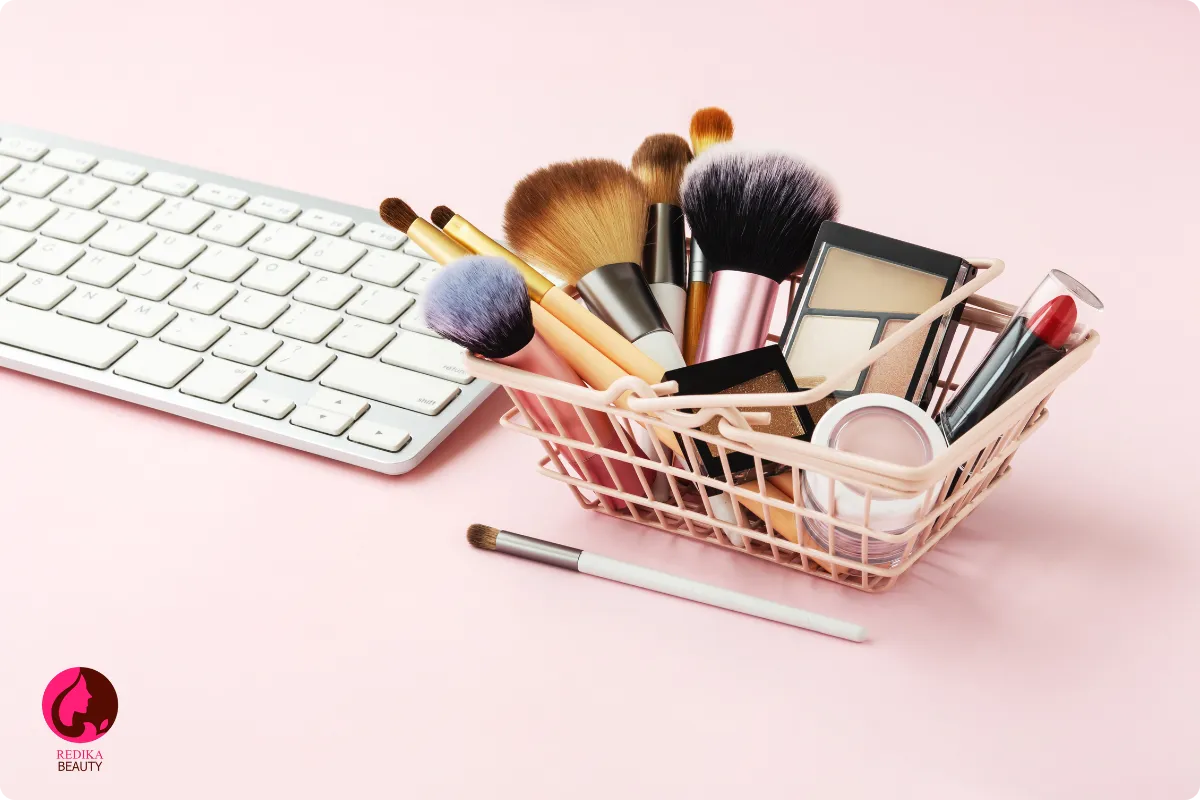
The US Federal Trade Commission (FTC) advises checking independent reviews across sources and reading feedback critically. Star ratings alone can be misleading, and paid or fabricated reviews can influence a listing.
Convenient ordering and time to research
Ordering from home or on a mobile device can reduce travel and offer more time to compare products. Order tracking and written confirmation are useful for routine reorders when you already know a formula and shade.

A special occasion or urgent replacement may favor an in-store purchase. Actual dispatch availability, transport distance and shipping options matter more than a general ‘fast delivery’ claim.
Ingredient lists, claims and your skin type
Before buying, look for the precise product name, size, ingredient list or INCI, shade number, usage instructions, warnings and the version offered in your country. Claims such as ‘for all skin types’, ‘natural’ or ‘hypoallergenic’ do not by themselves guarantee tolerance. The FDA explains that ‘natural’ does not automatically mean safer.
For skincare, start by identifying what the skin needs rather than choosing the most promoted active. Redika’s beginner skincare routine explains basic steps, while the Neutrogena guide shows why different formulas under one brand must be assessed separately.
Are online cosmetics really cheaper?
Online retailers also pay for fulfillment, website operations, advertising, payment services and support. There is no rule that online makeup is cheaper than an equivalent item sold in a nearby store. Compare product size, unit price, delivery charges, taxes where applicable, discounts and any return cost.

An unusually cheap branded item deserves closer scrutiny, but a high price cannot prove authenticity either. A voucher that saves money on the item may be cancelled out by shipping.
A wider selection—and regional formula differences
Online shops can expose you to shades and product lines unavailable locally. Yet the same brand may use different formulations, labeling and even packaging for different markets. A shade photograph can also look different under different lighting or screen settings.
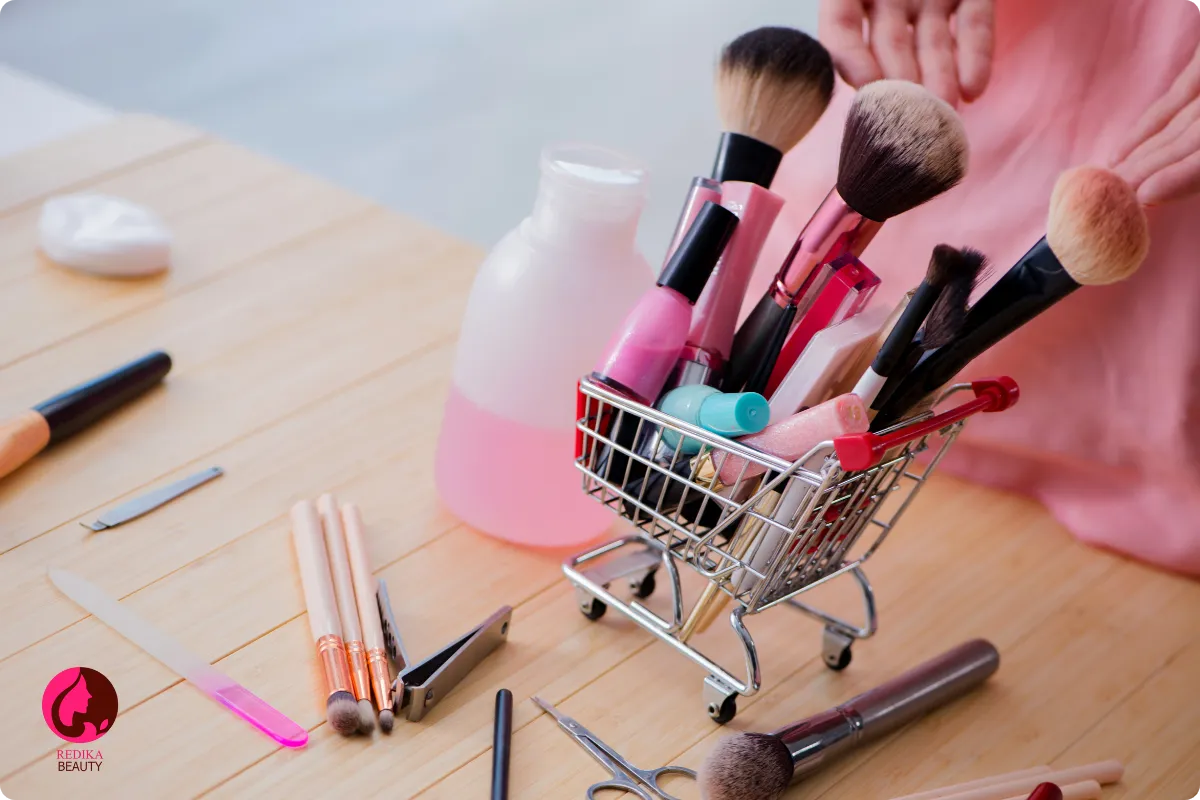
Verify the complete product name, batch or model details and official regional formulation where possible. Imported cosmetics are not inherently genuine just because a retailer describes them as imported.
Counterfeits, misleading sellers and unreliable listings
One of the main risks is paying a seller whose identity, contact details, return address or customer support cannot be verified. Look for traceable business information, consistent product photos, purchase documentation and a clear route to resolve complaints. A social-media follower count or trust-looking graphic is not proof.

The FTC warns against requests to pay outside a marketplace’s approved checkout process or by methods offering little recourse. Use a payment service with dispute resolution where available, and check which party is responsible if an order goes wrong.
Late deliveries and products damaged by heat
Makeup and skincare can be harmed by poor storage, leaks, broken containers or prolonged exposure to heat. The FDA notes that sunlight, moisture and high temperatures can affect product stability and preservatives. A genuine cosmetic can still deteriorate if handled improperly.

Before ordering, review the estimated arrival, shipping method, tracking and policy for goods damaged in transit. On delivery, check the seal, container and leakage before applying the product.
Why foundation and lipstick shades are harder to buy online
Studio lighting, editing, screen calibration and skin undertones can change how a foundation or lipstick looks. Multiple swatches on different skin tones, shade codes and undertone descriptions are more useful than one promotional image—but they cannot completely replicate an in-person match.
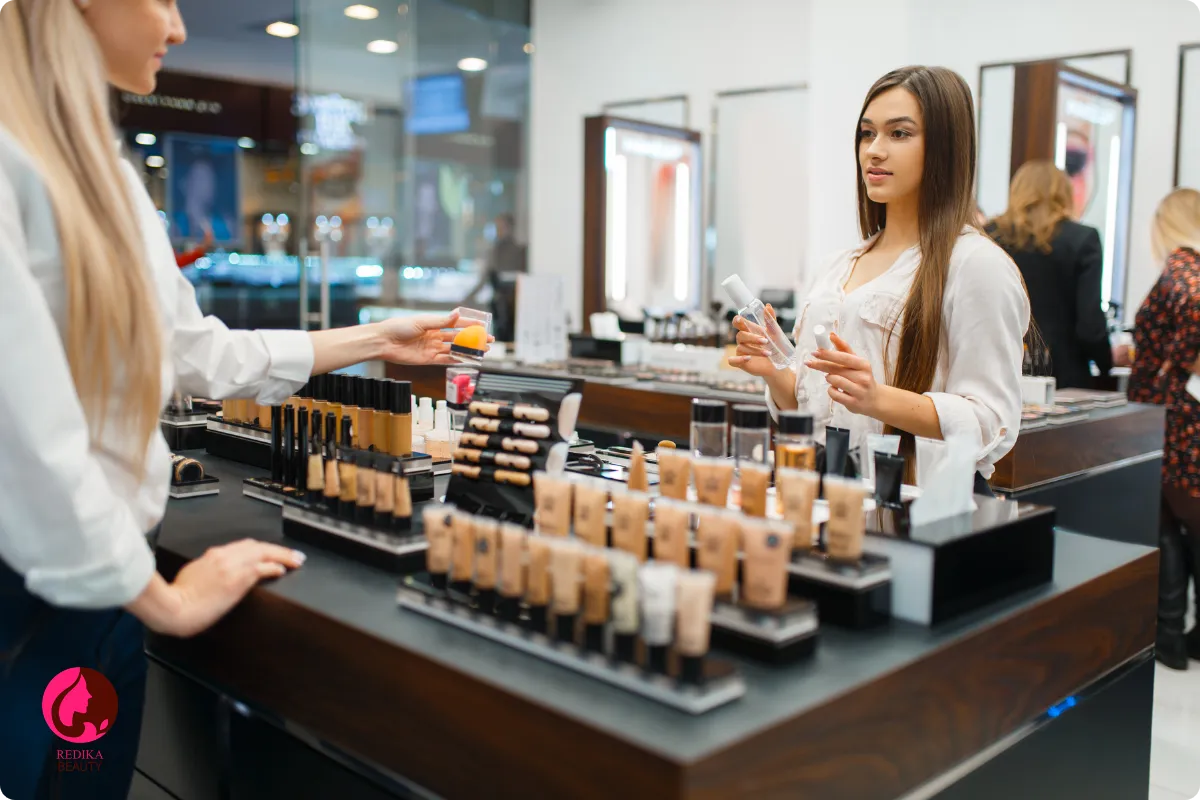
If it is your first expensive foundation, a hygienic in-store swatch or a trial-size product may reduce risk. The FDA cautions that shared cosmetics testers can harbor microbes; choose a fresh, single-use applicator when testing.
Expiration dates, PAO symbols and batch codes
Review any printed expiry date, the period-after-opening symbol such as 6M or 12M where applicable, batch code and seal integrity. Label requirements differ by market: in the United States, not every cosmetic needs a printed expiry date, while certain products such as sunscreens are regulated differently. A batch code alone is not a definitive authenticity test.

The FDA says products used around the eyes often have a shorter shelf life. Manufacturers may recommend discarding mascara after about two to four months; never revive dry mascara with water or saliva.
Can opened makeup be returned?
Refund and cancellation rights depend on where the transaction occurs, the kind of product, seller terms and whether the packaging has been opened. Across much of the European Union, distance purchases carry a 14-day withdrawal right, but sealed goods unsuitable for return for hygiene reasons may be exempt once unsealed.
Do not apply EU rules to other countries automatically. Before paying, read how a seller handles incorrect, damaged, defective or unwanted cosmetics, who pays return shipping and how quickly you must contact support.
Safe payment, privacy and keeping order records
Use the retailer’s verified checkout and a payment method with suitable buyer protections. HTTPS encrypts a connection; it does not prove that the business behind the website is trustworthy. Avoid sending payment credentials, security codes or sensitive details through unsolicited messages.
Keep the order confirmation, invoice, item description, return terms, tracking number and messages. On marketplaces, check whether buyer protection is supplied by the platform or only by the individual seller.
Online or in-store: which choice makes sense?
Online ordering can work well for a familiar moisturizer, a known lipstick shade or detailed ingredient comparison. Visiting a reputable physical retailer may be better for your first foundation match, a texture check or an urgent purchase. Some buyers compare in person first and then purchase from an authorized online seller.
At Redika, the useful question is not ‘which channel wins?’ but whether you can identify the exact product, verify the seller, understand the full cost and obtain help if something goes wrong.
Online versus in-store beauty shopping
| Factor | Online | In store |
|---|---|---|
| Ingredients and details | Compare several written listings | Inspect the physical packaging |
| Shade matching | Rely on swatches, images and shade codes | See colors under suitable light with hygienic testers |
| Total cost | Item plus shipping and possible fees | Item plus travel and local costs |
| Delivery | Depends on stock and courier | Usually available at purchase |
| Authenticity | Verify seller then inspect delivery | Verify seller and packaging on site |
| Returns | Local law, seller terms and product seal | Local law, seller terms and product seal |
Frequently asked questions about buying cosmetics online
Is buying cosmetics online always cheaper?
No. Compare the total including delivery and fees, not only the displayed item price.
How can I check an online beauty retailer?
Verify its identity, contacts, independent reviews, product details, payment protections and return procedures.
Can I return makeup after opening it?
That depends on local consumer law, item category, hygiene seals and seller terms; some unsealed goods are exempt.
Does HTTPS guarantee an online cosmetics store is legitimate?
No. HTTPS helps encrypt data in transit but is not a guarantee of a genuine merchant.
Do a batch code and expiration date prove a cosmetic is genuine?
No. They are useful checks but should be combined with seller traceability and consistent labeling.
Consumer protection and safety references
About the author

Join the conversation
Share your experience or question with REDIKA readers.
Your email stays private. Please avoid sharing personal or sensitive details.


