Home / Editorial guide


If after several months of sun exposure, heat, sweating, swimming, traveling, or continuous use of air conditioning, you feel that your skin has become drier, duller, or more uneven compared to the beginning of summer, it may be time to reset your skincare routine.
Post-summer skincare does not mean purchasing multiple new serums or starting exfoliants, retinoids, and brightening products all at once. In many cases, your skin needs a few days of a simple routine, sufficient hydration, and consistent protection from light more than anything else.
If your skin barrier is still irritated, adding several active ingredients may increase burning, dryness, sensitivity, and even post-inflammatory pigmentation instead of helping your skin recover faster.
In this guide, we will first identify your skin’s current condition, then create a 14-day skin recovery routine, and finally explain when and how you can gradually reintroduce anti-dark spot and anti-dullness ingredients.
If you want to review summer skincare basics first, the guide
Summer Skin Care Secrets
is a suitable starting point.
This article covers the next step of that journey: the period when summer ends and your skincare routine should be adjusted according to your skin’s actual needs, not simply based on the change of season.
Article Summary:
- If your skin feels irritated, flaky, or tight after cleansing, focus first on restoring hydration and reducing irritation.
- Do not stop using sunscreen after summer; sun protection remains a fundamental part of preventing dark spots and uneven skin tone.
- During the first week, keep your routine limited to a gentle cleanser, moisturizer, and sunscreen unless you are following a treatment plan prescribed by a dermatologist.
- From the second week, if your skin feels calm and balanced, introduce only one new active ingredient based on your main skin concern.
- New, changing, multicolored, bleeding, or unusual spots should not be treated with random serums or exfoliating products without professional evaluation.
Quick Answer: What Should You Do to Recover Your Skin After Summer?
After summer, if your skin has developed dark spots, dryness, or dullness, simplify your routine for the first few days. Use a gentle cleanser, a suitable moisturizer, and a broad-spectrum sunscreen with SPF (Sun Protection Factor) 30 or higher.
Once burning, noticeable redness, and flaking decrease, you can gradually introduce one active ingredient such as niacinamide, vitamin C, azelaic acid, or a suitable retinoid based on your skin’s needs.
Avoid starting multiple new active ingredients at the same time because if irritation occurs, it becomes difficult to identify which product caused the reaction.
- If dryness and burning are your main concerns: prioritize hydration and calming the skin.
- If your skin feels comfortable but you have dark spots: focus on sunscreen and one targeted brightening ingredient.
- If your skin looks dull and rough: correct dehydration and dryness first; exfoliation is not always the first step.
- If your spots look unusual or keep changing: professional skin evaluation is more important than home treatments.
The key point is that this routine is not a “14-day treatment to erase dark spots.” The goal of the first two weeks is to create a stable, low-irritation routine so that targeted treatments can be introduced with lower risk.
Visible improvement in many types of pigmentation may take much longer than two weeks and depends on the type of spot, depth of pigmentation, skin tone, sun exposure level, and chosen treatment approach.
Why Does Skin Become Darker, Drier, or Duller After Summer?
The end of summer is not the result of a single sunny day; it is the outcome of repeated exposure to sunlight, heat, sweating, swimming pools or seawater, increased cleansing, traveling, and dry air from cooling systems.
UV (Ultraviolet) radiation can stimulate pigment production and contribute to the development or worsening of some dark spots, while harsh cleansing and environmental dryness can disrupt the skin’s surface balance.
That is why two people may experience the same “tired-looking skin” after summer, while one mainly struggles with pigmentation and the other with dryness and a weakened skin barrier.
Before choosing skincare products, it is important to identify which concern should receive the highest priority.
Where Do Sun-Related Dark Spots Come From?
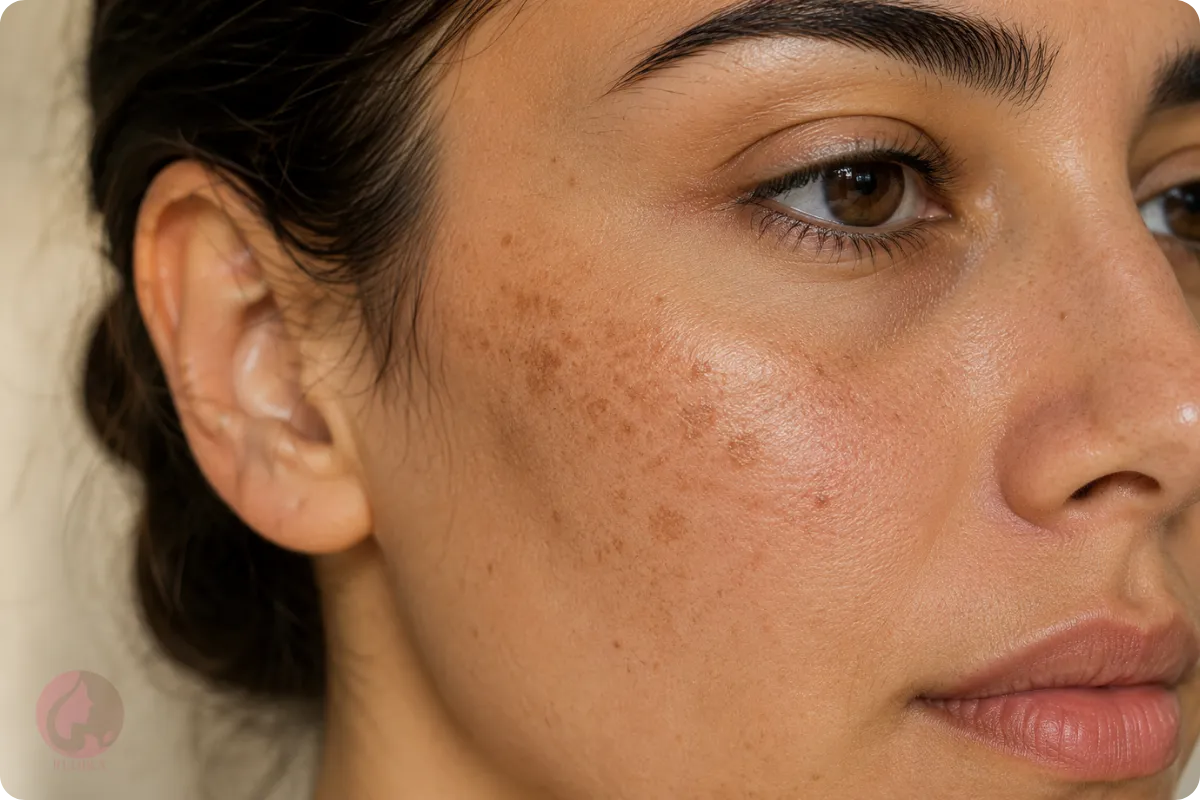
Not every brown spot that appears after summer is necessarily a “sun spot.”
Post-acne pigmentation, melasma, sun-related lentigines, and other pigment-related conditions can look similar but may require different approaches.
Using unsuitable products can also make pigmentation more complicated in some people, especially those who are prone to post-inflammatory hyperpigmentation.
For this reason, the first step in dark spot management should be preventing further irritation and reducing new damage rather than immediately using the strongest exfoliating products available.
Three principles are especially important when managing common post-summer pigmentation:
- Consistent protection from light: The need for sunscreen does not disappear when the hot season ends.
- Addressing the underlying cause: If pigmentation appears after acne or inflammation, controlling irritation is just as important as improving skin tone.
- Gradual treatment: Active ingredients should be introduced according to your skin’s tolerance without causing unnecessary irritation.
The American Academy of Dermatology emphasizes sun protection as one of the essential foundations for managing dark spots and hyperpigmentation. For some people, especially those dealing with melasma or pigmentation affected by visible light, tinted sunscreens containing iron oxides may also be considered.
This does not mean one type of sunscreen is ideal for everyone. The best choice depends on your skin type, lifestyle, tolerance, and the product’s formulation.
How Are Dryness and Skin Barrier Damage Related to Summer?
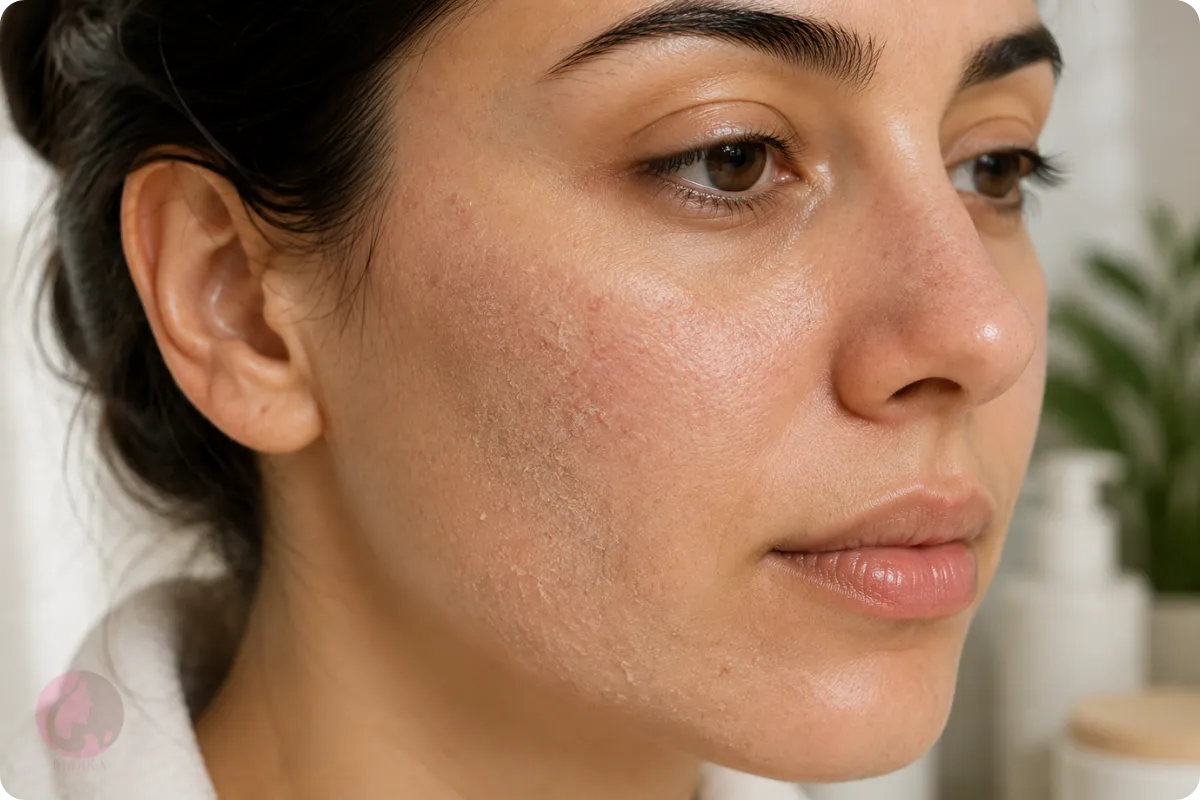
The skin barrier can be considered the protective layer that helps maintain water inside the skin while limiting the penetration of irritating substances.
Sun exposure, frequent cleansing, hot water, harsh cleansers, swimming pool chlorine, and dry indoor air may contribute to dryness and sensitivity in some people.
When this happens, the skin may feel tight after washing, products that were previously comfortable may start to sting, or small flakes may appear around the nose, mouth, or cheeks.
In these situations, immediately adding multiple active ingredients is usually not the best approach.
Signs That Your Skin May Need a Basic Recovery Routine First:
- Noticeable tightness after cleansing
- New flaking or rough texture
- Burning sensations from products you previously tolerated
- Persistent redness or itching
- Increased sensitivity after using multiple active ingredients
These signs do not automatically confirm a damaged skin barrier. Similar symptoms can also appear with conditions such as eczema, rosacea, or contact dermatitis.
If dryness is your main concern, the guide
Best Skincare Routine for Dry Skin
can help you understand how to build a simpler and more comfortable daily routine.
Why Does Skin Look Dull and Tired After Summer?
Dullness is not a specific medical condition; it is usually a description of how the skin looks.
Skin may appear dull because it has become rougher, lacks sufficient hydration, or has uneven pigmentation that prevents light from reflecting evenly.
This is why an exfoliating product is not always the answer for every type of dullness.
If dehydration is the main problem, improving moisturizer and cleanser choices may be more effective than immediately starting acids.
If uneven pigmentation is the dominant concern, sunscreen and a targeted active ingredient may have a role in a long-term routine.
For irritated skin, controlling the source of inflammation should come first.
- Dullness with tightness: Hydration is likely the first priority.
- Dullness with flat dark spots and no irritation: After stabilizing your routine, a pigmentation-focused ingredient may be considered.
- Dullness with peeling and burning: Avoid aggressive exfoliation until the skin becomes calmer.
- Dullness with active acne: Managing inflammation and preventing new post-acne marks are important.
Vitamin C is another commonly discussed ingredient for improving skin brightness and uneven tone. However, expectations should remain realistic.
A systematic review including seven studies and 139 participants reported potential improvements in pigmentation and some signs of photoaging, but researchers also noted that visible results may require longer use and that there is no single concentration or formula that works equally well for everyone.
Therefore, “instant glow” should not be the main criterion when choosing a skincare product.
Assess Your Skin Condition Before Starting a Recovery Routine
One of the best ways to avoid unnecessary purchases and product overload is to identify your main skin concern first.
For example, oily skin can still be dehydrated and sensitive, while dry skin may also experience pigmentation or breakouts.
This means skin type alone is not enough for making skincare decisions; your current skin condition matters as well.
The table below helps you determine your priority before starting the 14-day reset plan.
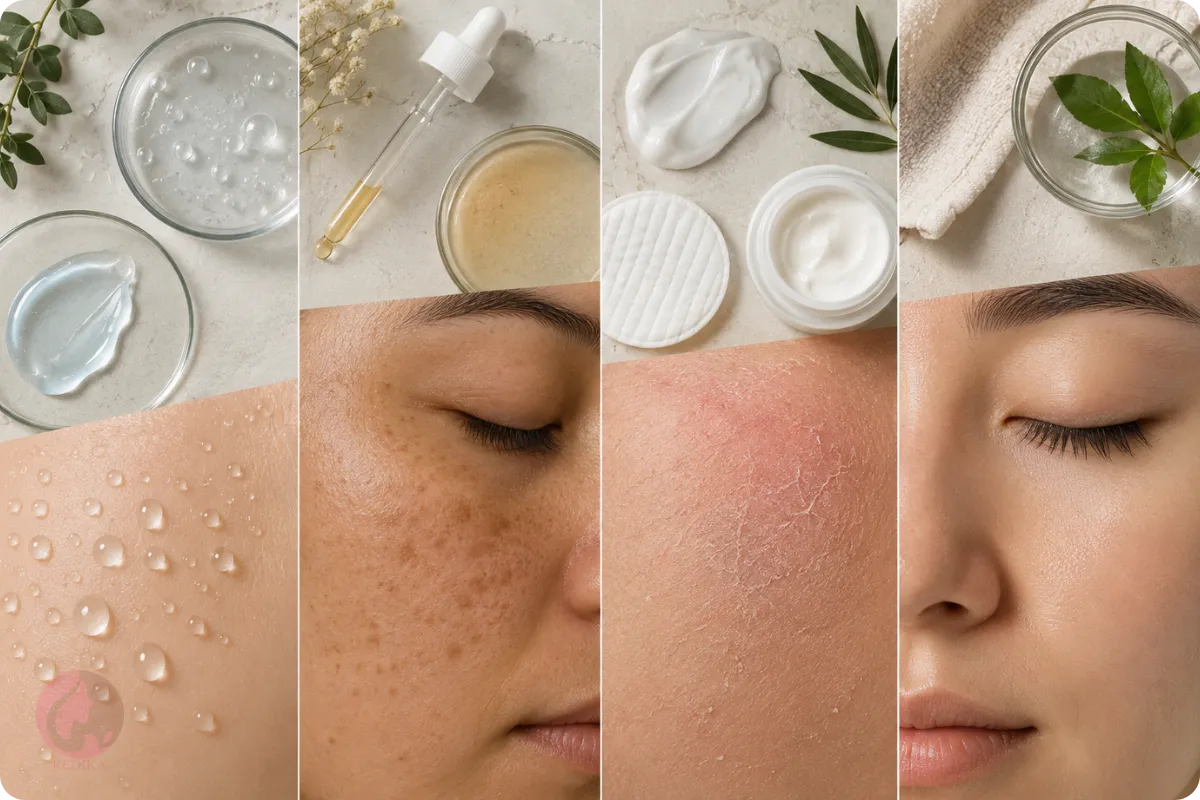
Post-Summer Skin Decision Matrix
| Current Skin Condition | Main Priority | Morning Routine | Night Routine | Avoid For Now |
|---|---|---|---|---|
| Dry, tight, or flaky skin | Reduce dryness and irritation | Moisturizer + sunscreen | Gentle cleansing + moisturizer | Scrubs, new acids, new retinoids |
| Oily but dehydrated and sensitive skin | Light hydration + less harsh cleansing | Light moisturizer + sunscreen | Gentle cleanser + lightweight moisturizer | Frequent washing and drying products |
| Pigmented but calm skin | Sun protection + one targeted ingredient | Basic routine + sunscreen | One suitable active ingredient | Starting multiple brightening products together |
| Pigmentation with burning or peeling | Calm the skin first | Moisturizer + sunscreen | Gentle cleansing + moisturizer | Aggressive pigmentation treatments |
| New, changing, or unusual spots | Evaluation before treatment | Sun protection | Basic skincare routine | Aggressive self-treatment |
This table is not a universal medical prescription; it is a decision-making guide to help you identify your first priority.
If your skin has multiple concerns at the same time, the issue associated with stronger irritation, inflammation, or visible barrier damage usually deserves attention before purely cosmetic concerns.
Once your skin becomes calmer, choosing targeted ingredients becomes easier and more predictable.
If lack of hydration is a major part of your concern, the guide
Best Hydrating Serum for Face
can help you understand the role of hydrating products and how they differ from moisturizers.
A hydrating serum does not replace a moisturizer for everyone, and the right texture depends on your level of dryness, oiliness, and skin tolerance.
Which Dark Spots or Skin Changes Should Be Checked by a Dermatologist?
A key part of responsible skincare is knowing when a concern should not be treated only as a cosmetic issue.
Many common dark spots are harmless, but a spot appearing after summer cannot be accurately identified only from that description.
If a mark has unusual characteristics, it is better to have it evaluated before using strong acids, intensive brightening products, or aggressive home treatments.
- A spot that changes in size, shape, or color within a short period.
- A mark that looks different from your other moles or pigmentation areas.
- A spot with multiple colors, irregular borders, or an unusual appearance.
- Bleeding, ulceration, pain, or persistent itching without a clear reason.
- New widespread pigmentation with an unknown cause.
- Severe dryness, redness, or itching that does not improve with a simple skincare routine.
If you have melasma, rosacea, eczema, moderate to severe acne, or another diagnosed skin condition, major skincare changes should ideally be coordinated with your existing treatment plan.
A skincare product should not replace or interrupt a medication prescribed by your dermatologist without professional advice.
14-Day Plan to Reset Your Skin After Summer
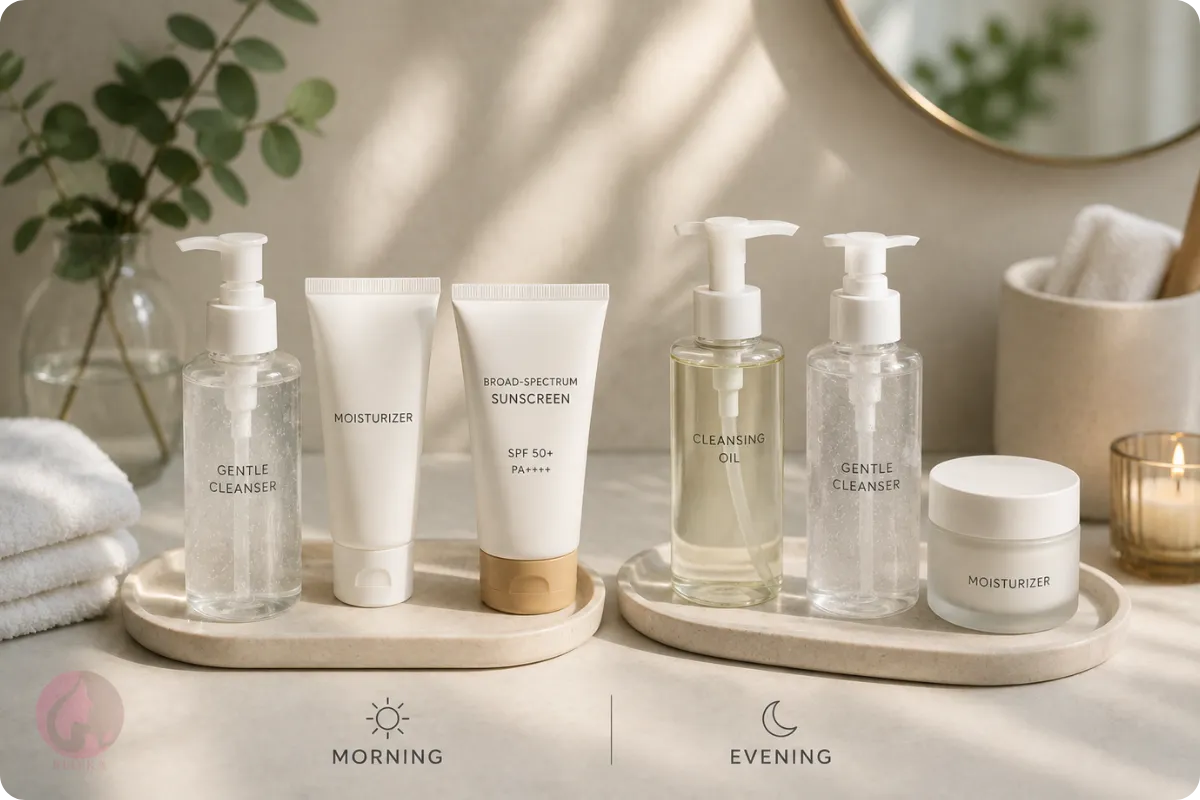
This plan is not designed to erase dark spots within 14 days.
The goal is to create a stable foundation where future targeted treatments can be added safely and effectively.
The first days focus on reducing irritation and improving hydration, while the second week introduces only one active ingredient if the skin remains comfortable.
If you experience severe redness, swelling, pain, or an unusual reaction at any stage, stop using the new product.
People following prescribed dermatological treatments should always prioritize their doctor’s instructions.
| Period | Goal | Morning Routine | Night Routine | What to Avoid |
|---|---|---|---|---|
| Days 1–3 | Reduce irritation and restore hydration | Gentle cleansing if needed + moisturizer + sunscreen | Gentle cleansing + moisturizer | Scrubs, multiple acids, starting new retinoids |
| Days 4–7 | Stabilize the basic routine | Continue the same routine | Continue the same routine | Constantly changing products or testing multiple new items |
| Days 8–10 | Evaluate skin tolerance | Basic routine | If skin is calm, introduce one suitable active ingredient | Adding several new ingredients in one night |
| Days 11–14 | Maintain the new ingredient and observe reactions | Basic routine + suitable morning active if needed | Selected active ingredient according to product instructions and tolerance | Increasing frequency quickly to get faster results |
Days 1–3: Calm the Skin and Restore Hydration
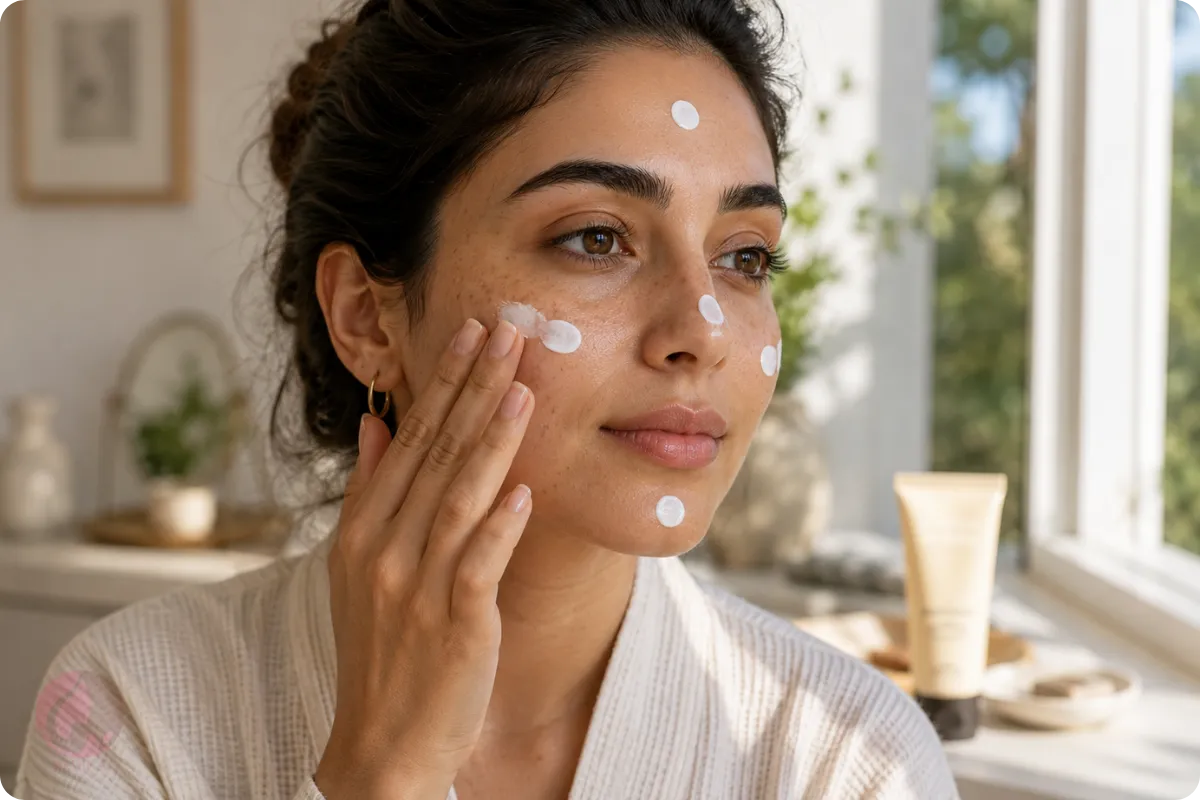
The first three days are intentionally simple.
If your skin became dry, sensitive, or reactive after summer, adding multiple products only increases the number of possible triggers.
A short routine helps you understand whether the problem is related to excessive active ingredients, harsh cleansing, or environmental stress.
The goal during this stage is not a tingling sensation or visible peeling; your skin should become more comfortable and predictable.
Suggested Morning Routine:
- If needed, use a gentle cleanser.
- Apply a moisturizer suitable for your skin’s dryness and oil level.
- Use a broad-spectrum sunscreen with SPF (Sun Protection Factor) 30 or higher.
- If you spend extended time outdoors, reapply sunscreen according to the product instructions and your exposure conditions, including sweating or water contact.
Suggested Night Routine:
- Remove makeup and sunscreen without aggressive rubbing.
- Cleanse your face with a gentle cleanser.
- Apply moisturizer to clean skin. Applying moisturizer to slightly damp skin may help some people maintain a more comfortable hydrated feeling.
- If your usual moisturizer suddenly causes strong burning, investigate the cause of irritation instead of adding more products.
The American Academy of Dermatology recommends gentle cleansing, suitable moisturizers, and avoiding unnecessary irritation as important foundations for managing dry skin.
For very dry skin, creams often provide more moisture than lightweight lotions, while people with acne-prone skin may prefer lighter textures.
Choosing the right formulation matters more than simply selecting a product labeled as “repairing” or “restoring.”
Days 4–7: Stabilize the Skin Barrier Without Rushing Into Exfoliation
If your skin feels calmer by day four, there is still no need to immediately add exfoliating products just because you feel your pigmentation needs faster improvement.
A few days of consistency allow you to evaluate your skin more accurately.
The main question is not whether your skin has become completely flawless; the important point is whether tightness, flaking, redness, and burning have improved compared to the beginning.
If your skin is moving in a better direction, continue the same routine until the end of the first week.
At the end of the first week, ask yourself these five questions:
- Does your skin feel less tight after cleansing?
- Has flaking decreased?
- Can you use your basic products without significant burning?
- Are redness and itching lower compared to the beginning?
- Have you maintained a consistent routine for several days?
If the answer to most of these questions is yes, you can consider adding one targeted ingredient during the second week.
However, if your skin is still inflamed, painful, extremely dry, or highly reactive, there is no need to move to the next stage simply because day eight has arrived.
Continue with the basic routine for a few more days or consult a dermatologist if the issue continues.
Week Two: Add Only One Active Ingredient Based on Your Main Skin Concern
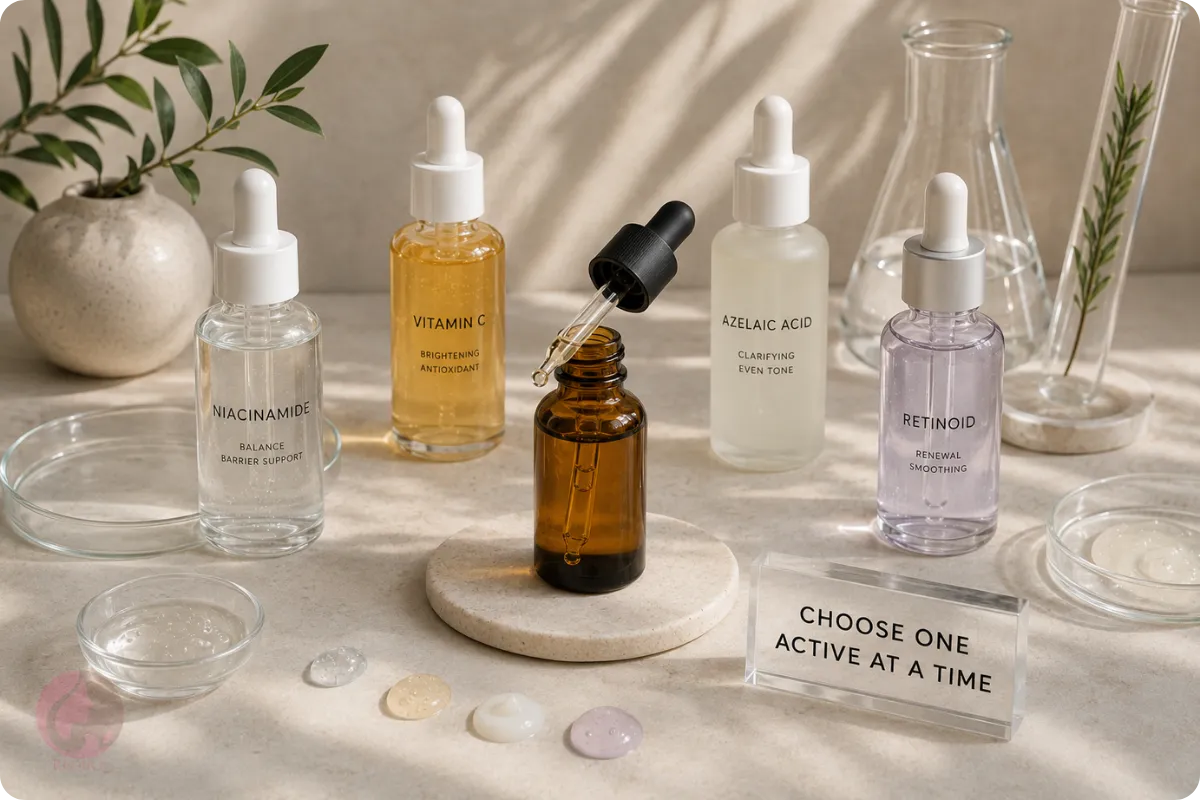
During the second week, choosing an active ingredient should be based on your main skin concern rather than social media popularity.
Clinical discussions and published studies have evaluated ingredients such as niacinamide, azelaic acid, retinoids, glycolic acid, and vitamin C for different pigmentation concerns and uneven skin tone.
However, the fact that an ingredient is popular or scientifically studied does not mean it is suitable for every person or compatible with every skincare combination.
The concentration, final formulation, other products in your routine, and your skin’s tolerance all influence the final result.
| Main Concern | Ingredient to Consider | General Purpose | Important Note |
|---|---|---|---|
| Dark spots with sensitive skin | Niacinamide | May support uneven tone improvement and skin barrier function | Higher percentages do not always mean better results or better tolerance. |
| Dark spots and dull appearance | Vitamin C | An antioxidant ingredient that may support brighter-looking skin | Formula stability and product quality affect performance and tolerance. |
| Post-inflammatory pigmentation or acne marks | Azelaic Acid | May be considered for pigmentation concerns and some acne-prone skin types | Start gradually and monitor possible irritation. |
| Uneven texture and signs of photoaging | Suitable Retinoid | May support skin renewal and improve some signs of sun-related aging | Can cause dryness and irritation; slow introduction is important. |
| Surface roughness in stable skin | Gentle Chemical Exfoliant | May improve texture and some types of uneven tone | Avoid starting on irritated skin or together with several new actives. |
If niacinamide is the ingredient you are considering, the guide
Niacinamide Benefits and Uses for Skin
can help you understand its role in supporting skin tone and barrier function.
Niacinamide is popular because of its multiple skincare applications, but like every active ingredient, it works best when used within a suitable formula and according to your skin’s needs.
How to Test a New Skincare Product Safely
For products you have never used before, testing the product on a limited area of skin can help identify possible reactions before applying it more widely.
The American Academy of Dermatology recommends testing new skincare products on a small area first under conditions similar to normal use.
However, a patch test cannot guarantee that a reaction will never occur in the future.
If you experience severe irritation, swelling, blistering, or concerning symptoms, stop using the product and seek professional advice if needed.
Starting Retinoids After Summer: What Should You Know?
Retinoids should not be introduced suddenly and frequently simply because the weather becomes cooler.
Autumn may be a convenient season for some people to begin a new routine, but the condition of your skin matters more than the calendar.
If your skin is still peeling, red, or irritated after summer, focus first on your basic routine, hydration, and barrier support.
When the skin becomes more stable, retinoids can be introduced gradually according to tolerance and product instructions.
During pregnancy, topical retinoids should be avoided, and suitable alternatives should be discussed with a healthcare professional.
Your skincare routine should always be adjusted according to your personal health situation and medical advice.
Conclusion: The Right Order Matters More Than the Number of Products

For post-summer skincare, you do not need to completely rebuild your routine with many new products.
Start by identifying your main skin concern: pigmentation, dryness, irritation, dullness, or a combination of these issues.
Then create a stable foundation with gentle cleansing, proper hydration, and consistent sunscreen use.
If your skin becomes calmer, introduce only one active ingredient based on your actual needs and give it enough time to evaluate its effect.
New or changing spots and skin concerns accompanied by ongoing inflammation should follow a different path from simple cosmetic experimentation.
If You Remember Only Five Points From This Article:
- Calm irritated skin before starting intensive pigmentation treatments.
- Sunscreen remains important even after summer ends.
- Do not introduce several new active ingredients at the same time.
- The 14-day plan is designed to reset your routine, not promise complete removal of dark spots in two weeks.
- Unusual, changing, or bleeding spots require professional evaluation.
Medical Disclaimer:
This article is written for general skincare education and does not replace diagnosis or personalized medical treatment.
Skin type, existing conditions, medications, pregnancy, allergies, and previous sensitivities can all affect which skincare ingredients and products are appropriate for each person.
Frequently Asked Questions About Post-Summer Skincare
What Should I Do for Dark Spots After Summer?
For common post-summer dark spots, the first steps are preventing new pigmentation and reducing irritation.
Consistent sunscreen use, identifying the underlying cause, and maintaining a gentle routine are essential foundations.
Once the skin feels stable, ingredients such as niacinamide, vitamin C, azelaic acid, or suitable retinoids may be considered depending on the type of pigmentation and skin tolerance.
If a spot is new, changing, unusual in appearance, or different from your other marks, it should be evaluated by a dermatologist before starting aggressive home treatments.
When Should I Start Exfoliating My Skin After Summer?
There is no fixed date for restarting exfoliation after summer; your skin condition matters more than the calendar.
If your skin is still red, peeling, burning, or sensitive, focus first on restoring comfort and hydration.
Once your skin has been stable for several days, people who previously tolerated exfoliation may gradually reintroduce a gentle exfoliating product according to the product instructions.
More frequent use or stronger burning does not mean the product is working better.
Is Autumn a Good Time to Start Using Retinol?
Autumn can be a practical time for some people to begin retinoids, but skin readiness is the most important factor.
If your skin is still dry, irritated, or recovering from summer stress, it is better to focus first on moisturizer, sunscreen, and barrier support.
For beginners, starting slowly and increasing frequency gradually based on tolerance is usually more manageable than applying retinoids every night from the beginning.
During pregnancy, topical retinoids should be avoided, and suitable alternatives should be discussed with a healthcare professional.
For Dry and Pigmented Skin, Should I Fix Dryness or Dark Spots First?
If dryness is accompanied by burning, flaking, or sensitivity, calming the skin and improving hydration is usually the better short-term priority.
This does not mean ignoring pigmentation completely, because sunscreen is already an important part of managing dark spots.
After irritation decreases, a suitable brightening ingredient can be introduced gradually.
This approach is usually more comfortable than applying multiple strong treatments to skin that is already reactive.
How Long Does Post-Summer Skin Recovery Take?
There is no single timeline that works for everyone.
Mild dryness may improve relatively quickly after adjusting your routine, but pigmentation and uneven skin tone often require more time and depend on the type of spot, depth of pigment, chosen ingredients, and consistency of sun protection.
The 14-day plan in this article is designed to create a stable routine and understand your skin’s tolerance, not to guarantee complete transformation.
If your condition becomes worse, a spot changes, or irritation continues, do not wait for a routine experiment to finish before seeking professional advice.
Main Scientific References Used for This Article:
- American Academy of Dermatology guidelines on dry skin care and maintaining healthy skin barrier function.
- American Academy of Dermatology resources on managing dark spots and hyperpigmentation.
- American Academy of Dermatology guidance on testing new skincare products on a limited skin area.
- Systematic reviews evaluating topical vitamin C for pigmentation concerns and photoaging.
- Expert consensus publications on commonly used topical ingredients for pigmentation, dryness, redness, and other skincare concerns.
- Scientific reviews discussing vitamin C, antioxidants, and their role in supporting skin appearance after environmental stress.
About the author

Join the conversation
Share your experience or question with REDIKA readers.
Your email stays private. Please avoid sharing personal or sensitive details.


