Home / Editorial guide


If you suddenly notice more hair on your brush, pillow, or shower floor as summer comes to an end, your first concern may be, “Is my hair starting to thin?” The good news is that a temporary increase in shedding can be associated with seasonal changes in the hair growth cycle for some people. The more important point, however, is that not every episode of hair shedding that happens in fall is necessarily seasonal. Illness, fever, rapid weight loss, restrictive diets, iron deficiency, thyroid disorders, physical stress, certain medications, and other types of hair loss can become noticeable at exactly the same time of year.
So the most useful question is not “How many hairs did I lose today?” Instead, ask: Has my actual hair density changed? Is the shedding happening across the entire scalp or only in one area? How long has it been going on? And what happened to my body two to four months ago? In this Redika guide, we focus on exactly that distinction so you can understand when it is reasonable to monitor the situation and when it is better to see a dermatologist.
Quick takeaway:
Mild, temporary, diffuse hair shedding in late summer or fall may be compatible with the normal hair cycle, especially when it does not create bald patches and overall hair density remains stable. However, a widening part, a noticeably thinner ponytail, a receding hairline, patchy hair loss, scalp inflammation, or shedding that continues for several months are signs that you should not automatically assume the problem is seasonal.
Scientific sources last reviewed: August 18, 2026 — This article is intended for general education and is not a substitute for an individual diagnosis by a physician or dermatologist.
Quick Answer: Is Increased Hair Shedding in Fall Normal?
Yes. A limited and temporary increase in hair shedding in late summer and fall can be normal for some people. Research suggests that the proportion of hairs entering the resting phase of the hair cycle may increase during summer in some individuals, with some of those hairs shedding several weeks or months later. However, this is not a universal rule, and not everyone will experience increased shedding during the same months every year.
For hair shedding to be more consistent with a seasonal or temporary pattern, several features are usually expected:
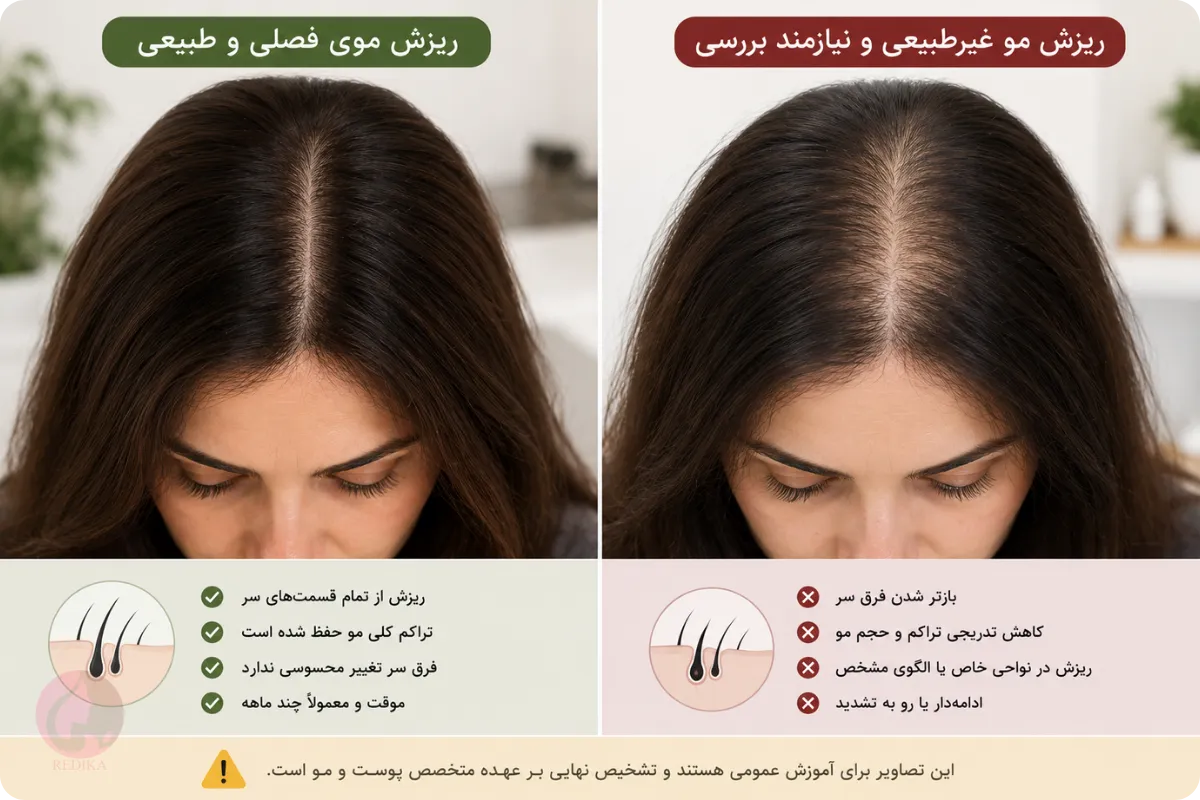
- Shedding occurs relatively evenly across the entire scalp, rather than from one specific area.
- There are no round bald patches or clearly hairless areas.
- The width of the hair part and the hairline do not change noticeably over a few weeks.
- Shedding eventually stabilizes or begins to decrease.
- There is no significant scalp pain, sores, severe inflammation, or unusual scaling.
The American Academy of Dermatology commonly describes shedding around 50 to 100 hairs per day as part of the normal hair cycle, while updated guidance from the British Association of Dermatologists refers to a broader range of approximately 30 to 150 hairs per day. This difference itself shows why a simple hair count is not a precise diagnostic threshold. The pattern of shedding, changes in density, and how long the problem continues usually provide more useful information.
| Sign | More Consistent With Temporary or Seasonal Shedding | More Likely to Need Evaluation |
|---|---|---|
| Location of shedding | Relatively diffuse across the scalp | Patchy or following a specific pattern |
| Hair density | Mostly stable | Gradual and visible reduction |
| Hair part | No obvious change | Gradually widening |
| Scalp | Usually appears normal | Pain, inflammation, sores, or scarring |
| Duration | Short-term and improving | Persistent or becoming worse |
Redika’s 4-Step Check for an Initial Hair Shedding Assessment
Instead of becoming anxious every time you notice a few hairs on your brush, you can use a simple framework. Redika’s 4-Step Check is not a medical diagnostic test. It is an educational tool designed to help you identify the information that matters most when evaluating hair shedding and understand when the problem may deserve closer attention.
| Step | Question to Ask | Why Does It Matter? |
|---|---|---|
| 1. Pattern | Is hair shedding happening all over the scalp or only in one specific area? | Diffuse shedding is more compatible with telogen-related shedding, while patchy loss generally deserves further evaluation. |
| 2. Duration | Has it continued for a few weeks or several months? | Temporary shedding should eventually show improvement; shedding lasting longer than six months generally warrants closer assessment. |
| 3. Trigger | What happened two to four months before the shedding started? | Illness, fever, surgery, childbirth, restrictive dieting, or rapid weight loss can trigger delayed shedding. |
| 4. Scalp and density | Has your hair part, hairline, scalp, or overall density changed? | Changes in density, inflammation, or clearly hairless areas should not automatically be blamed on the season. |
If you remember only one point from this Redika guide, make it this: the number of hairs you see on the shower floor alone is not a reliable measure of how serious the problem is. Changes in density and the overall shedding pattern usually tell you more.
Does Seasonal Hair Shedding Really Exist Scientifically?

Humans do not experience a synchronized, dramatic seasonal molt in the way some animals do. Therefore, it would be scientifically inaccurate to say that “everyone loses a specific amount of hair every fall.” Instead, studies suggest that the hair follicle cycle may show measurable seasonal variations. These changes are not equally noticeable in everyone, and some people may not experience any obvious increase in shedding at all.
One of the best-known studies in this area examined data from 823 apparently healthy women who had presented with complaints of hair shedding. After excluding participants with diseases or medications known to affect hair loss, researchers identified annual variations in the hair cycle and reported the highest proportion of hairs in the telogen phase during summer. The findings support the existence of a seasonal pattern in the hair growth and shedding cycle, but they do not prove that everyone around the world experiences fall hair shedding.
The exact timing should not be tied to the same calendar months everywhere. Climate, latitude, hemisphere, lifestyle, and individual differences may all influence when a person notices increased shedding. For this reason, “late summer and fall” should be understood as a possible pattern, not a universal rule.
How Is the Hair Growth Cycle Connected to Fall Hair Shedding?
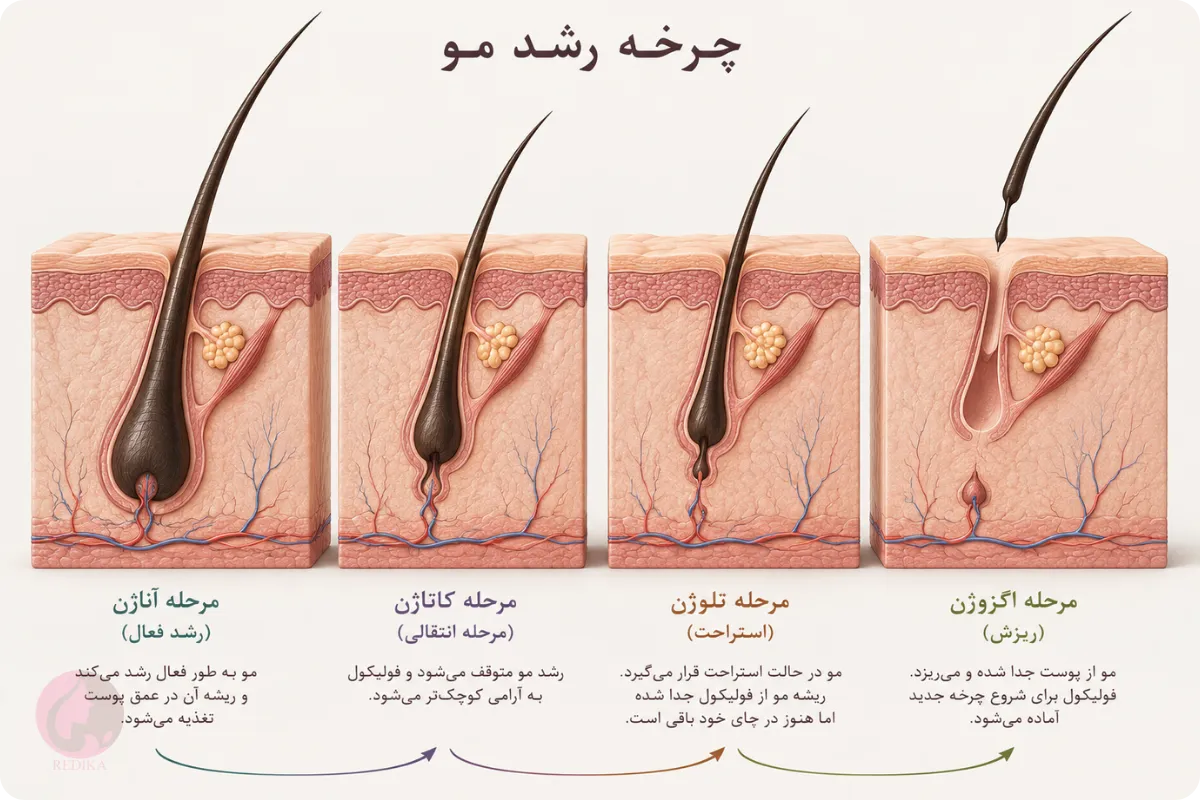
To understand seasonal shedding, it helps to understand the hair cycle itself. Scalp follicles do not all work in sync. Some are actively growing hair, others are transitioning, and others are resting. According to guidance from the British Association of Dermatologists, approximately 85% of scalp follicles are normally in the growth phase, while around 15% are in the resting and shedding phase.
- Anagen: The active growth phase in which the hair shaft becomes longer.
- Catagen: A short transitional phase during which active growth slows down.
- Telogen: The resting phase, during which the follicle prepares to release the old hair and begin a new cycle.
- Exogen: The stage in which the old hair shaft is actually released from the follicle.
In telogen effluvium, a larger-than-usual number of hairs enter the resting phase earlier than expected. The important point is that shedding does not happen on the same day. Hair may remain in this state for two to four months before falling out. That is why the cause of the shedding you notice today may be related to something that happened several months earlier.
To better understand the differences between terms related to shedding, breakage, and the hair cycle, you can also read Redika’s Hair Care and Hair Product Terms Glossary.
What Do Scientific Studies Say About Hair Shedding in Summer and Fall?
The study involving 823 women is among the most direct sources of evidence regarding seasonal changes in human hair. Researchers used trichograms—a method for evaluating the proportion of hairs in different phases of the growth cycle—and found the highest proportion of telogen hairs in summer and the lowest proportion in late winter. A smaller peak was also reported in spring.
The findings need to be interpreted carefully. The study did not conclude that “fall causes hair loss.” What researchers observed was a change in the proportion of hairs in different stages of the growth cycle throughout the year. Because the telogen phase lasts for several months, an increase in hairs entering telogen during summer may result in more visible shedding later in summer or during fall.
In terms of evidence quality, studies that directly assess the hair cycle are more relevant to this question than behavioral data such as internet search volumes, because they examine the hair itself. Even so, there is still no single confirmed mechanism that explains seasonal hair-cycle changes in every human population. The most scientifically accurate conclusion is that evidence supports seasonal variations in the hair cycle, but their timing and intensity vary from person to person.
How Much Hair Shedding Per Day Is Normal?
This is one of the most frequently asked questions, but there is no single magic number. As mentioned earlier, the American Academy of Dermatology commonly refers to around 50 to 100 hairs per day, while updated guidance from the British Association of Dermatologists mentions approximately 30 to 150 hairs per day as a normal range. This variation reminds us that the number of shed hairs needs to be interpreted within the context of the individual.
Even your washing routine can affect how dramatic shedding appears. Someone who washes their hair every day may see fewer hairs each time, while a person who washes every three or four days may see several days’ worth of naturally released hairs at once. Long hair can also look visually more substantial, making the same number of strands appear much more alarming.
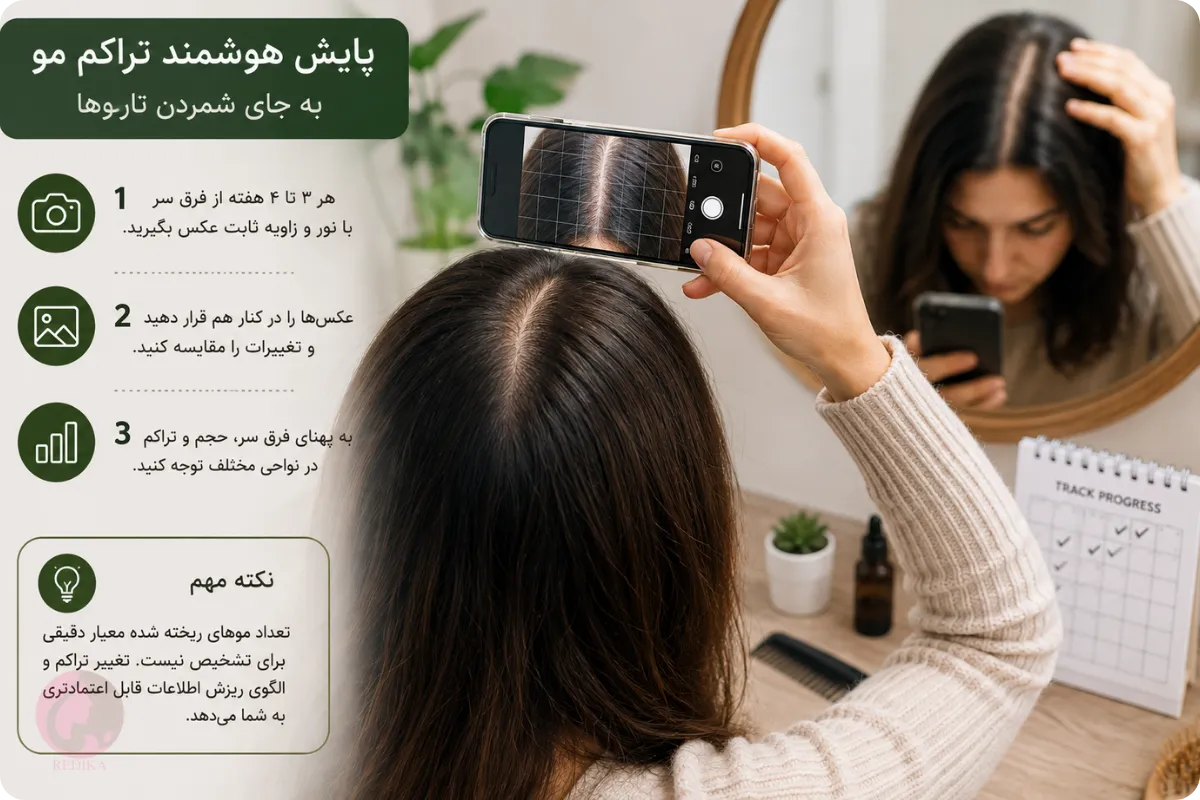
Instead of obsessively counting individual hairs, monitor these three more practical indicators:
- Every three to four weeks, photograph your hair part and hairline using similar lighting, distance, and camera angles.
- If your hair is long, pay attention to a noticeable change in ponytail thickness over several months.
- Check whether more scalp is visible compared with older photos.
Important: Counting individual hairs can increase anxiety without providing particularly precise diagnostic information. If your density, hairline, and hair part remain stable, seeing more hairs during a single shower does not necessarily mean that you are starting to go bald.
Do Not Confuse Hair Shedding From the Root With Hair Breakage
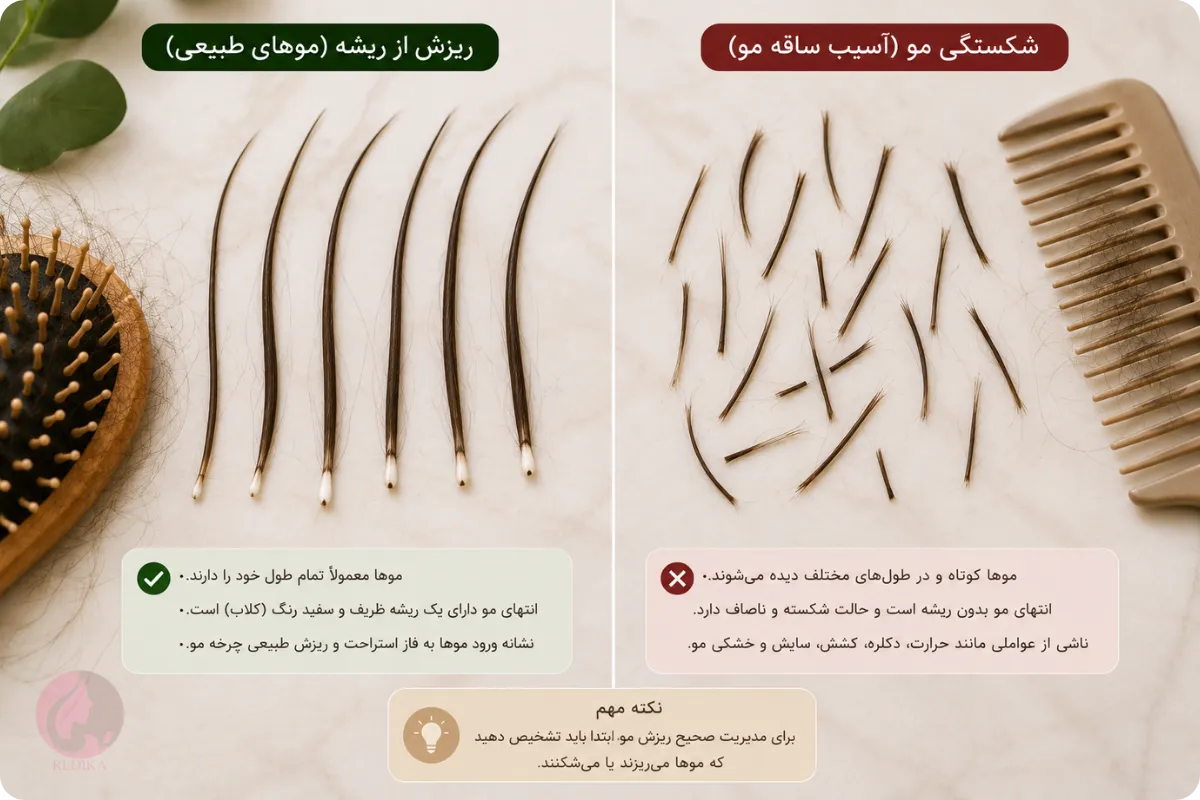
Not every hair you find on your clothes or shower floor has been released from a follicle. Sometimes a large part of what people describe as “hair loss” is actually hair shaft breakage. This distinction matters because the causes and management strategies are different.
| Feature | Hair Shedding From the Follicle | Hair Shaft Breakage |
|---|---|---|
| Length of detached hairs | Usually close to the full length of the hair | Shorter strands of varying lengths |
| End of the strand | May show a pale, club-shaped end | Usually lacks a club-shaped end |
| Common causes | Hair cycle changes, physical stress, illness, hormonal changes, or deficiencies | Bleaching, heat, tension, dryness, and mechanical damage |
| Care focus | Identifying the cause of shedding and evaluating follicle health | Reducing damage and protecting the hair shaft |
If you notice many short, broken strands, reviewing your hair-care routine is important. Excessive heat, flat irons, bleaching, aggressive brushing, and very tight hairstyles can all increase breakage. For more information, see Redika’s guide to Hair Damage and Ways to Reduce It.
Why Does Hair Seem to Shed More in Late Summer and Fall?

If the shedding is genuinely part of a seasonal pattern, one possible explanation is that a larger number of follicles entered the resting phase during the previous months, with the older hairs being released later. In real life, however, the season is not the only variable. Summer and early fall are often accompanied by other changes in lifestyle, nutrition, and health that may overlap with the onset of shedding.
If your shedding started in late summer or early fall, it is worth looking back two to four months rather than focusing only on the weather. Recognized triggers of telogen effluvium can include:
- Fever or a significant illness;
- Infection or recovery from illness;
- Major surgery or substantial physical stress;
- Childbirth and postpartum hormonal changes;
- Rapid weight loss or a highly restrictive diet;
- Inadequate protein intake;
- Iron deficiency;
- Certain thyroid disorders;
- Starting or stopping certain medications or hormonal treatments;
- Severe or prolonged stress.
For example, if someone starts a very low-calorie diet in early summer, loses a substantial amount of weight the following month, and then develops diffuse shedding toward the end of summer, the timing alone does not prove that the season is responsible. In this situation, the body’s timeline may provide a more convincing explanation than the seasonal calendar.
If your diet is restrictive or you have questions about iron, protein, and micronutrients, Redika’s article on Nutrition for Healthy Skin and Hair can be a useful companion guide. Nutrition, however, is only one part of the picture, and not every case of hair shedding should be blamed on vitamin deficiency.
When Is Fall Hair Shedding Not Normal?
The most important distinction between temporary shedding and a condition that deserves further evaluation is a real change in hair density and pattern. Telogen effluvium typically causes diffuse shedding, meaning that more hair is released from across the scalp. Overall volume may decrease, but it usually does not produce a completely bald, round patch.
Other forms of hair loss can appear differently. Androgenetic alopecia, also known as pattern hair loss, usually causes gradual thinning, widening of the part, or recession of the hairline. Alopecia areata can create round or oval areas with little or no hair. Certain inflammatory and scarring scalp conditions may also cause redness, pain, scaling, or damage to the follicles.
It is also possible for more than one type of hair loss to occur at the same time. The British Association of Dermatologists notes that telogen effluvium can sometimes make previously mild or less noticeable pattern hair loss become more obvious. If your intense shedding improves but your hair part remains visibly wider than before, a closer evaluation may be reasonable.
Warning Signs That Should Be Taken Seriously
If you notice any of the following, it is better not to attribute the problem only to seasonal change:
- A round bald patch or clearly hairless area has developed.
- Your hair part has become noticeably wider over several months.
- Your hairline is gradually receding.
- Your ponytail diameter or overall hair volume has clearly decreased.
- Shedding continues for several months without improvement.
- Your scalp becomes painful, red, sore, or severely scaly.
- Your eyebrows or hair on other parts of the body have also started to fall out.
- Hair shedding is accompanied by unusual fatigue, weight changes, sensitivity to cold, or other systemic symptoms.
- Shedding became significantly worse after starting a new medication.
- You have a family history of pattern hair loss and your own hair pattern is also changing.
Warning: If hair loss is accompanied by inflammation, sores, pain, scarring, or a clearly hairless area, do not wait for the season to end. Some forms of hair loss can be managed more effectively when they are identified earlier.
How Can You Tell Whether Hair Shedding Is Seasonal or Has Another Cause?
A detailed medical history is extremely important when evaluating hair loss. Even before laboratory tests are considered, information such as when the shedding began, how it is distributed, recent illnesses, dietary changes, weight loss, medications, childbirth, and changes in general health can help guide the assessment. Clinical sources indicate that with telogen effluvium, the trigger often occurs around three months before visible shedding begins, although the interval can be shorter or longer.
For a simple at-home review, create a basic timeline:
- Identify the approximate month when increased shedding began.
- Go back two to four months.
- Write down any illness, fever, surgery, diet, weight loss, childbirth, new medication, or significant stress during that period.
- Compare older photos of your hair part and hairline with how they look today.
- Consider whether the problem started suddenly or whether density has gradually declined over the past year.
Sudden, diffuse shedding after a trigger may be more compatible with telogen effluvium. In contrast, a gradual reduction in density around the center of the scalp or slow changes in the hairline may make evaluation for pattern hair loss more important. A definitive diagnosis belongs to a healthcare professional; these signs are only intended to provide initial guidance.
| Pattern | Possible Clue | Reasonable Next Step |
|---|---|---|
| Sudden onset with diffuse shedding | Temporary telogen shedding | Review possible triggers from previous months and monitor progress |
| Gradually widening hair part | Possible pattern hair loss | Dermatologist evaluation |
| Round bald patches | Patchy causes such as alopecia areata | See a dermatologist |
| Hair loss with inflammation or scarring | Possible scalp disorder | Early medical evaluation |
| Many short, broken strands | Hair shaft damage and breakage | Adjust the hair-care routine and reduce heat and chemical damage |
If your doctor suspects an underlying cause, laboratory testing may be considered based on your symptoms and medical history. For example, if iron deficiency is suspected, a complete blood count, serum iron, transferrin saturation, and ferritin may be evaluated. If symptoms suggest hypothyroidism, a thyroid-stimulating hormone test may also be considered.
This does not mean that everyone with increased fall shedding needs a long list of laboratory tests. Testing should be selected according to individual circumstances. In many cases, a dermatologist will first decide whether blood tests are necessary after taking a history and examining the scalp.
What Can You Do to Manage Seasonal Hair Shedding?

If the overall picture is more consistent with temporary shedding, the main goal is not necessarily to prevent every hair that has already entered the shedding phase from falling out. In acute telogen effluvium, many hairs that have entered the resting phase will eventually be released, while the follicle can begin a new growth cycle. The British Association of Dermatologists explains that this condition often improves without specific treatment and that medication does not necessarily speed up the natural return of hair volume.
More reasonable steps during this period include:
- Avoid very low-calorie diets and rapid weight loss.
- Consume adequate protein and maintain a balanced diet.
- If iron deficiency or another problem is suspected, seek appropriate evaluation instead of taking supplements without guidance.
- Reduce aggressive brushing and combing.
- Limit frequent use of flat irons, curling tools, and high heat.
- Wear fewer very tight hairstyles that continuously pull on the hair.
- Reduce bleaching and aggressive chemical treatments as much as possible during periods of increased shedding.
- Wash your hair according to your scalp’s needs; dramatically reducing washing frequency does not stop telogen shedding.
- Monitor hair density every three to four weeks with standardized photos.
Caution is also important with supplements. Taking iron, zinc, biotin, or other supplements without knowing whether a deficiency exists is not a universal solution for hair shedding. The American Academy of Dermatology warns that excessive intake of certain nutrients can even worsen hair loss. Therefore, seeing hair on your brush alone is not a good reason to automatically start a “hair supplement.”
The cause of hair loss also matters when considering minoxidil. This medication has an important role in some types of hair loss, but starting it on your own for every episode of temporary fall shedding is not necessarily appropriate. If there is a genuine reduction in hair density, it is better to identify the type of hair loss first and then decide on treatment.
If you are looking for general principles that support healthy hair growth, Redika’s Guide to Supporting Healthy Hair Growth can complement this article. Still, no shampoo, serum, or quick trick can replace identifying the cause of abnormal hair loss.
If you are experiencing increased hair shedding right now, do these three things:
- Instead of counting individual hairs, compare your hair part and density with photos from one to three months ago.
- Review events from two to four months ago, such as fever, illness, severe dieting, weight loss, surgery, or medication changes.
- If you have bald patches, obvious loss of density, inflammation, or prolonged shedding, do not automatically assume it is seasonal.
Conclusion
Seasonal hair shedding in late summer and fall is a scientifically plausible pattern, but it is not a diagnosis that can explain every episode of hair loss. Research on the hair cycle suggests that the proportion of hairs in the telogen phase can vary throughout the year in some individuals, and an increase in telogen hairs during summer may lead to more noticeable shedding several months later. Even so, seasonality is only one possible factor.
If shedding is diffuse and temporary, there are no bald patches, and overall density has not changed significantly, a temporary process becomes more likely. In contrast, a widening part, gradually thinning hair, changes in the hairline, patchy hair loss, scalp inflammation, or a problem that continues for months deserves closer attention.
Instead of counting hairs every day, remember Redika’s 4-Step Check: pattern, duration, trigger, and scalp/density changes. These four questions usually provide more useful information than relying on a single number for “normal” daily shedding.
Ultimately, “hair loss” is a symptom, not a diagnosis. Telogen effluvium, hair shaft breakage, pattern hair loss, alopecia areata, and scalp disorders do not all follow the same diagnostic or treatment pathway. The earlier the type of problem is identified accurately, the more rational decisions about care and treatment can become.
Frequently Asked Questions About Seasonal Hair Shedding
How Long Does Seasonal Hair Shedding Last in Fall?
If the shedding is part of a seasonal change or acute telogen effluvium, it is generally expected to be temporary. Guidance from the British Association of Dermatologists describes the shedding phase of telogen effluvium as commonly lasting around three to six months. If the underlying trigger has resolved, new hair growth can continue after this period.
However, the end of increased shedding does not mean that hair volume returns immediately. New hairs need time to grow long enough to contribute noticeably to overall volume, so shedding may improve before the hair appears as full as it did previously.
If excessive shedding continues for longer than six months without showing improvement, it may fall into the chronic category and other causes or ongoing triggers should be considered.
Will Hair Shed in Fall Grow Back?
If the follicles are healthy and the shedding is related to the normal hair cycle or temporary telogen effluvium, the likelihood of regrowth is generally very good. In this situation, the follicles have not been destroyed; a larger number of hairs have simply entered the resting phase and then been released.
However, this answer does not apply to every form of hair loss. In androgenetic alopecia, the follicles may gradually miniaturize and produce thinner hairs. Some scarring forms of alopecia can also permanently damage hair follicles.
A more accurate answer is therefore: hair lost during temporary telogen shedding usually has a good chance of growing back, provided that the follicle remains healthy and the underlying trigger does not persist.
Can Shampoo Stop Seasonal Hair Shedding?
Shampoo generally cannot force a follicle that entered the telogen phase weeks or months earlier to hold onto that hair. The primary role of shampoo is to cleanse the scalp and help manage issues such as excess oil, dandruff, or certain inflammatory scalp conditions.
Seeing many hairs during washing also does not necessarily mean that your shampoo caused the shedding. Hairs that were already ready to be released often come away together during washing and movement of the hands, making them much more noticeable.
If a shampoo causes severe itching, redness, or scalp irritation, that is a different situation and it may be reasonable to stop using it. However, the words “anti-hair loss” on a shampoo label do not mean that the product can treat every form of hair loss.
Should You Take Biotin or Iron Supplements for Fall Hair Shedding?
No, not automatically. Iron, protein, zinc, and other nutrients are important for healthy hair, but their importance does not mean that taking more of them will stop shedding in everyone. If your iron stores are already normal, taking iron without medical guidance may not help and excessive intake may be harmful.
If you have symptoms such as fatigue, a restrictive diet, significant blood loss, or other risk factors, your doctor may evaluate your iron status. Ferritin, serum iron, transferrin saturation, and a complete blood count are among the tests that may be considered when clinically appropriate.
Biotin is also not a universal treatment for every type of hair loss. It is better to identify the cause of shedding and determine whether a genuine nutritional deficiency exists before taking high-dose supplements.
When Should You See a Dermatologist for Hair Loss?
If you notice somewhat more shedding for a short period, your overall density remains stable, and there are no bald patches or scalp inflammation, it may be reasonable to monitor the situation for a while. However, if shedding is becoming worse or the appearance of your hair is changing, seeing a dermatologist is more appropriate.
In particular, it is better not to wait for the season to end if you notice:
- A bald patch;
- A clearly widening hair part;
- A receding hairline;
- A noticeable decrease in overall volume or ponytail thickness;
- Hair loss accompanied by pain, inflammation, sores, or scarring;
- Loss of eyebrow hair or hair from other parts of the body;
- Severe shedding that continues for several months without improvement;
- General symptoms such as severe fatigue, unexplained weight changes, or unusual sensitivity to cold.
Seeing a dermatologist does not automatically mean that you have a serious disease. Sometimes the assessment shows that the follicles are healthy and the shedding is temporary. That reassurance is much more valuable when it is based on an appropriate examination and diagnosis.
Scientific sources used and reviewed:
- American Academy of Dermatology — Difference Between Excessive Hair Shedding and Other Types of Hair Loss
- British Association of Dermatologists — Updated Telogen Effluvium Guidance, October 2025
- National Center for Biotechnology Information — Clinical Review of Telogen Effluvium
- PubMed — Study of Seasonal Changes in Hair Cycling and Shedding in 823 Women
- American Academy of Dermatology — Dermatologist Tips for Reducing Hair Damage and Breakage
Redika Editorial Note: This guide is intended to support education and informed decision-making. Diagnosing the cause of hair loss, selecting laboratory tests, and starting medication should be based on individual circumstances and the advice of a physician or dermatologist.
About the author

Join the conversation
Share your experience or question with REDIKA readers.
Your email stays private. Please avoid sharing personal or sensitive details.


