Home / Editorial guide


Video summary
Editorial transparency: This educational guide was prepared by the Redika editorial team with reference to guidance from the American Academy of Dermatology, the US Food and Drug Administration, the UK National Health Service, and published medical research. It was not written or medically reviewed by a physician. During pregnancy, breastfeeding or prescription treatment, seek individualized advice rather than relying on this article. Source review date: July 15, 2026.
This companion article explains which skincare actives may cause excess irritation, which combinations are commonly compatible, and how to simplify morning and evening routines. Where medication is involved, follow the product label and prescribing clinician.
Quick answer: Which skincare ingredients should you avoid using together?
There is no universal ban on combining all active skincare ingredients. The main concerns are cumulative irritation, instability of particular formulations, and the special requirements of prescription products. Beginners often tolerate retinoids and strong exfoliating acids better on different nights. Traditional tretinoin products and benzoyl peroxide may also need separation, though certain stabilized products are specifically formulated together. Niacinamide and vitamin C are generally compatible, contrary to a widespread myth. Match decisions to concentration, formula, skin tolerance and medical advice rather than social-media rules.
Combinations worth separating, especially on reactive skin:
- Retinol or other retinoids with strong acid exfoliants or abrasive scrubs
- Several exfoliating acids, acid masks and scrubs in the same evening
- Benzoyl peroxide with conventional tretinoin unless a tested formulation or prescribed plan specifies otherwise
- Benzoyl peroxide with pure L-ascorbic acid in the same layer as a precaution, not because the pair forms a toxin
- Two new active products when tolerance to neither has been established
Skincare ingredient compatibility chart at a glance
The following chart is a starting framework, not an instruction to stop prescribed treatment. ‘Use separately’ usually reflects the goal of lowering irritation rather than proof that ingredients neutralize each other chemically.
| Combination | Use at the same time? | Main concern | Lower-risk approach | Important exception |
|---|---|---|---|---|
| Retinol or retinoid + AHA/BHA acids | Often separate when starting | Cumulative dryness and irritation | Alternate nights and begin infrequently | Some finished formulations or clinician schedules differ |
| Retinoid + physical scrub | Usually avoid together | Mechanical and chemical irritation | Skip scrubbing | Never scrub already inflamed or peeling skin |
| Standard tretinoin + benzoyl peroxide | Usually separate standalone products | Stability in some formulations; irritation | Different times unless directed otherwise | Certain encapsulated or combined prescriptions differ |
| Cosmetic retinol + benzoyl peroxide | Depends on formulation | Irritation; possible stability differences | Separate times or alternate nights | Do not extrapolate every tretinoin rule to all retinol products |
| Benzoyl peroxide + pure ascorbic acid | Prudent to separate | Potential oxidation and irritation | Vitamin C in morning; acne treatment another time | Direct clinical interaction data are limited |
| Several exfoliating acids | Often avoid stacking | Excessive exfoliation | Choose one treatment and fewer sessions | Follow directions for properly formulated multi-acid products |
| Pure vitamin C + acid peel | Use cautiously | Stinging and cumulative irritation | Different sessions when starting | Tolerability varies by formula |
| Niacinamide + vitamin C | Usually compatible | Possible sensitivity from an individual formula | Introduce separately to identify reactions | No universal chemical incompatibility |
| Retinoid + vitamin C | Can be compatible with careful introduction | Cumulative dryness or redness | Try vitamin C in the morning and retinoid in the evening | There is no absolute chemical prohibition for this pairing |
| Niacinamide + retinol | Usually compatible | Total routine may still irritate | Keep formulation simple | Consider other actives used alongside |
| Salicylic acid + benzoyl peroxide | Use with caution | Cumulative dryness and irritation | Consider a rinse-off cleanser or separate applications | They may be combined under a structured acne-treatment plan |
| Hyaluronic acid or ceramides + active treatments | Usually compatible | Generally little direct incompatibility | Use with or after the active as directed | Moisturizers may improve tolerance but do not make excessive actives risk-free |

What does skincare ‘incompatibility’ actually mean?
The term can refer to at least three different phenomena. Chemical instability is when one ingredient affects another in a particular preparation. Cumulative irritation means the ingredients still work, but together overwhelm the skin’s tolerance. Finally, a professionally engineered finished product may behave differently from two separate serums that a consumer layers at home. This distinction prevents inaccurate blanket statements about ingredients.
| Type | Meaning | Example | Practical decision |
|---|---|---|---|
| Formula instability | Interaction may alter stability or performance | Some older tretinoin formulas with benzoyl peroxide | Separate standalone products if instructions call for it |
| Cumulative irritation | Both remain active but cause too much stress together | Retinoid plus strong acid peel | Use different nights or lower frequency |
| Formulated-product exception | Finished products can be designed for compatibility | Approved adapalene and benzoyl peroxide combinations | Follow prescription and label directions |
Higher-risk pairings that may be better separated
Oily skin can still have a weakened protective barrier. Excess sebum is not a reason to stack strong active ingredients in one session. Acid-containing cleansers, exfoliating toners, peeling masks and abrasive scrubs all contribute to the overall exposure and potential irritation. Check the full ingredient list and the rest of your routine instead of judging compatibility by the product name alone.
Retinol and retinoids with exfoliating acids
AHAs such as glycolic acid and BHAs such as salicylic acid can exfoliate, while retinoids affect cell turnover and may independently cause peeling and irritation. Using both intensively in one session is often unnecessary. For beginners, alternate nights and give the skin recovery days. Do not continue if you develop marked burning or cracking. A clinician may advise a different schedule for a diagnosed condition.
Benzoyl peroxide with tretinoin, adapalene or retinol
It is inaccurate to treat every retinoid as identical. Some conventional tretinoin formulations are used at a different time from benzoyl peroxide, but approved fixed-dose products containing adapalene and benzoyl peroxide demonstrate that certain pairings are viable. Product stability also depends on encapsulation and formulation. Consult instructions rather than mixing separate prescriptions based on generic online tips.
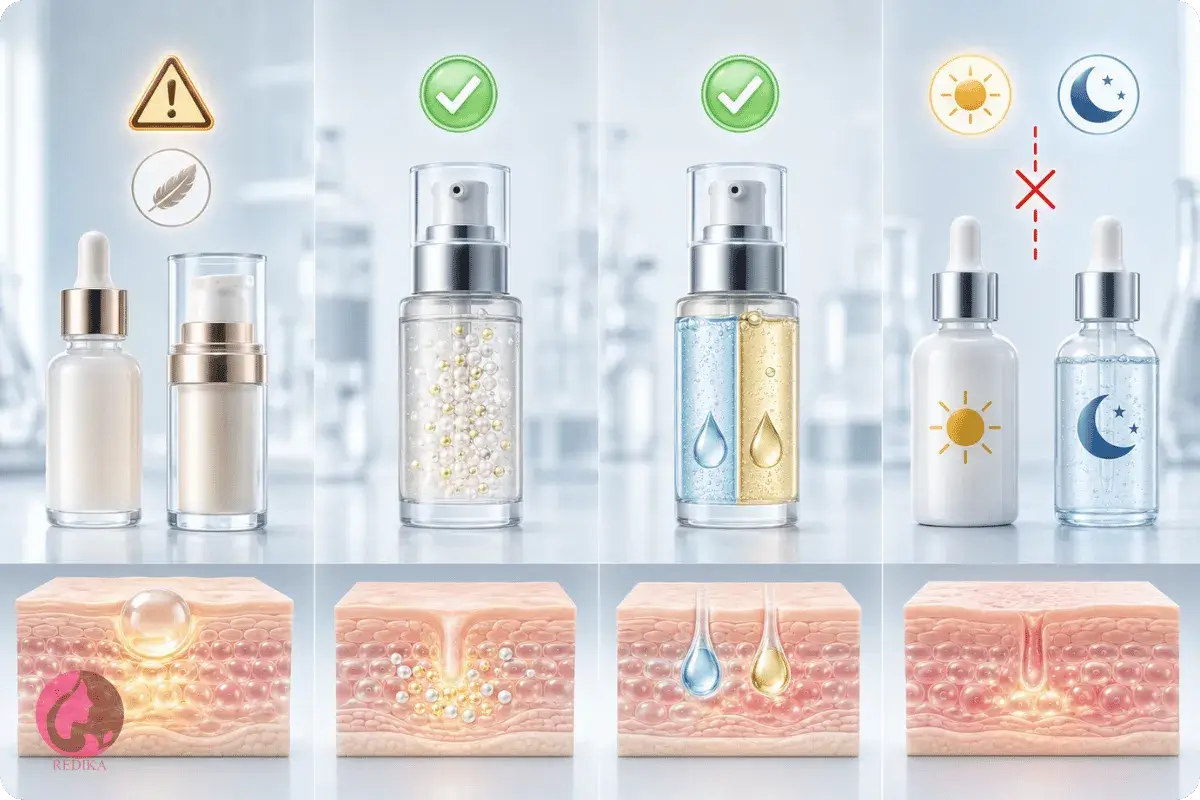
Benzoyl peroxide with pure vitamin C
Benzoyl peroxide is an oxidizing agent. As a cautious approach, separating it from low-pH, pure ascorbic acid formulations may reduce concerns about oxidation and irritation. That does not mean every vitamin C derivative or finished preparation becomes ineffective on contact. When both are needed, a simpler morning-versus-evening split is often easier to tolerate. Direct comparative clinical evidence remains limited.
Practical ways to reduce uncertainty:
- Try pure vitamin C in the morning and benzoyl peroxide at another time.
- If using a nighttime retinoid, all three actives need not be used every day.
- Do not assume all vitamin C derivatives behave like pure L-ascorbic acid; the final formulation matters.
- Assess darkening of a vitamin C serum against the manufacturer’s normal color and storage advice.
Multiple exfoliants and pure vitamin C in one session
Stacking acid cleanser, exfoliating toner, acid serum and a low-pH vitamin C product can increase cumulative irritation, especially with sensitive or recently treated skin. Avoid assuming faster results from using everything together. A carefully formulated combined product used as directed is not equivalent to layering numerous independent products without guidance.
Combinations that are generally compatible despite popular myths
Many social-media prohibitions extrapolate findings from old products, laboratory conditions or unusually high concentrations to all modern formulations. Two ingredients can be chemically compatible yet still feel irritating when combined as concentrated serums on sensitive skin. Introduce each product individually, assess tolerance, and then add the second gradually; a tested combination product is different from mixing separate products at home.
Niacinamide with vitamin C
Modern niacinamide and vitamin C skincare products can generally be used together. The old claim that they always neutralize each other overstates laboratory observations under conditions unlike normal cosmetic use. You may still experience stinging from a concentrated ascorbic acid serum, so introduce each product separately to distinguish sensitivity from incompatibility.
Retinoid with vitamin C
A retinoid and vitamin C can feature within the same overall skincare routine. For beginners, vitamin C in the morning and a retinoid at night can simplify application and tolerability. It is not a universal requirement: finished formula properties and prescribing instructions matter. If either ingredient causes irritation, reduce complexity rather than increasing doses.
Retinol with niacinamide
Niacinamide is commonly paired with retinoids as part of routines aiming to support comfort and the skin barrier. The combination itself is not generally prohibited, although very strong concentrations or numerous other active ingredients can still irritate skin. Retinoids should be introduced slowly according to the label or clinician.
Hyaluronic acid and ceramides alongside actives
Humectants such as hyaluronic acid and barrier-supporting ingredients such as ceramides can commonly be used with vitamin C, niacinamide and retinoids. They do not eliminate every possible side effect. Choose a gentle moisturizer that you tolerate; a simple formula may work better than several additional serums.
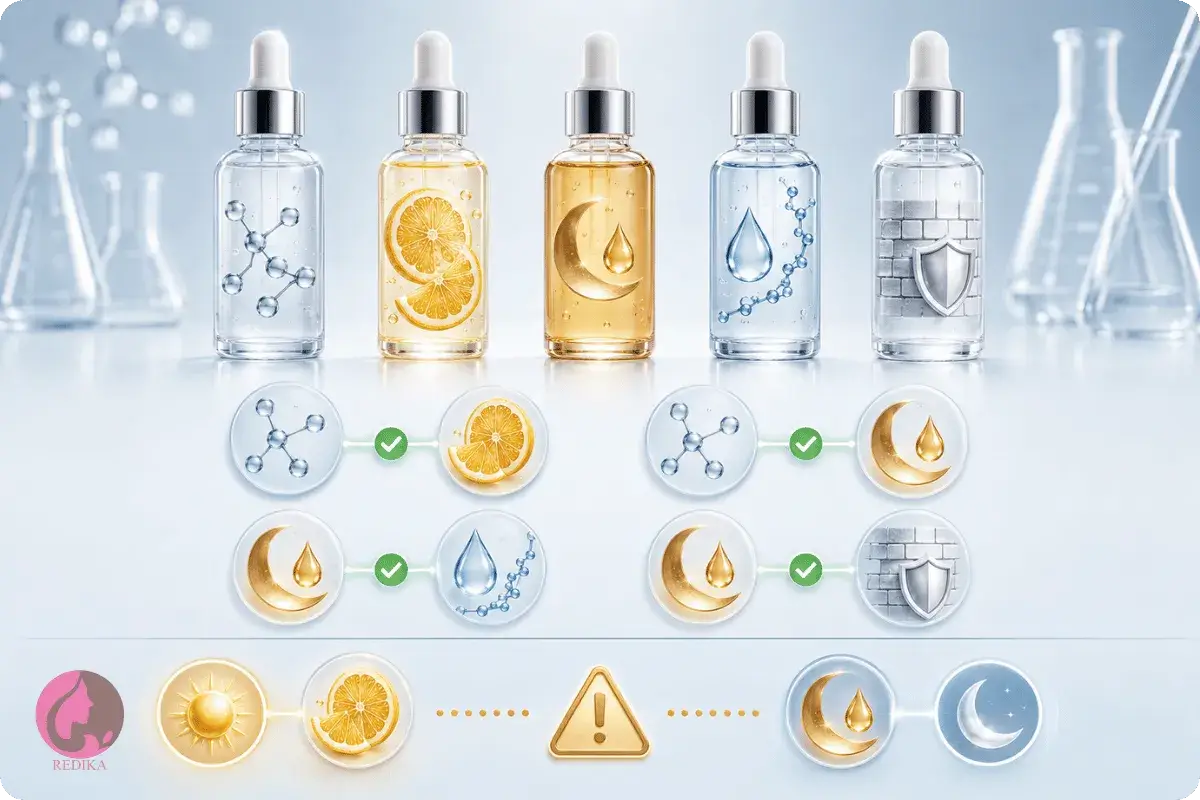
Using moisturizers alongside actives:
- Apply a hydrating product to dry or slightly damp skin as directed on its label.
- The sandwich method places a retinoid between two thin layers of moisturizer, where appropriate.
- If plain water or a basic moisturizer also stings, pause irritating actives and consider clinical advice.
- For acne-prone skin, a fragrance-free, non-comedogenic formulation can be easier to tolerate.
Other skincare combinations people often ask about
Compatibility depends on the individual product, strength and sensitivity. Azelaic acid and niacinamide are commonly paired, while azelaic acid plus a retinoid or salicylic acid may require additional caution. Copper peptides with pure vitamin C are especially formulation-dependent, and manufacturer directions should be prioritized. Using two separate retinoids at once is generally unnecessary unless a clinician specifically instructs you.
| Pairing | General assessment | Practical note |
|---|---|---|
| Azelaic acid + niacinamide | Usually compatible | Introduce one at a time on reactive skin |
| Azelaic acid + retinoid | Can be used cautiously | Consider different times or alternate nights |
| Azelaic acid + salicylic acid | Depends on tolerance | Avoid introducing both in one session |
| Copper peptides + pure vitamin C | Formulation-dependent | Follow manufacturer guidance; evidence is limited |
| Two different retinoids | Usually unnecessary | Don’t layer adapalene, tretinoin and retinol without a prescription |
| Acid cleanser + exfoliating serum | Caution | Rinse-off use may reduce exposure but total frequency matters |
Building a lower-risk morning and evening routine
You do not need a complicated timetable. In the morning, cleanse gently, use a selected serum only if needed, moisturize and apply broad-spectrum sunscreen. On retinoid nights, choose a mild cleanse and moisturizer around the active according to the label. On a different night, an exfoliant may be used if it is needed and tolerated. Recovery nights can include only cleansing and moisturizer. Do not treat this schedule as a personalized prescription.
| Session | Basic sequence | Example active | Control point |
|---|---|---|---|
| Morning | Gentle cleanse, optional serum, moisturizer, sunscreen | Vitamin C or niacinamide | Start with only one new active |
| Retinoid night | Cleanse, optional moisturizer, retinoid, moisturizer | Retinol or prescribed retinoid | Follow directions and begin less frequently |
| Exfoliation night | Cleanse, one exfoliant, moisturizer | Glycolic or salicylic acid | Skip scrub and retinoid that session |
| Recovery night | Cleanse, hydrating or barrier-supporting moisturizer | Ceramides, glycerin, panthenol | Prioritize comfort and barrier support |
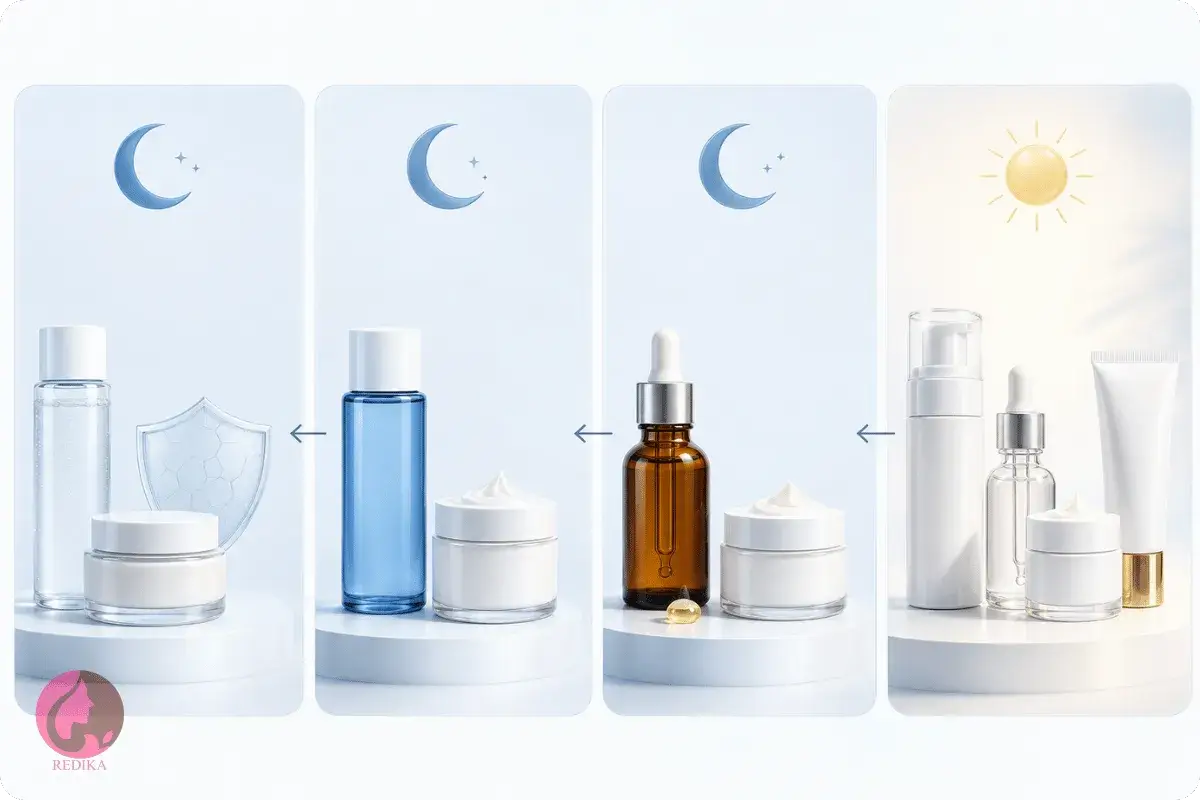
Four questions before you combine two products
First, are both products already familiar to your skin? Second, do they contain active ingredients that can cause irritation at their advertised concentrations? Third, are you using prescription treatment that has special instructions? Fourth, does your skin currently burn, peel or show eczema or rosacea symptoms? If any answer raises concern, do not rush to layer products; seek professional guidance where appropriate.
Four checks before mixing products:
- Do both products contain the same active? A salicylic cleanser and salicylic serum may add up to extra exposure.
- Can both dry or exfoliate the skin? At first, consider using them on separate evenings.
- Are they part of one tested commercial formulation or two separate bottles? Home mixing is not equivalent to a tested formula.
- Has your skin tolerated each separately? If not, adding both makes the cause of any reaction hard to identify.
Patch testing and gradual product introduction
Try new cosmetics one at a time rather than changing an entire routine in a day. A small-area test can help identify some reactions, but cannot guarantee you will never develop an allergy. Follow the directions for the particular leave-on or wash-off formulation. Track burning, itching, redness and swelling, and discontinue a product if these occur. Someone with known allergies or a chronic inflammatory skin condition may benefit from clinician-guided testing.
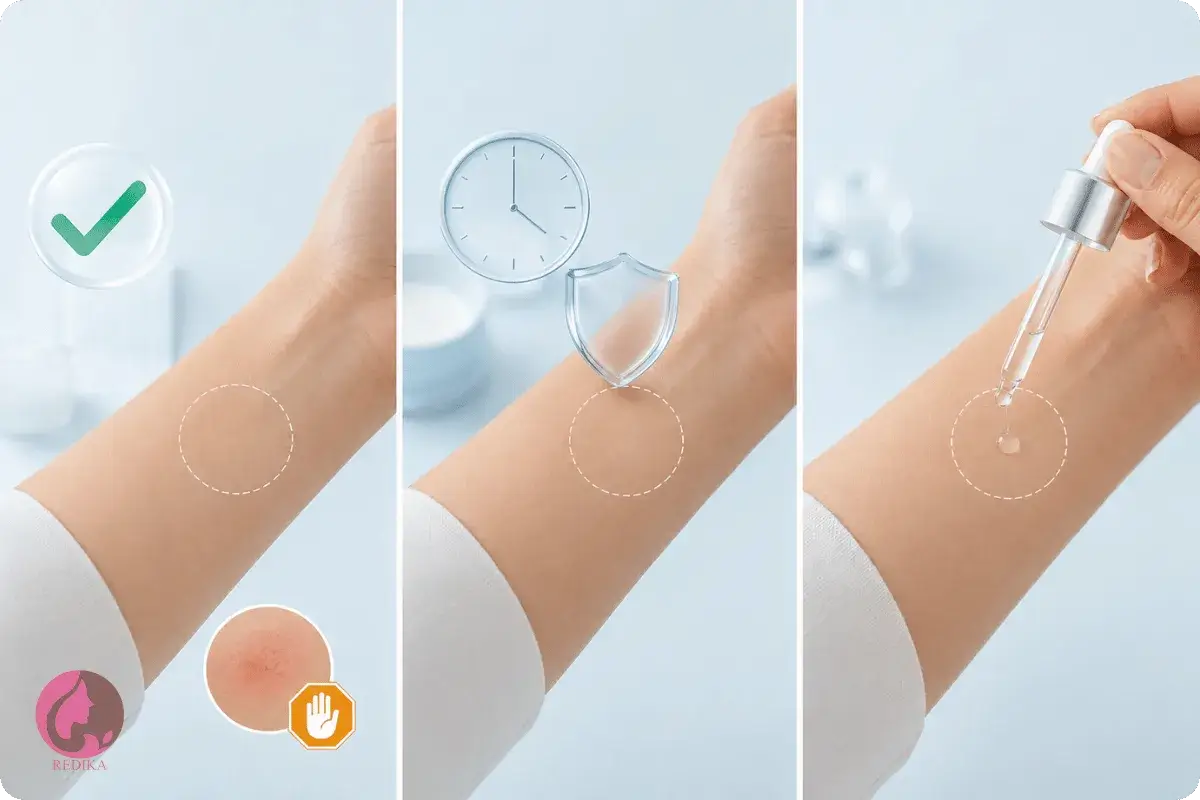
Introducing and testing products:
- Introduce one new skincare product at a time.
- Record the start date, frequency and skin response.
- Compare weekly photographs under consistent lighting instead of checking immediately after each application.
- For prescription medicines, follow the physician’s or pharmacist’s testing and application instructions.
When should you stop using the products?
Stop and rinse off products causing significant burning, hives, swelling or a rapidly spreading rash. Seek prompt medical assessment if the reaction is severe, persistent or accompanied by alarming symptoms. Mild transient tingling is not proof a product is effective, and persistent peeling should not be ignored. Simplify the routine and avoid repeatedly challenging injured skin.
When to seek medical help:
- Swelling of the face, lips, or eyelids
- Widespread hives, blisters, discharge or severe pain
- Breathing difficulty or feeling acutely unwell
- Inflammation that does not improve after stopping irritating products and returning to basic care
Pregnancy, breastfeeding and prescription treatments
Retinoid and acne-treatment decisions during pregnancy or breastfeeding require individualized professional advice. Do not assume an ingredient used in an over-the-counter cosmetic has the same safety profile as a prescription medication. For drugs such as tretinoin, adapalene or benzoyl peroxide, follow the official product instructions and your clinician’s guidance before combining or stopping treatment.
Summary
Compatibility is not a binary list of ingredients that can never touch. Product formulation, concentration, contact time, existing skin condition and prescription instructions determine actual risk. Separate strong exfoliation from retinoid use when needed, simplify routines and remember that niacinamide with vitamin C is generally compatible. Moisturizing and daytime sun protection are fundamental, and treatment-related reactions deserve attention.
Frequently asked questions
Can I use niacinamide and vitamin C together?
Yes, generally. Introducing them separately is useful for identifying any irritation from the individual product rather than assuming an automatic chemical conflict.
Can I use retinol with hyaluronic acid?
Usually yes. A simple hydrating product may make a retinoid routine more comfortable, but apply prescription drugs as directed.
How many minutes should I wait between serums?
There is no universal scientifically required waiting period for every serum. Allow products to settle according to the label and reduce layers if pilling or irritation occurs.
What should I do if layering products makes my skin sting?
Stop the suspected products, rinse if appropriate, return to a simple tolerable routine and seek medical advice for severe or persistent symptoms.
Can I use two exfoliating acids on the same night?
Often it is better not to layer separate strong exfoliants, especially for beginners. A finished multi-acid formula should be used exactly as directed, and irritated skin should not be exfoliated.
Primary scientific references
These official labels, clinical recommendations and studies support the discussion of irritation, formulation-specific exceptions and clinical precautions. Always follow the prescribing clinician’s advice.
- American Academy of Dermatology acne treatment guideline (2024)
- FDA labeling for adapalene and benzoyl peroxide
- FDA labeling for encapsulated tretinoin and benzoyl peroxide
- FDA multidisciplinary review of a combined formulation
- AAD recommendations for testing a new skincare product
- AAD advice about cautious exfoliation
- NHS acne treatment information, including topical retinoids
- AAD pregnancy skincare advice
- Study of a topical formulation containing retinol and vitamin C
- Study of a formulation containing retinol and niacinamide
About the author

Join the conversation
Share your experience or question with REDIKA readers.
Your email stays private. Please avoid sharing personal or sensitive details.


