Home / Editorial guide


Imagine standing face-to-face with a fear you have avoided for years, without ever leaving your room; but this time, in a safe, controllable, and step-by-step environment. Virtual reality therapy does exactly that: it makes fear “real,” but without any actual danger.
In recent years, VR Therapy has become increasingly prominent as a modern tool in psychotherapy, especially in approaches based on exposure therapy and cognitive-behavioral therapy (CBT). This article is for informational purposes; the decision to start treatment should only be made following an expert assessment.
What is VR Therapy?
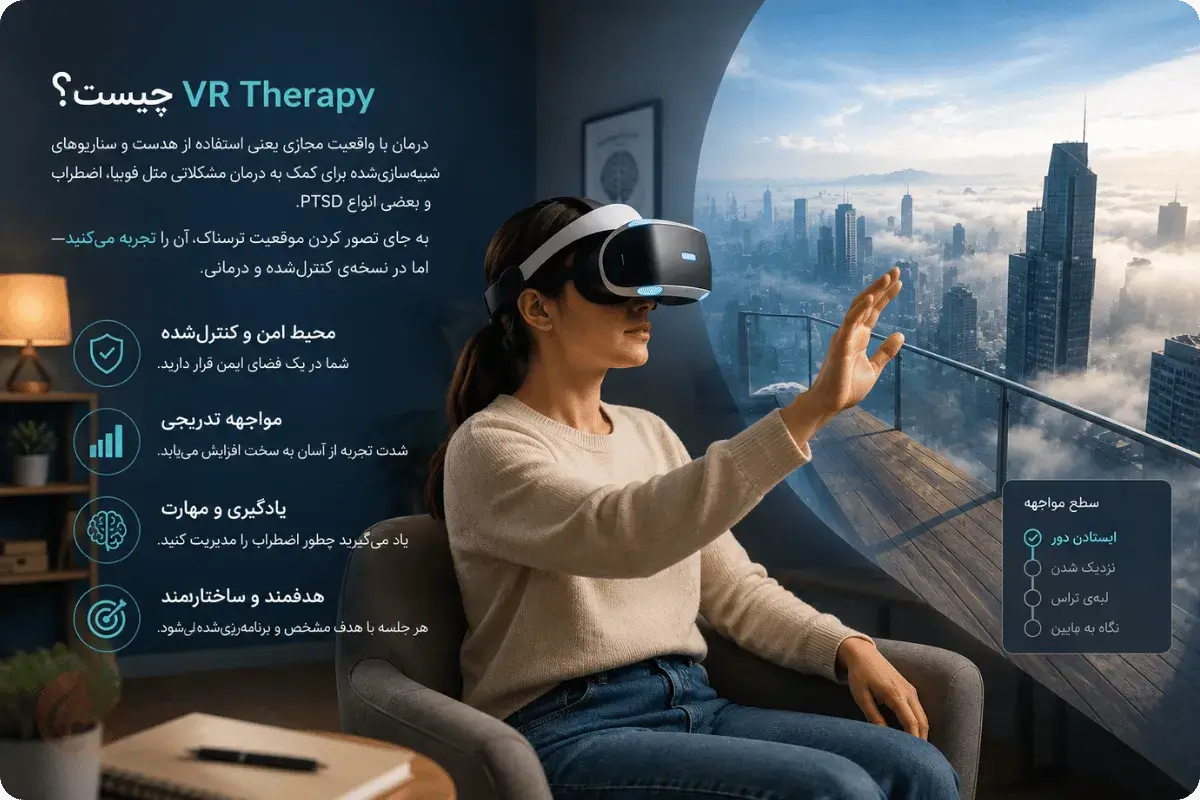
Virtual reality therapy means using headsets and simulated scenarios to help treat issues such as phobias, anxiety, and certain types of PTSD.
Its main difference from “just talking in a session” is that instead of imagining a scary situation, you experience it—but in a controlled, therapeutic version.
For example, if you are afraid of heights, the therapist can place you in a virtual tower and adjust the intensity of the experience step-by-step, from “standing by a window” to “approaching the edge.”
A Brief History of Virtual Reality Therapy
The story of virtual reality therapy began in the 1990s, when researchers at universities such as USC in the United States began testing early VR headsets to treat phobias. Initial studies showed that patients could experience real emotional reactions by being placed in virtual scenarios, but without physical risks. In later years, with the advancement of hardware like the Oculus Rift, this technology moved from laboratories to clinics. Today, organizations such as the APA (American Psychological Association) recognize it. In Iran, although still in the early stages, medical universities have begun research in this field. This brief history shows that virtual reality therapy has evolved from a science-fiction idea into a real therapeutic tool.
Why does the brain take the virtual world seriously?
By combining 3D imagery, sound, and a sense of presence, VR causes your brain to react realistically: your heart rate increases, your palms sweat, and anxiety is activated.
But the golden point is this: because the situation is not real, you have the opportunity, with the therapist’s guidance, to learn how to regulate anxiety and slowly rewrite fear pathways.
How is virtual reality therapy performed?
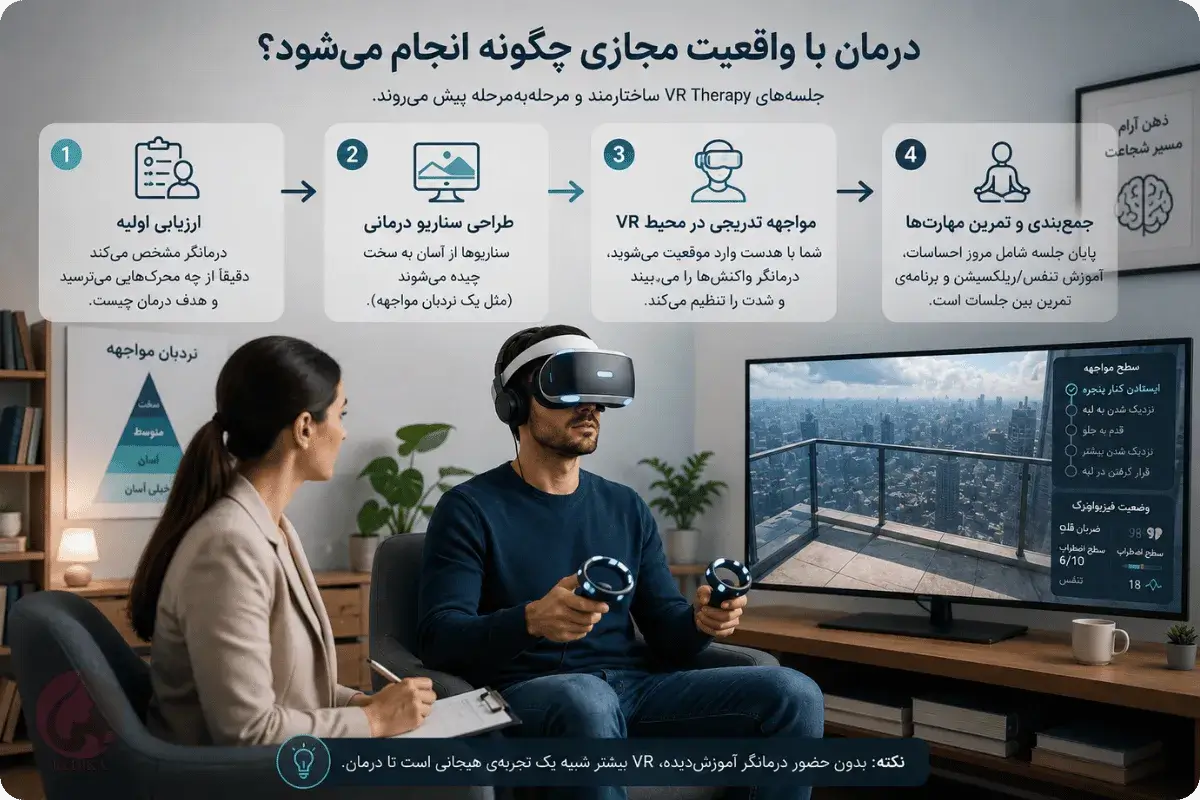
VR sessions are usually structured, and the “intensity” is increased gradually:
Initial Assessment
The therapist determines exactly which triggers you fear and what the goal of the treatment is.Designing the Therapeutic Scenario
Scenarios are arranged from easy to difficult (like an exposure ladder).Gradual Exposure in the VR Environment
You enter the situation with a headset, the therapist observes your reactions, and adjusts the intensity.Conclusion and Skill Practice
The end of the session usually includes reviewing feelings, teaching breathing/relaxation techniques, and a practice plan between sessions.
Note: Without the presence of a trained therapist, VR is more like an emotional experience than therapy.
For which problems is VR Therapy more applicable?
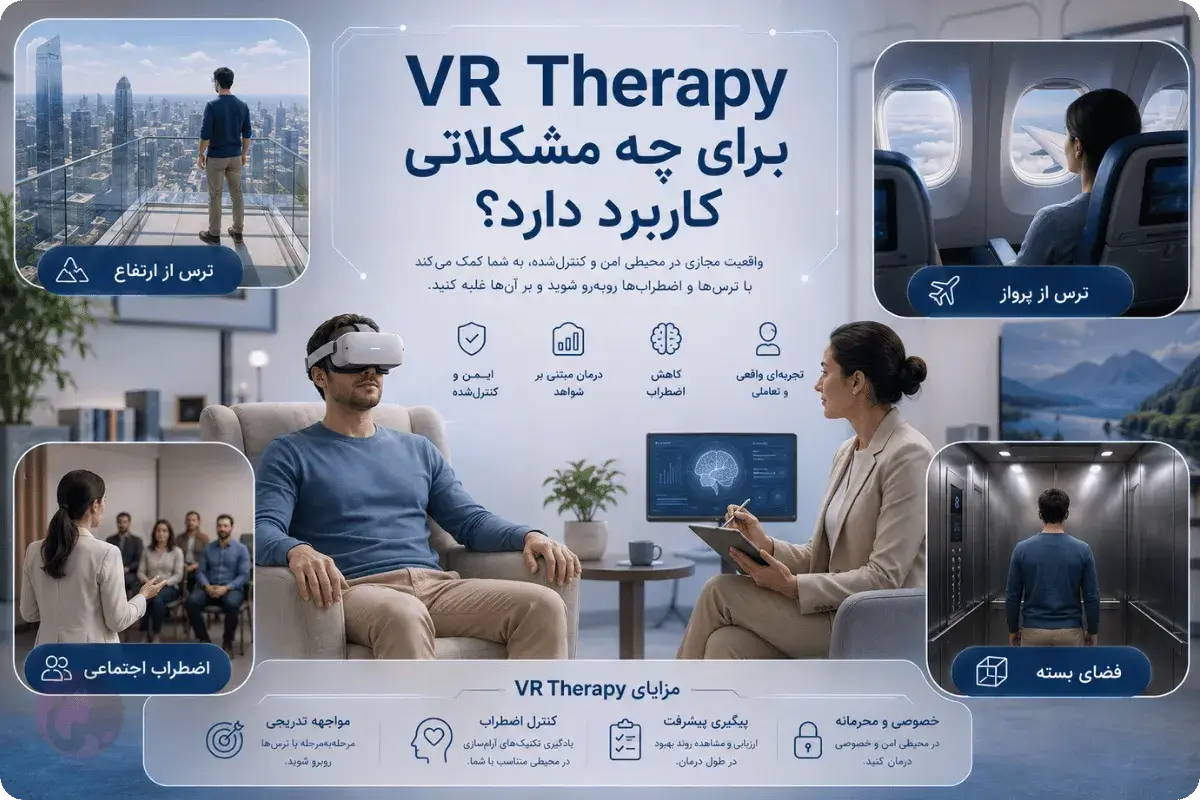
Virtual reality therapy shines most in cases where “real exposure” is difficult, expensive, or impossible:
Specific Phobias: Fear of flying, heights, elevators, animals, enclosed spaces
Social Anxiety: Public speaking, attending parties, giving presentations
Certain PTSD cases: When the therapist determines that controlled exposure is helpful
Skill Practice: Such as facing social situations or practicing relaxation in triggering conditions
Important benefits of virtual reality therapy
Safe and controlled: The intensity of the experience is in the therapist’s hands
Repeatable: A scenario can be executed exactly the same way again
Highly personalized: The scenario is designed according to your fear
Reduced resistance: Many find it easier to enter the VR version than real-world exposure
Possibility of measuring progress: Some systems also record physiological data like heart rate
Limitations and risks (let’s look realistically)
VR is not a miracle and is not suitable for everyone:
Cybersickness (nausea/dizziness) occurs in some people
Limited access and equipment costs in some cities or clinics
Need for specialized therapist training and standardized scenarios
Not suitable for certain medical/psychological conditions (see below)
Applications of virtual reality therapy in mental disorders
For what types of fears and disorders is it used? Virtual reality therapy is mainly used for phobias, anxiety, PTSD, and even autism. For example, in VR phobia treatment, patients face spiders, heights, or social situations. In PTSD, combat scenarios are simulated so that veterans can process the fear. Its wide applications include everyone from children to adults. In psychotherapy, this method acts as a supplement to CBT (cognitive-behavioral therapy) and provides faster results.
Who is suitable for VR Therapy and who is not?
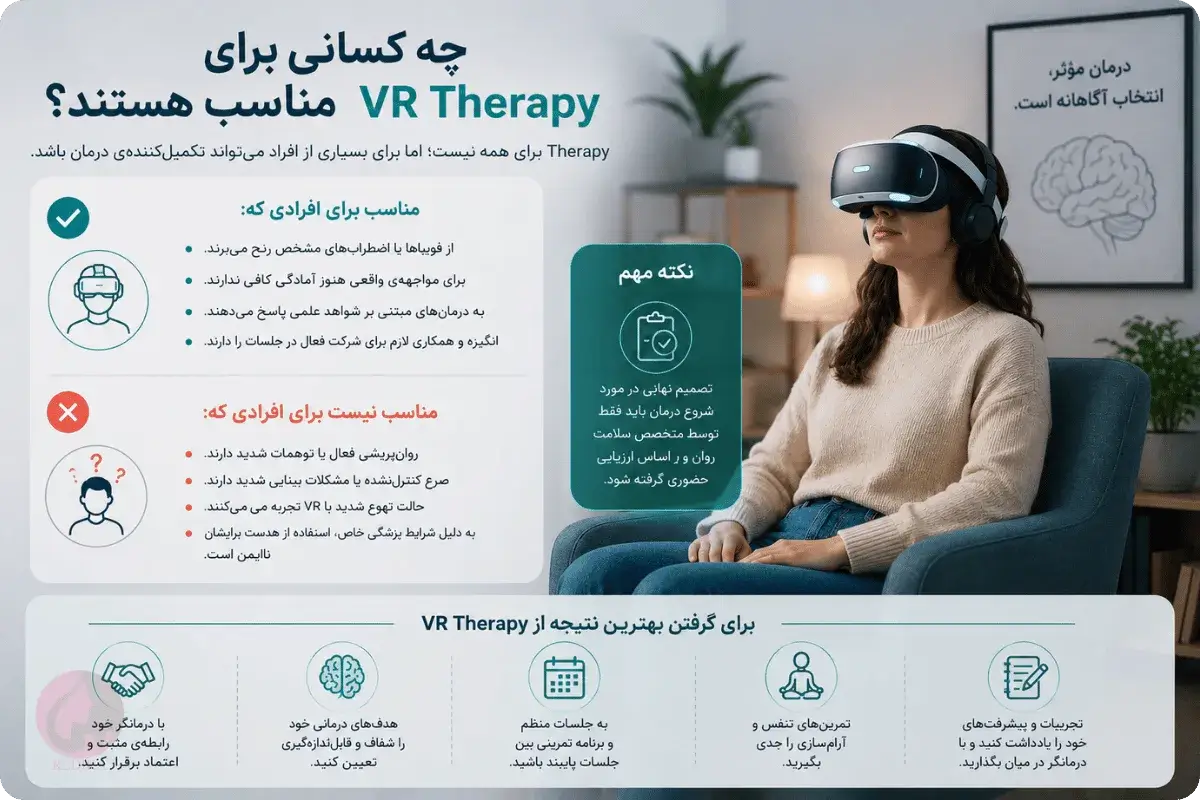
More suitable for:
Specific phobias (flying, heights, enclosed spaces, etc.)
Mild to moderate social anxiety (with therapist diagnosis)
People who have trouble with exposure therapy and need a softer start
Unsuitable or requiring serious caution:
History of epilepsy/seizures or severe sensitivity to light and flickering
Certain states of psychosis/delusions or severe disorders that require precise diagnosis and monitoring
Severe dizziness and nausea (motion sickness) that prevents continuing sessions
Any medical condition where a doctor/therapist limits the use of VR
Benefits and limitations of virtual reality therapy
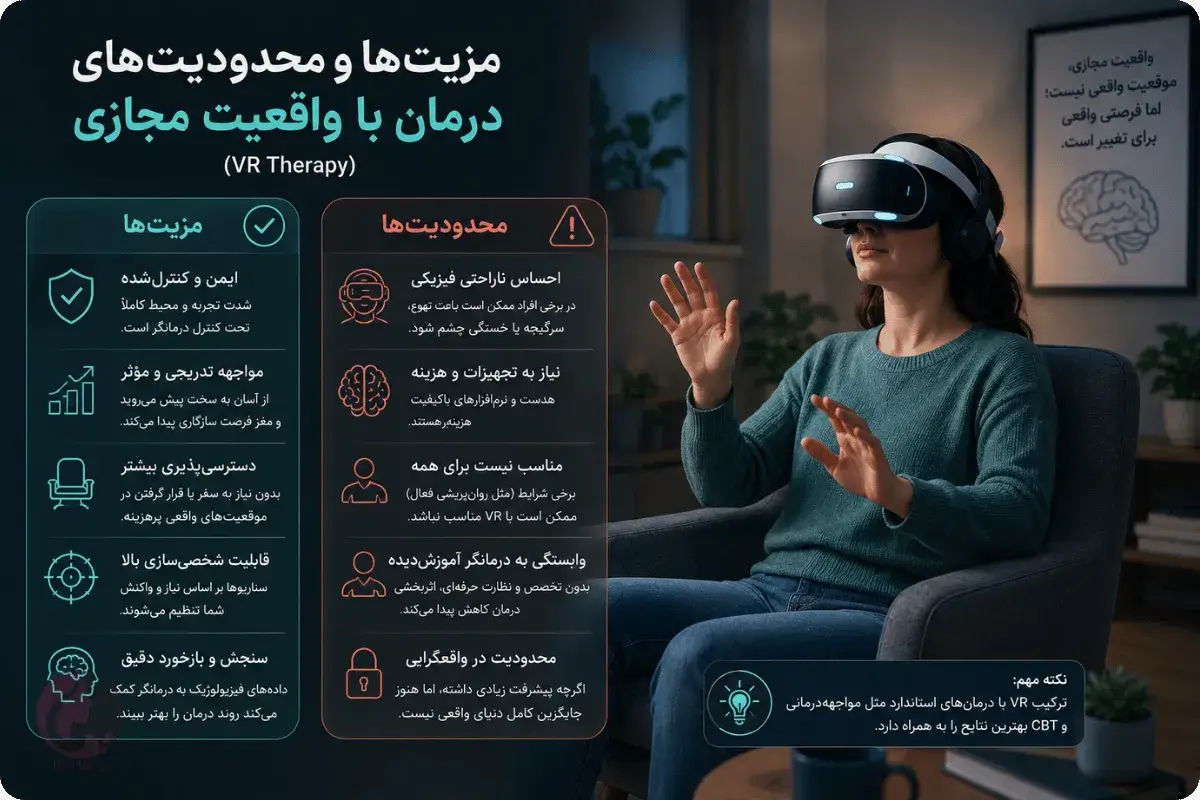
What is its advantage over classic exposure therapy? Virtual reality therapy offers controllability, safety, and personalization. In traditional exposure, the patient must be placed in the real world, which may be expensive or dangerous. But VR simulates this in the office, making sessions shorter. Meta-analysis studies show its effectiveness is similar or higher, with a lower dropout rate. What are the limitations and risks? Despite the benefits, there are risks such as cyber-sickness (nausea), and limited access to equipment. Also, it is not suitable for all disorders and requires a specialist.
Superiority over traditional exposure therapy
In the classic method, finding a real situation is difficult; for example, simulating a storm. VR makes this easy and has high repeatability. Another advantage is the precise measurement of progress through sensor data. Patients often say VR is empowering, and they prefer virtual reality therapy.
Risks and limitations of VR Therapy
The main risk is motion sickness in 20-30 percent of users, which is managed with short sessions. Limitations include equipment costs ($5,000-$10,000) and the need for therapist training. Also, long-term effects have not yet been fully studied. These show that VR is a powerful but not flawless tool.
Comparison of effectiveness with other methods
Compared to medication, VR is without side effects and has more lasting effects. It is combined with mindfulness for better results. However, for severe cases, a combination of methods is recommended.
Status of VR Therapy in Iran: Global trend or accessible reality?
In Iran, interest in and use of VR in psychotherapy is increasing, but it is not available everywhere and for everyone. It is mostly seen in large cities and in some well-equipped centers (clinics or university projects).
If you are looking for this method, it is better to ask a licensed psychologist/psychotherapist instead of searching sporadically:
Do they offer VR as a supplement to treatment?
What is their protocol? What disorders do they work with?
How do they manage side effects like nausea or severe anxiety?
The future of digital therapies: VR + AI + Biofeedback
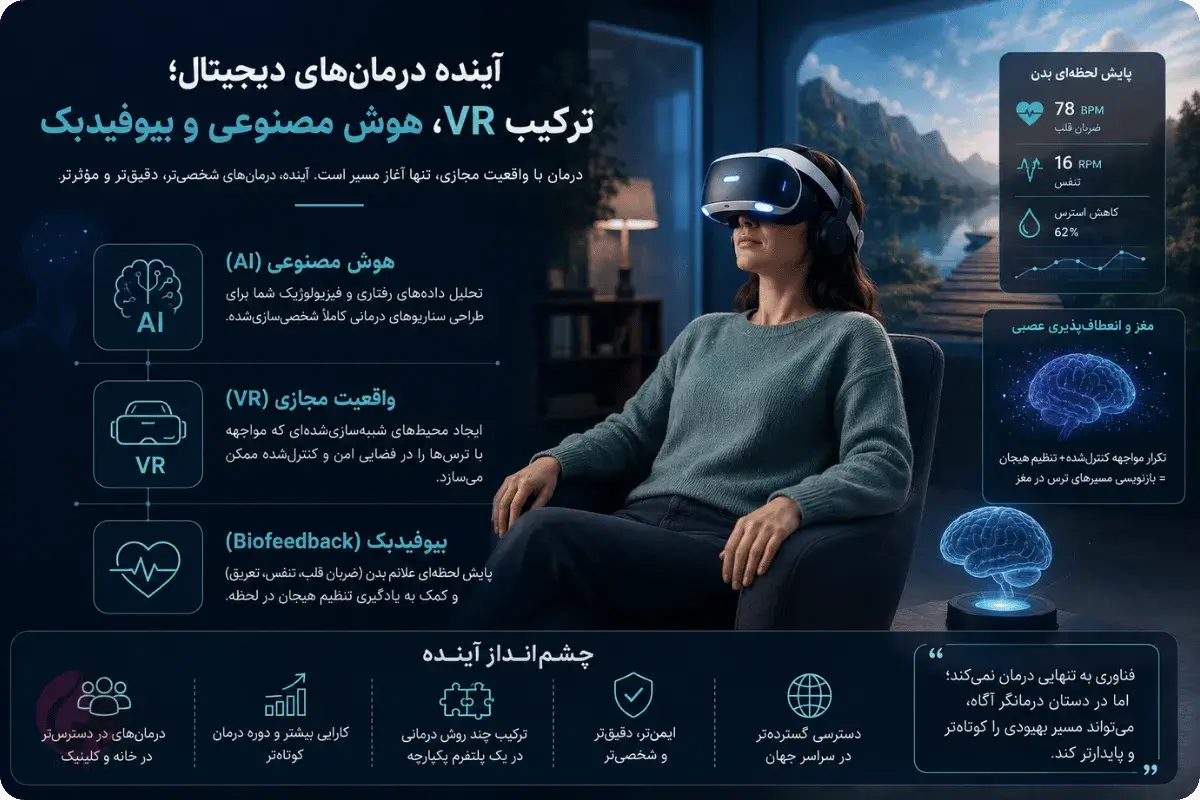
The global trend is toward more personalized treatments; combining VR with:
Biofeedback (displaying and regulating body reactions like heart rate)
Artificial Intelligence (smart adjustment of scenario intensity based on your reaction)
Augmented Reality (AR) for daily exercises outside the clinic
Conclusion
Virtual reality therapy builds a bridge between “mental fear” and “real exposure”; a safe, controllable, and step-by-step bridge. For some phobias and anxieties, it can be very helpful, but only when used within a professional treatment framework and with proper assessment.
Frequently Asked Questions
1) Does VR Therapy replace the therapist?
No. VR is a tool; therapy finds meaning through the therapist’s design and guidance.
2) How many sessions are needed?
It depends on the type of problem and the severity of symptoms. Usually, the therapist provides a step-by-step plan after assessment.
3) What if I get nauseous or dizzy in VR?
This is normal in some people and is usually managed by shortening the session, adjusting the scenario, and resting—but it must be reported to the therapist.
4) Can it be used for children as well?
In some cases, yes; but age, the child’s cooperation, the type of problem, and the specialist’s opinion are determining factors.
5) Can I self-treat with a home headset?
Self-treatment is not recommended; because incorrect or intense exposure can worsen anxiety.
About the author

Join the conversation
Share your experience or question with REDIKA readers.
Your email stays private. Please avoid sharing personal or sensitive details.


