Home / Editorial guide

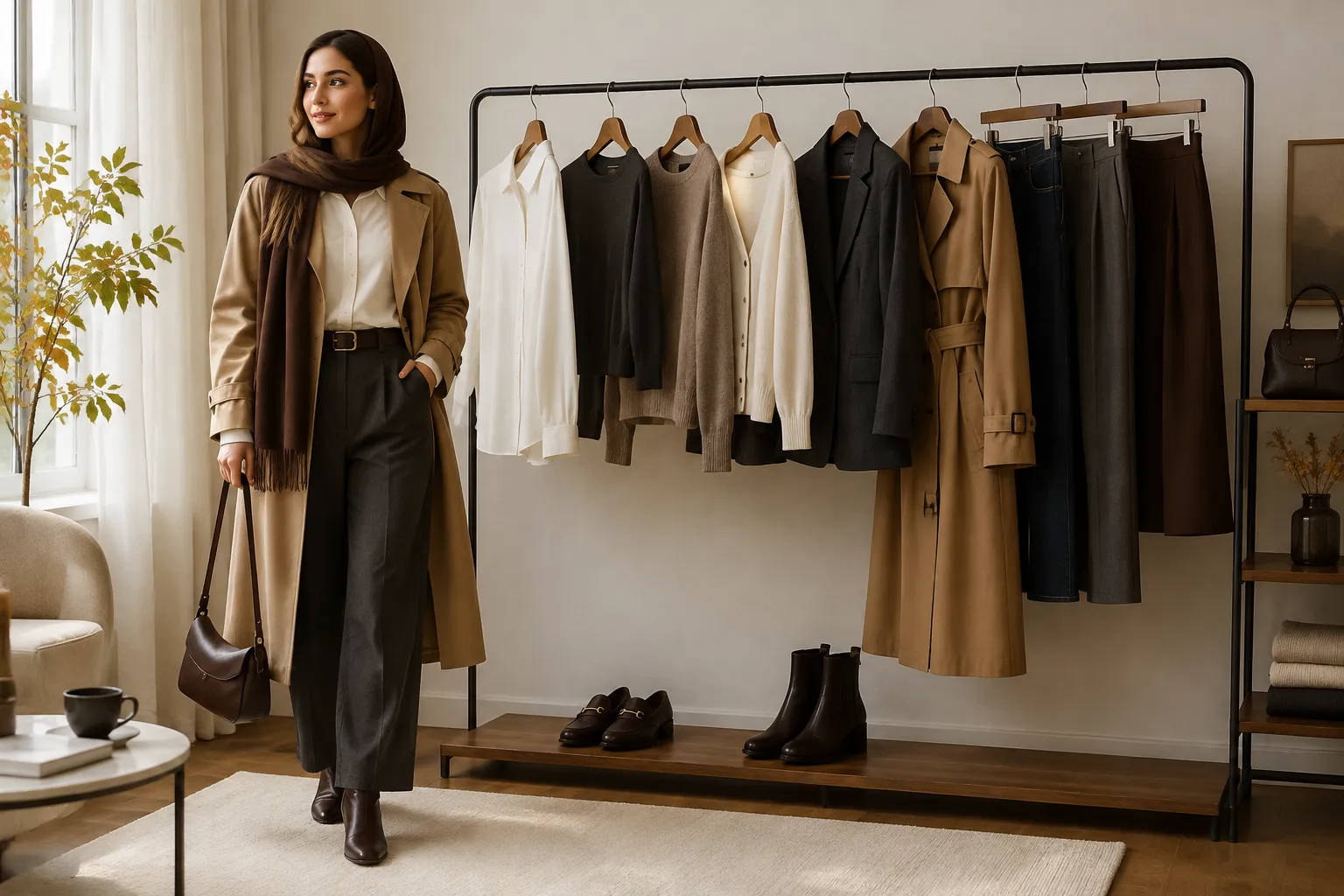
Quick answer: You do not need to buy dozens of new clothes to build a Fall 2026 capsule wardrobe. In this guide, we have selected 12 versatile pieces—including three tops, three mid and outer layers, four bottoms or one-piece garments, and two pairs of shoes—that can be combined to create at least 30 different, wearable fall outfits. Neutral colors form the foundation of the wardrobe, while Fall 2026 trend colors are introduced selectively to keep your outfits fresh without forcing you to replace your entire wardrobe next year.
The problem with many fall wardrobes is not a lack of clothes; it is a lack of combinations. You may own 30 or 40 pieces yet still think of only a few reliable outfits when getting dressed and end up repeating the same combinations. A capsule wardrobe reverses this process: first, you choose a limited number of coordinated pieces, then make sure each item works in several different outfits. The result is a more compact wardrobe, more intentional shopping, and faster outfit decisions on fall mornings.
The formula used in this guide: 12 essential pieces + a coordinated color palette + layering potential + at least 30 real outfit combinations. Accessories such as scarves, bags, belts, and jewelry are not included in the 12-piece count, so using accessories you already own can take the number of possible looks well beyond 30.
What Is a Capsule Wardrobe and Why Is It Relevant Again?
A capsule wardrobe is a limited collection of coordinated, versatile clothing pieces, most of which can be mixed and matched with one another. In this kind of wardrobe, the value of an item is not determined only by how attractive it looks when you buy it. What matters more is how many other pieces it works with, how many situations you can wear it in, and whether it can stay useful for several seasons. For example, charcoal trousers that work with a light shirt, knit sweater, turtleneck, cardigan, and blazer are more valuable in a capsule wardrobe than trousers that only look good with one specific top.
A capsule wardrobe does not mean removing color or personality from your style. Your clothes do not all have to be cream, beige, and black, and everyone does not need to follow the same version of minimalism. Recent Fall/Winter 2026 reports show that classic pieces, modern tailoring, updated proportions, and layering remain important, while richer colors and textures are becoming more prominent as well. Vogue’s Fall/Winter 2026 fashion trend report also highlights the reinterpretation of familiar wardrobe staples rather than completely replacing them.
If you are still unsure which silhouettes and colors genuinely suit your lifestyle, body proportions, and personal preferences, it is worth working on finding your personal style before buying new capsule wardrobe pieces. A capsule wardrobe works best when it reflects your real life rather than simply copying outfits you have seen on social media.
Why Is Fall 2026 an Ideal Season for Building a Capsule Wardrobe?
Fall is particularly well suited to a capsule wardrobe because one garment can play several different roles throughout the season. A shirt worn on its own in early fall may be layered underneath a sweater a few weeks later, and as the weather gets colder, it can also be worn under a blazer and trench coat. Changing the layers can therefore transform an outfit without requiring additional purchases. This flexibility allows 12 well-chosen fall pieces to create far more practical combinations than a similarly sized summer wardrobe.
This approach also aligns with the direction of Fall 2026 fashion. In Vogue’s overview of the defining Fall 2026 trends, Prada’s presentation is highlighted as an example: 15 models appeared in multiple layered versions of their looks, with the outfit changing as individual layers were removed. The same report also highlights separates designed to work together, practical outerwear, and clothing suited to colder weather.
ELLE’s Fall 2026 trend report also identifies modern tailoring as one of the season’s major directions. Blazers, jackets, and structured silhouettes remain relevant, but they are being styled in a more relaxed and everyday way. That makes them especially suitable for a capsule wardrobe, because you do not have to choose between timeless clothing and contemporary styling.
The Color Formula for a Fall 2026 Capsule Wardrobe
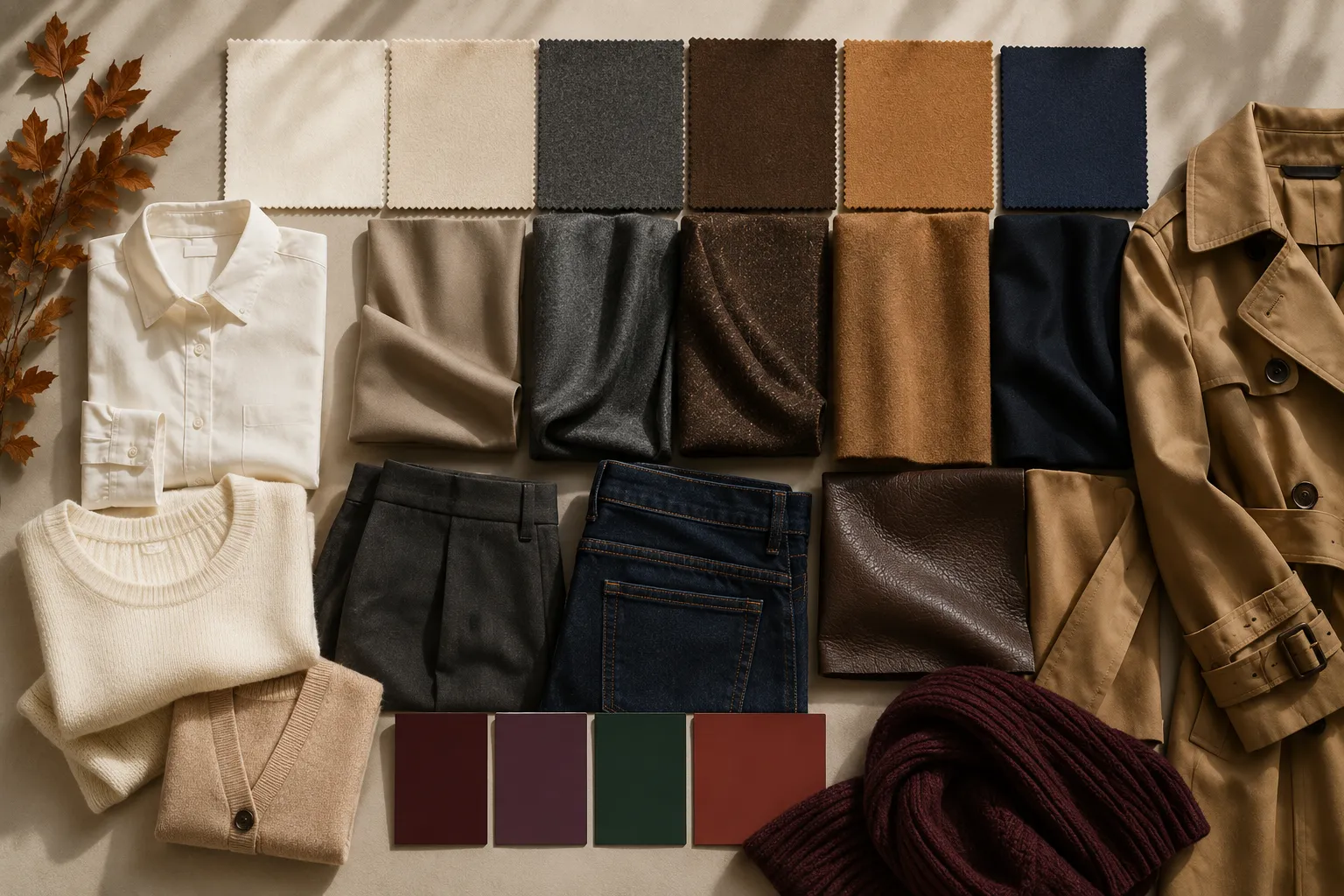
Choose your color palette before choosing individual garments. If you buy 12 attractive pieces whose colors do not work together, you will need additional purchases just to make them wearable, defeating the purpose of a capsule wardrobe. For a compact and flexible collection, a reliable formula is three base colors + one secondary color + one accent color. For example, cream, charcoal, and brown can form the base, camel can serve as the secondary shade, and burgundy, plum, deep green, or blue can be introduced through just one or two items.
The official Pantone Color Institute Autumn/Winter 2026–2027 report reflects a similar balance, pairing earthy neutrals with brighter and more expressive colors. Warm whites, browns, grays, and deep blues appear among the season’s dependable foundations, while terracotta tones, greens, lilac-influenced pinks, red-browns, and brighter blues bring more energy to the palette.
“Autumn/Winter 2026–2027 creates a fresh balance between minimalism and urban energy.”
— A brief paraphrase of comments by Leatrice Eiseman, Executive Director of the Pantone Color Institute
Base Colors That Create the Most Outfit Combinations
A good base color should connect several different pieces within your wardrobe. For most fall capsule wardrobes, warm white or ivory works well for shirts and lighter tops, charcoal or black works for darker garments, and brown, camel, or mocha adds warmth. Navy can also replace black, especially if many of the clothes you already own are white, blue, gray, or brown. You do not need all of these colors; three coordinated base shades are usually enough.
- Warm white, ivory, or cream: ideal for shirts, knitwear, and lighter layers.
- Charcoal, black, or navy: useful for trousers, base layers, jackets, and shoes.
- Brown, mocha, or camel: suitable for knitwear, cardigans, trench coats, and accessories.
- One accent color: burgundy, plum, deep green, blue, or another shade that fits your personal style.
There is a simple way to identify your best base colors: take five fall pieces from your existing wardrobe that you wear most often and place them together. The colors that repeatedly appear among those pieces are usually a better foundation for your real capsule wardrobe than a palette that simply looks attractive on a screen.
How Should You Add Fall 2026 Trend Colors to a Capsule Wardrobe?
Trend colors should be added to your wardrobe rather than allowed to control the entire wardrobe. If all 12 pieces are selected according to one season’s hottest colors or silhouettes, you may feel the need for another major shopping cycle as soon as trends change. A more practical strategy is to keep most of the wardrobe neutral and introduce seasonal color through a sweater, cardigan, scarf, bag, or another lower-risk piece. A relatively small color change can refresh several existing outfits at once.
| Color Role | Suggested Shades | Best Uses |
|---|---|---|
| Light base | Ivory, warm white, cream | Shirts, knitwear, cardigans |
| Dark base | Charcoal, black, navy | Trousers, blazers, shoes |
| Warm neutral | Brown, mocha, camel | Knitwear, trench coats, bags |
| Accent color | Burgundy, plum, deep green, or blue | One top or accessory |
12 Essential Pieces for a Fall 2026 Capsule Wardrobe
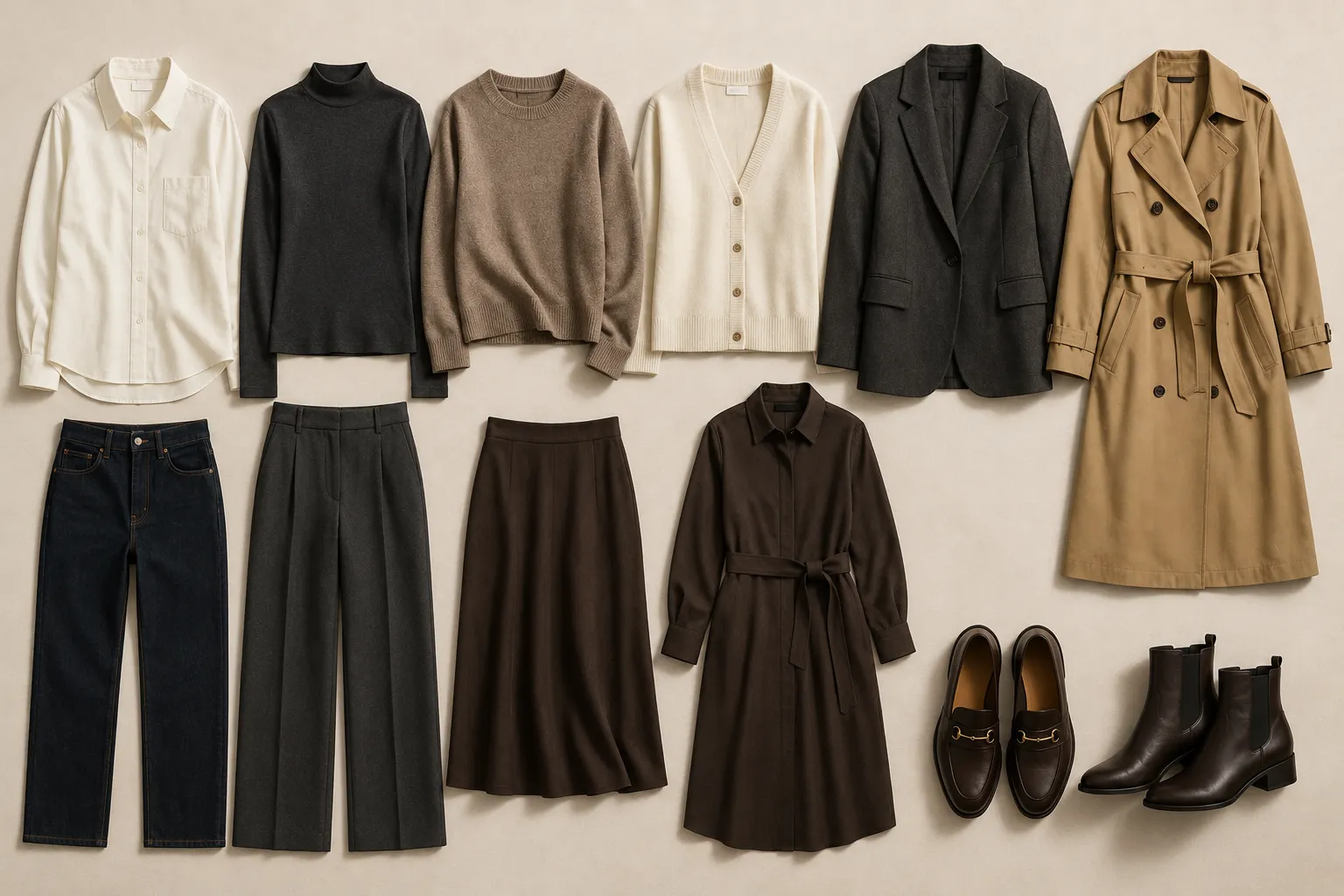
The 12 pieces in this capsule are: a light-colored shirt, a long-sleeve base layer or lightweight turtleneck, a lightweight sweater, a cardigan, a blazer or structured jacket, a trench coat or lightweight raincoat, dark jeans, tailored trousers, a midi or maxi skirt, a simple midi dress, loafers, and ankle boots. This list is not a rigid rule. It is a framework that can be adapted to your personal style, climate, and everyday routine.
Four criteria were used to select these 12 pieces:
- Mix-and-match potential: each item should work with several other pieces in the wardrobe.
- Multiple uses: whenever possible, a garment should work in more than one type of situation.
- Layering potential: the fit and thickness should allow it to be worn under or over other garments.
- Longevity: the core design should not rely entirely on a very short-lived trend.
This capsule has been designed for real life. Its pieces can be adapted for university, work, shopping, cafés, everyday city wear, and semi-formal occasions. For styling preferences where longer outerwear is preferred, a classic trench can be replaced with a long raincoat or streamlined long coat. If skirts or dresses are not part of your personal style, suitable alternatives are also included later in this guide.
Essential Tops: Shirt, Base Layer, and Knitwear
The first three tops do most of the combination work in this capsule wardrobe. A warm white or ivory shirt should ideally have a slightly relaxed fit so it can be worn on its own or layered under a sweater and blazer without bunching. The second item is a simple long-sleeve top or lightweight turtleneck in a dark shade, which works as a base layer on colder days. The third piece is a lightweight sweater, which can either be neutral or serve as the accent color of your capsule.
The thickness of your knitwear matters in a small wardrobe. An extremely bulky sweater may look attractive on its own but can be difficult to wear comfortably beneath a blazer or trench coat, reducing the number of combinations available. Harper’s Bazaar’s Fall 2026 knitwear report also notes the return of V-neck knits and their suitability for layering. For this reason, lightweight to medium-weight knitwear usually offers more versatility in a capsule wardrobe than an extremely thick sweater.
- Item 1: a slightly relaxed warm white or ivory shirt.
- Item 2: a black, charcoal, or dark brown long-sleeve top or lightweight turtleneck.
- Item 3: a lightweight cream, mocha, burgundy, plum, or otherwise coordinated sweater.
Mid and Outer Layers: Cardigan, Blazer, and Trench Coat
The fourth piece is a simple cardigan that ideally works both open and buttoned. A buttoned cardigan can function as a top, while an open cardigan can be layered over a shirt, turtleneck, or midi dress. Item five is a blazer, long jacket, or structured coat-style outer layer; charcoal, camel, brown, and navy generally offer the greatest flexibility. Item six is a trench coat, raincoat, or lightweight long coat that serves as the final layer on windy or rainy days.
When choosing outerwear, do not judge it only by how it looks on a hanger. Try it over the thickest sweater in your capsule and check that the shoulders, armholes, and chest do not pull. If a traditional trench coat does not fit your style, a minimalist long raincoat or streamlined long coat can play exactly the same role. What matters is not the garment’s label, but the function it performs within the wardrobe.
- Item 4: a simple cream, gray, brown, or burgundy cardigan.
- Item 5: a structured blazer or long jacket.
- Item 6: a trench coat, raincoat, or seasonal long coat.
Bottoms and One-Piece Options: Jeans, Trousers, Skirt, and Dress
For bottoms, it is usually more useful to vary the silhouette than to buy several similar colors. Dark straight-leg jeans provide a reliable foundation for everyday city outfits and can shift easily in mood depending on whether they are paired with loafers, ankle boots, knitwear, or a blazer. Straight or wide-leg tailored trousers bridge the gap between casual and polished dressing: they feel relaxed with knitwear and become appropriate for many workplaces when paired with a shirt and blazer. Charcoal, navy, brown, and dark indigo are versatile choices for these two pieces.
A simple midi or maxi skirt introduces a different silhouette and is easiest to combine when it does not have an overly busy print or highly restrictive details. A simple midi dress is also especially valuable because it creates a complete outfit on its own while working again under a cardigan, blazer, trench coat, or even a sweater layered on top. If skirts and dresses do not fit your style, there is no reason to buy them simply to follow a preset capsule list. Replace those roles with a second pair of trousers and a tunic, shirt dress, or another suitable long piece.
- Item 7: dark straight-leg jeans.
- Item 8: straight or wide-leg tailored trousers.
- Item 9: a simple midi or maxi skirt.
- Item 10: a simple, layer-friendly midi dress.
Essential Footwear: Loafers and Ankle Boots
Two pairs of shoes are enough to change the overall mood of these combinations. Loafers work particularly well on milder days, for university, office settings, and city outfits. Black, brown, or dark burgundy styles coordinate easily with most fall palettes. Ankle boots offer more warmth and work with skirts, dresses, jeans, and tailored trousers. For the main footwear in your capsule, avoid designs that are so heavily embellished that they quickly look tied to one short-lived trend.
Across the 30 outfits in this article, ankle boots are used 16 times and loafers 14 times. These figures show why your core shoes deserve extra attention when it comes to comfort, quality, and color coordination. A frequently worn item that is uncomfortable can undermine even the most carefully planned capsule wardrobe.
Complete Table of the 12 Pieces and Their Roles
Tables like this are often filled with approximate numbers, but the figures below are based on the actual number of times each piece appears across the 30 unique outfits in this guide. The final column therefore shows exactly how often each item is used in the outfit combinations below, helping identify the true workhorses of the capsule.
| No. | Item | Suggested Color | Main Role | Uses Across 30 Outfits |
|---|---|---|---|---|
| 1 | Simple shirt | Warm white or ivory | Core top and base layer | 11 times |
| 2 | Long-sleeve top or lightweight turtleneck | Black, charcoal, or dark brown | Base layer for cooler days | 9 times |
| 3 | Lightweight sweater | Mocha, cream, or accent color | Warmth and color variation | 8 times |
| 4 | Cardigan | Cream, brown, or burgundy | Mid layer or standalone top | 6 times |
| 5 | Blazer or structured jacket | Charcoal, camel, or navy | Adds structure and polish | 8 times |
| 6 | Trench coat, raincoat, or long coat | Camel, khaki, or dark neutral | Weather-protective outer layer | 8 times |
| 7 | Dark straight-leg jeans | Dark indigo | Everyday outfit foundation | 9 times |
| 8 | Tailored trousers | Charcoal, brown, or navy | Polished casual to workwear | 8 times |
| 9 | Midi or maxi skirt | Black, chocolate, or charcoal | Adds silhouette variety | 7 times |
| 10 | Midi dress | Neutral or dark | Standalone and layered outfits | 6 times |
| 11 | Loafers | Black or brown | Everyday, university, and work | 14 times |
| 12 | Ankle boots | Black or brown | Cold weather and polished outfits | 16 times |
This data reveals an important point: not every item in a capsule wardrobe needs to be worn equally often. Pieces such as shoes, the light-colored shirt, and jeans function as high-frequency foundations, while items such as the cardigan or midi dress create additional variety. If you are deciding where to invest more of your budget, it makes sense to prioritize the pieces that will be worn most frequently.
How Can 12 Pieces Create at Least 30 Outfits?
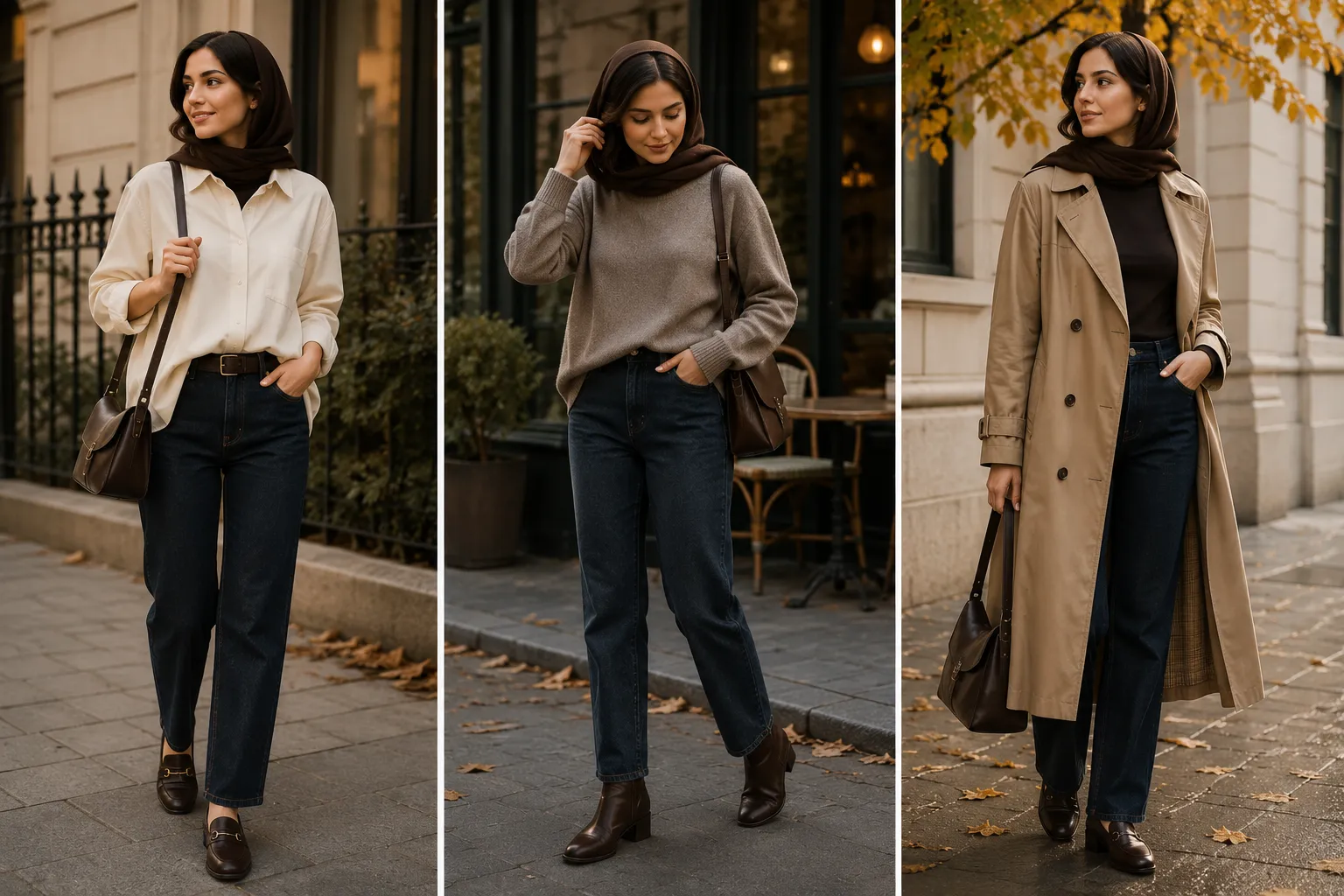
You do not need to count tiny styling changes as entirely new outfits to reach 30 combinations. In the list below, every outfit differs from the others in at least one major element—such as the top, bottom, outer layer, or shoes—and all 30 combinations are unique. Accessories are still excluded from the calculation, which means scarves, bags, belts, and jewelry can create even more variations.
For easier reference, the full names of the garments are included rather than relying only on item numbers. The 30 outfits are divided into three practical groups: 10 everyday city outfits, 10 university and work outfits, and 10 more polished looks for cafés, dates, and semi-formal occasions.
10 Casual and Everyday City Outfits
| No. | Combination | Mood and Use |
|---|---|---|
| 1 | Light shirt + dark jeans + loafers | Simple, polished, and ideal for mild days |
| 2 | Light shirt + dark jeans + cardigan + loafers | Layered everyday look |
| 3 | Dark base layer + dark jeans + raincoat + ankle boots | Ideal for cool and rainy weather |
| 4 | Lightweight sweater + dark jeans + ankle boots | Simple and warm fall outfit |
| 5 | Dark base layer + midi or maxi skirt + ankle boots | Comfortable with a different silhouette |
| 6 | Midi dress + cardigan + loafers | Comfortable for everyday city wear |
| 7 | Midi dress + raincoat + ankle boots | Complete outfit for a cool day |
| 8 | Dark base layer + open light shirt + jeans + loafers | Light, relaxed layering |
| 9 | Light shirt + sweater layered over it + jeans + ankle boots | Classic fall combination |
| 10 | Buttoned cardigan + tailored trousers + loafers | Comfortable but polished |
To create even more variation from these 10 outfits, you do not need additional core garments. With neutral combinations, introduce your accent color through a scarf or bag, add a belt, or allow the shirt cuffs to show beneath the cardigan or jacket. Small styling changes like these can refresh the overall look without making the capsule wardrobe larger.
10 University and Work Outfits
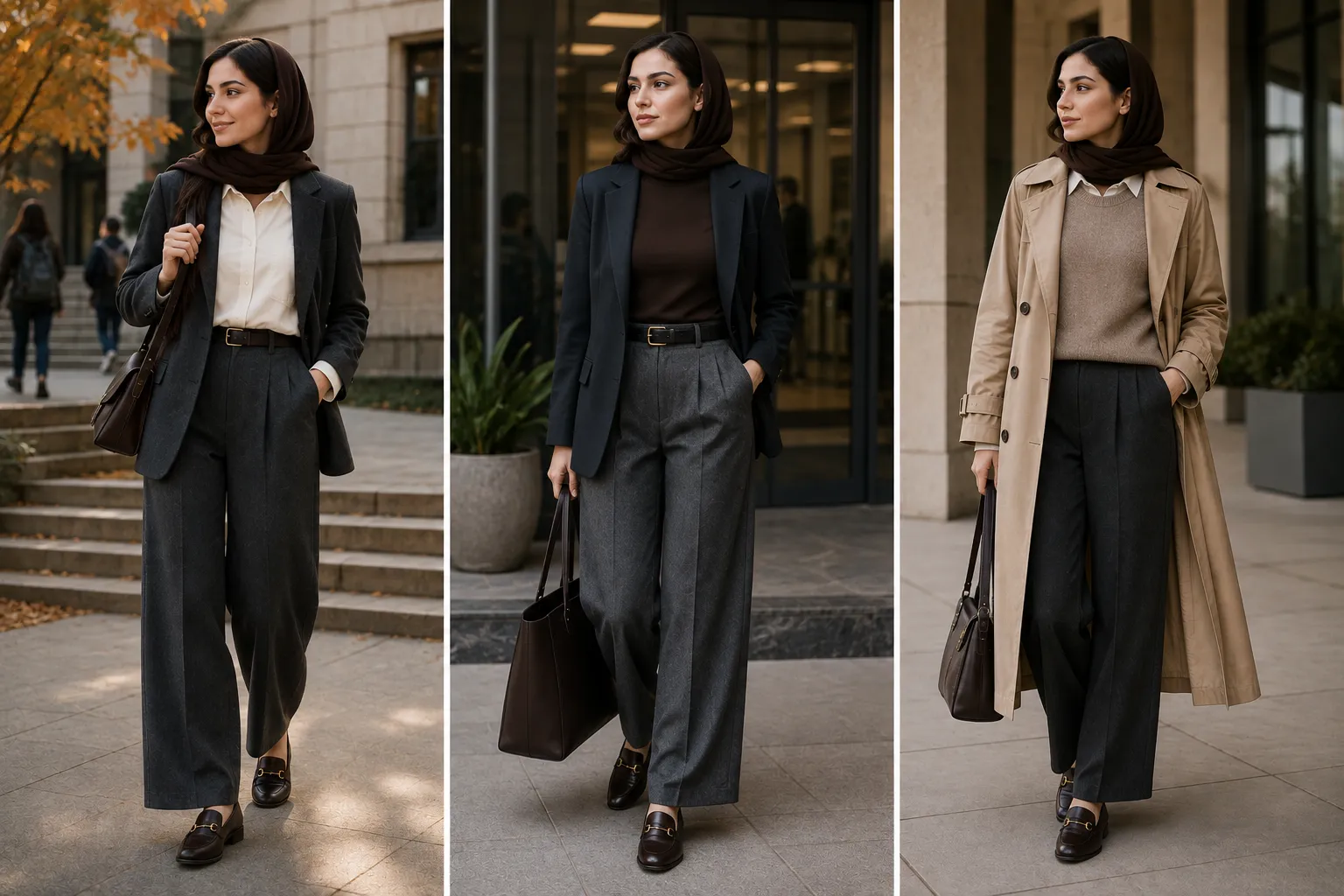
| No. | Combination | Mood and Use |
|---|---|---|
| 11 | Light shirt + tailored trousers + blazer + loafers | Polished and suitable for work |
| 12 | Dark base layer + tailored trousers + blazer + loafers | Minimal and more formal |
| 13 | Lightweight sweater + tailored trousers + raincoat + loafers | Suitable for university and smart-casual settings |
| 14 | Light shirt + skirt + cardigan + ankle boots | Polished with a softer layer |
| 15 | Dark base layer + skirt + blazer + ankle boots | Structured and suitable for meetings |
| 16 | Midi dress + blazer + loafers | Quick and easy polished outfit |
| 17 | Dark base layer under midi dress + raincoat + ankle boots | Layered and suitable for colder days |
| 18 | Light shirt + dark jeans + blazer + loafers | A balance between casual and professional |
| 19 | Light shirt + sweater + tailored trousers + loafers | Classic and suitable for university |
| 20 | Dark base layer + dark jeans + raincoat + loafers | Comfortable for busy days |
If your workplace is more formal, increase the role of tailored trousers, light-colored shirts, and blazers. In a creative workplace or university setting, dark jeans, knitwear, and loafers can play the same functional roles. This flexibility is one of the main advantages of a capsule wardrobe: the structure stays consistent while the balance between formal and casual dressing changes according to your lifestyle.
10 Semi-Formal Outfits for Cafés, Dates, and Social Plans
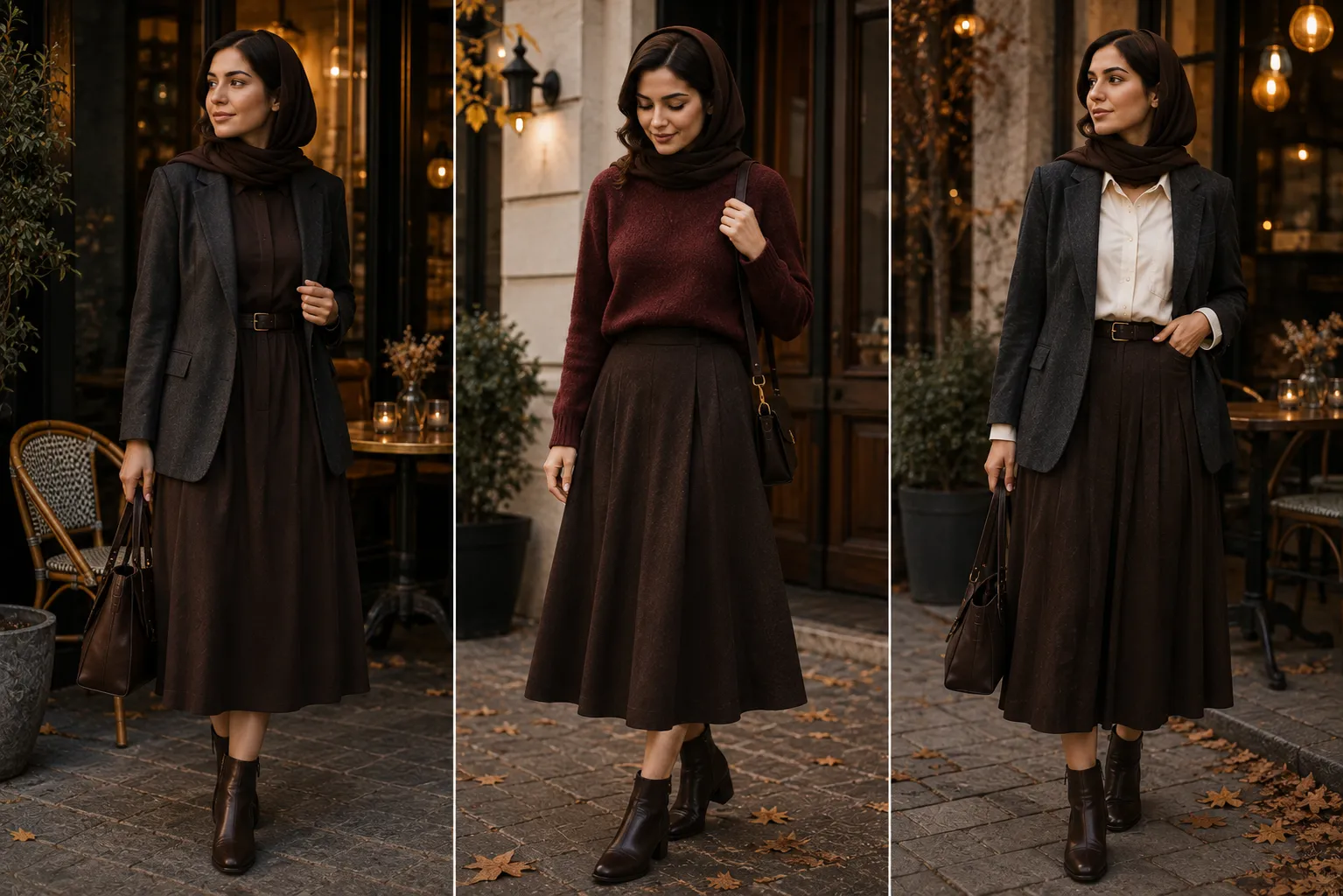
| No. | Combination | Mood and Use |
|---|---|---|
| 21 | Midi dress + blazer + ankle boots | Polished for a café or date |
| 22 | Sweater over midi dress + ankle boots | Makes the dress appear more like a skirt |
| 23 | Dark base layer + skirt + raincoat + ankle boots | Autumnal and ideal for evenings |
| 24 | Light shirt + skirt + blazer + ankle boots | Classic and more polished |
| 25 | Lightweight sweater + skirt + ankle boots | Simple with a focus on texture and silhouette |
| 26 | Buttoned cardigan + skirt + loafers | Softer and ideal for mild weather |
| 27 | Light shirt + tailored trousers + raincoat + ankle boots | Chic without looking overly formal |
| 28 | Dark base layer + tailored trousers + cardigan + ankle boots | Warm and suitable for fall evenings |
| 29 | Lightweight sweater + dark jeans + blazer + ankle boots | A balance of casual and structured elements |
| 30 | Light shirt + sweater + tailored trousers + raincoat + loafers | Layered and suitable from day to evening |
If you add just two scarves, two bags, and one belt that you already own, many of these 30 combinations can look different again without purchasing another core garment. In a well-designed capsule wardrobe, accessories are often a lower-cost way to refresh your style than buying another jacket or pair of trousers.
A Practical Formula for Layering Clothes in Fall
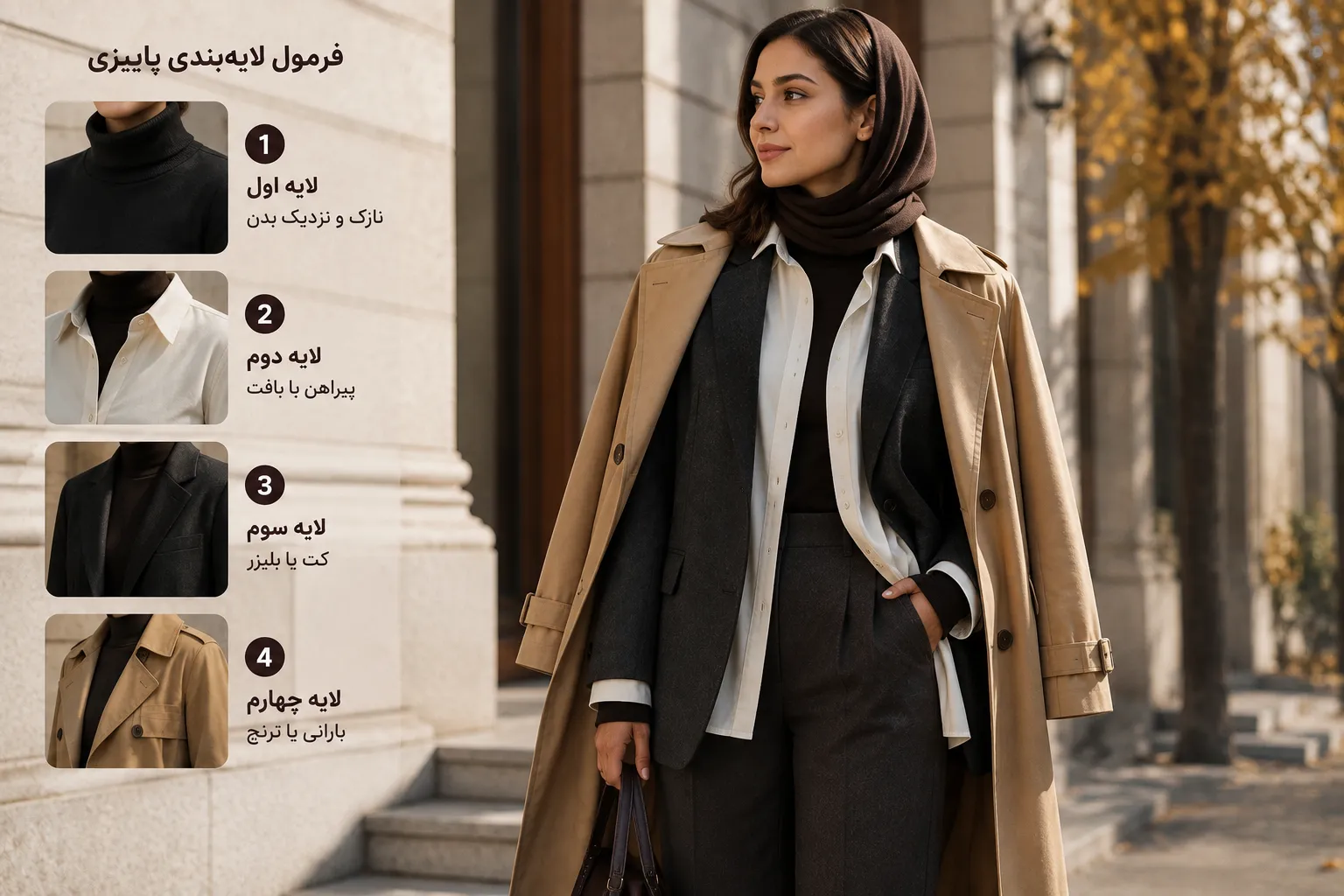
Successful layering does not mean simply wearing several thick garments at once. If all your layers are bulky or the same length, movement becomes more difficult and the overall silhouette can look heavy. A useful rule is to begin with a thin layer close to the body and gradually add weight or structure as you move outward. On warmer fall days, only two stages may be necessary, while colder weather can call for all four.
- Layer 1 — thin: a lightweight long-sleeve top or turtleneck close to the body.
- Layer 2 — medium: a shirt, sweater, or cardigan.
- Layer 3 — structured: a blazer or jacket to give the outfit shape.
- Layer 4 — protective: a trench coat, raincoat, or outer layer for wind and rain.
In Fall 2026, layering is not only practical but also part of the season’s visual language. Vogue’s Pre-Fall 2026 styling guide also emphasizes separates, polished tailoring, and layers that work in real life. To apply the idea to your own wardrobe, allow a shirt collar to remain visible above a sweater or let part of the shirt hem show underneath. Small differences in length can make layered outfits appear much more intentional.
Common Mistakes When Building a Capsule Wardrobe
A capsule wardrobe is useful only when it helps you buy less and wear your existing clothes more often. If creating one means immediately discarding your current wardrobe and buying 12 brand-new pieces, the process has gone in the wrong direction. The following mistakes are among the most likely to turn a capsule wardrobe into just another shopping list:
- Shopping before reviewing what you own: you may already have seven or eight of the 12 essential roles covered. Check your existing wardrobe first.
- Choosing clothes only because they are trending: an item built around a short-lived microtrend usually offers less long-term flexibility.
- Making every color the same: a capsule does not have to consist entirely of cream and black. One accent color that reflects your personality can prevent the wardrobe from feeling monotonous.
- Ignoring your lifestyle: someone who spends five days a week in a formal workplace needs a different balance of tailoring and denim than a student or someone who dresses casually most of the time.
- Ignoring comfort and fit: a garment may theoretically work with 10 other pieces, but if it is uncomfortable when you sit or walk, you probably will not wear it often.
- Buying several nearly identical versions: three similar cream sweaters do not perform three truly different roles. It is more useful to create variety through function.
- Having no rule before buying: before purchasing an item, imagine at least three real outfits you can create with clothes you already own.
That final rule can prevent a large number of impulse purchases. If an item only looks good with trousers, shoes, or a bag that you do not yet own, its real cost is much higher than the price printed on the tag.
How to Shop Smarter and Use the Clothes You Already Own
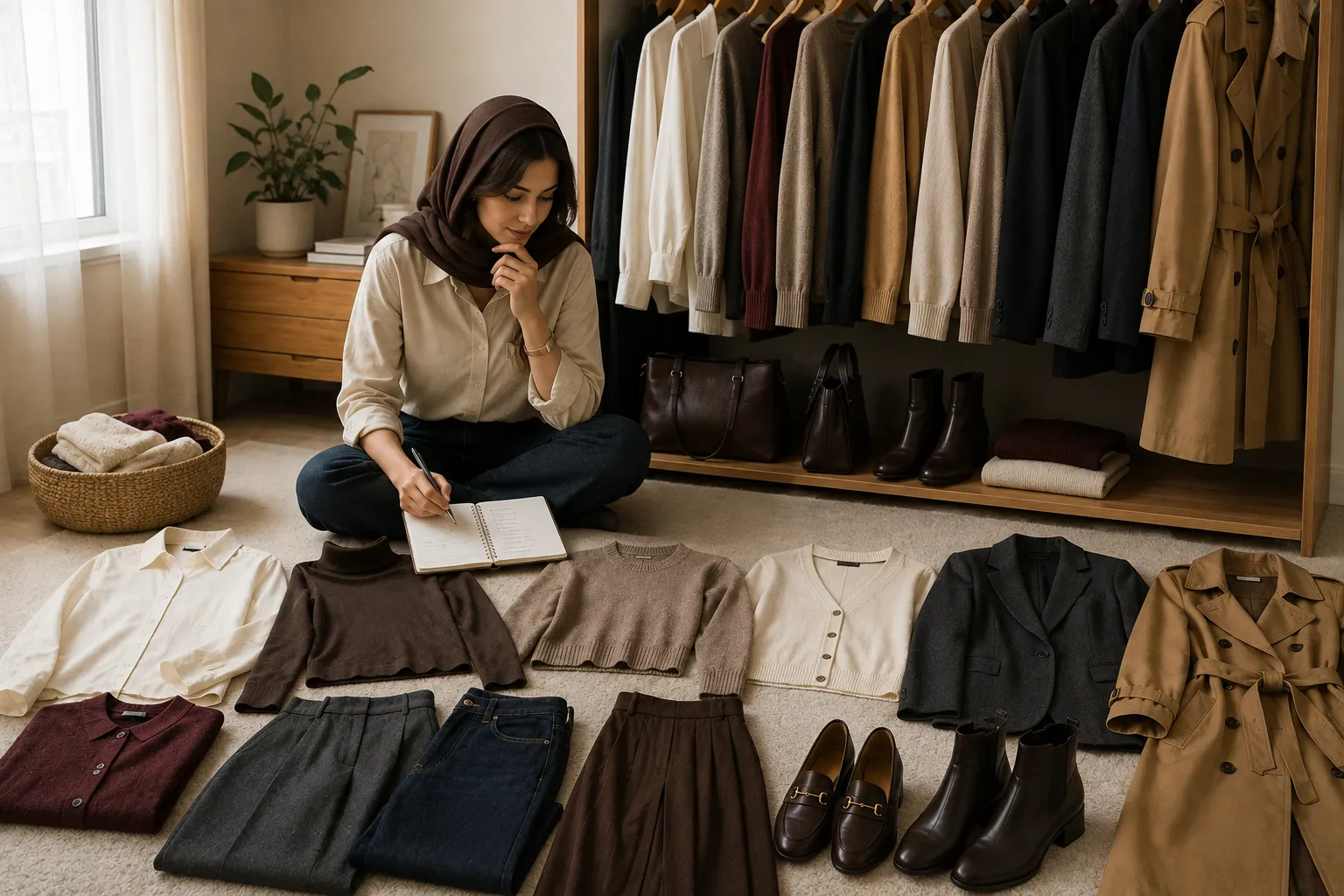
The first step is not shopping; it is taking inventory of the clothes you already own. Write down the 12 roles introduced in this guide and place one of your existing garments next to each role whenever possible. If eight of those positions are already covered, you do not need a completely new wardrobe—you only have four genuine gaps to fill. That distinction can significantly reduce the cost of building your fall capsule.
If your budget is limited, invest first in pieces that will be worn most frequently and have the greatest impact on everyday comfort. In this guide, ankle boots, loafers, the light-colored shirt, and jeans are among the most frequently used pieces. For more detailed shopping planning, the Redika guide to looking stylish on a limited budget can also be useful. The goal is not necessarily to buy the cheapest clothing; it is to consider how often each purchase will realistically be worn.
You also do not need to follow this 12-piece formula without making any changes. The table below shows practical alternatives for items that may not suit your personal style, local climate, or everyday needs.
| If You Do Not Wear This | Suggested Alternative | Role to Preserve |
|---|---|---|
| Midi or maxi skirt | A second pair of trousers in a different fabric or silhouette | Create variety in bottoms |
| Midi dress | Long tunic, shirt dress, or another one-piece option that fits your style | Create a complete outfit quickly |
| Classic trench coat | Long raincoat or minimalist long coat | Lightweight weather-resistant outer layer |
| Loafers | Minimal leather sneakers or simple flats | Comfortable footwear for mild days |
| Blazer | Cropped jacket or structured long jacket | Add structure and polish |
| Turtleneck | Long-sleeve T-shirt or lightweight crew-neck top | Thin base layer |
If you live in a colder climate, you do not necessarily need to increase the number of garments. Instead, choose warmer knitwear, more insulating outerwear, weather-appropriate boots, and a lightweight thermal layer underneath your first layer. In milder fall climates, lighter knitwear and outerwear will usually be more practical. The capsule framework remains the same, but the fabrics should reflect your actual climate.
- Write down the 12 essential wardrobe roles.
- Match your existing clothes to the appropriate roles.
- Identify only the genuine gaps.
- Create at least three outfit combinations before buying any new item.
- Prioritize better quality for the clothes and shoes you will wear most often.
Conclusion
A Fall 2026 capsule wardrobe is not designed to limit you to only 12 garments. Its purpose is to help you get more use from the combinations you already have before adding more clothes. The 12-piece capsule proposed in this guide creates 30 genuinely unique outfits, and scarves, bags, belts, jewelry, and other accessories have not even been included in the calculation. More important than the number 30 is the system behind it: coordinated colors, versatile silhouettes, thoughtful layering, and shopping only to fill genuine wardrobe gaps.
If you want to start today, you do not need to order anything. Open your current fall wardrobe, write down the 12 roles in this article, and see how many of them are already covered. Then make decisions only about the empty positions. This simple exercise often reveals that the number of new garments you genuinely need is much smaller than it first appears.
Fall capsule wardrobe formula at a glance:
- Choose three base colors and one accent color.
- Fill the 12 practical wardrobe roles with clothes you already own.
- Every new purchase should work in at least three outfits.
- Use layering instead of buying several similar garments.
- Bring seasonal trends into the wardrobe mainly through color, texture, and accessories.
Frequently Asked Questions About a Fall 2026 Capsule Wardrobe
1. How many pieces should a fall capsule wardrobe contain?
There is no fixed number. For a starting point, around 10 to 15 core pieces can provide a good balance between variety and simplicity. This guide uses 12 pieces, with accessories excluded from the total.
2. Can you really create 30 outfits with only 12 pieces?
Yes. The 30 combinations in this article were designed individually and checked to make sure they are not duplicates. Reaching this number is possible when the tops, bottoms, outer layers, and shoes are intentionally selected to work together.
3. What are the best colors for a Fall 2026 capsule wardrobe?
A practical approach is to choose three base colors such as ivory, charcoal, and brown or camel, then add only one accent color. If other colors already appear repeatedly in the clothes you own, those may be better choices. Coordination with your real wardrobe matters more than copying a predetermined palette exactly.
4. If I do not wear skirts or dresses, will my capsule wardrobe be incomplete?
No. You can replace the skirt with a second pair of trousers in a different fabric or silhouette and replace the midi dress with a tunic, shirt dress, or another one-piece garment that serves the same function in your wardrobe. A capsule wardrobe should adapt to your lifestyle, not the other way around.
5. How should these 12 pieces change for colder climates?
The number of wardrobe roles can remain the same while the fabrics and weights change. Warmer knitwear, a more insulating coat or raincoat, cold-weather ankle boots, and a lightweight thermal base layer are usually more useful than simply adding several similar garments.
Sources used to review Fall 2026 fashion trends:
Pantone Color Institute official report,
Vogue’s Fall 2026 trend report,
ELLE’s Fall 2026 fashion trend review, and
Harper’s Bazaar Fall 2026 knitwear guide.
About the author

Join the conversation
Share your experience or question with REDIKA readers.
Your email stays private. Please avoid sharing personal or sensitive details.


