


Editorial Note:
This article was written by reviewing the autumn and winter 2026 makeup trends and converting them into methods applicable to daily life. Colors and techniques are general suggestions, and the final result depends on skin type, face shape, individual sensitivities, and product formula. In case of unusual burning, itching, or redness, stop using the product.
Quick Answer; What exactly does the Autumn 1405 trend makeup look like?
The Autumn 1405 trend makeup is a combination of natural semi-matte skin, cranberry blush, brown smoky or soft blue eyes, and glossy berry, red, or brown lips. In this style, the real texture of the skin is not completely erased, and the edges of eyeshadow, blush, and even some lipstick styles are softer than in fully formal makeup. It is enough to choose one part of the face as the main focal point; for example, pair red lips with simple eyes or smoky eyes with natural-colored lips. The result should have character, but not make the face look cluttered and heavy.
The simplest version of this makeup is created with a suitable moisturizer, light foundation, berry-toned blush, brown pencil, and a berry lip color. If your skin is even, you can even skip the foundation and only use concealer (spot coverage) on dark spots or redness. For the eyes, apply the pencil close to the lash line and smudge it slightly before it dries. For the lips, start the color from the center so that the edges remain softer and more natural.
Summary of Autumn 2026 Makeup Trends at a Glance
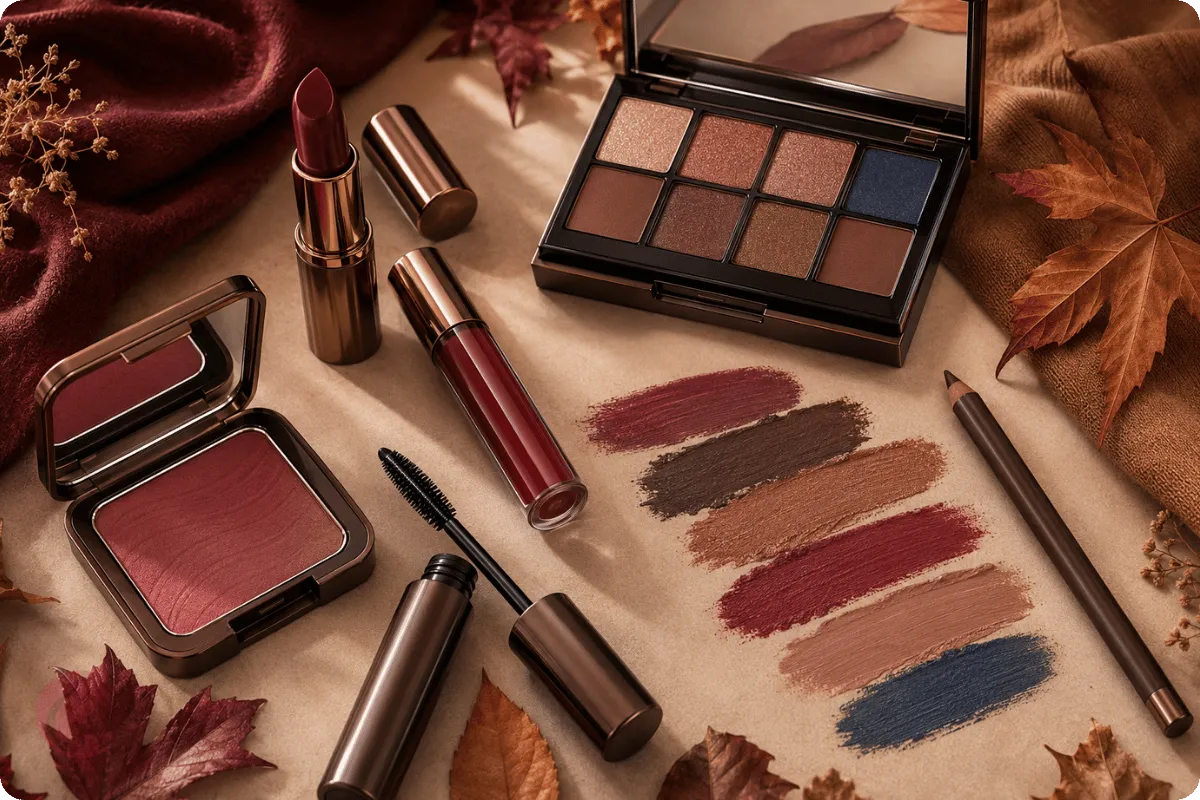
If you do not have time to read the entire article, the table below shows the most important choices of the season. The “Everyday Version” column is written for people who want light, fast, and manageable makeup, and the “Party Version” column has more intensity and glow. It is better to choose only one or two main trends for each makeup look. Executing all popular colors and textures at the same time usually does not make the result more professional and only destroys the visual focus of the face.
| Face Part | Fall 1405 Main Trend | Everyday Version | Party Version | Common Mistake |
|---|---|---|---|---|
| Skin | Natural and semi-matte | Tinted sunscreen and spot concealing | Lightweight foundation with limited highlighter | Too much powder on dry skin |
| Cheeks | Cranberry, berry, and frost-bitten | A thin layer of cream blush | Combining cream and powder layers | Excessive redness near the nose |
| Eyes | Smoky brown, gray, and faded blue | Smudged brown pencil along the lash line | Smoky or metallic and shimmering eyeshadow | A blend of several heavy colors on the eyelid |
| Lashes | Brown, plum, and crimson | A coat of brown or crimson mascara | Two coats of mascara with light eyeshadow | Clumping of lashes due to too many layers |
| Lips | Faded berry, red, and warm brown | Lip tint or tinted balm | Glossy red, burgundy, or brown lipstick | Matte lipstick on chapped lips |
Three principles are common to most successful makeup looks this season: believable skin, soft edges, and a clear focal point. If you choose a dark lip, your eyes and cheeks do not need to be equally bold. If you have blue eyeshadow or a smoky eye, a natural-toned lip, rose-brown, or tinted balm creates more balance. If cranberry blush is the main element of the face, the contouring should remain light and harmonious.
Why is Fall 1405 makeup different from previous years?
In the past few years, some makeup trends created faces that looked very similar: overly shiny skin, perfectly lifted eyebrows, blush in a fixed spot, and lips that were made to look larger using a common method. Fall 1405 values individuality more and highlights one or two features instead of erasing natural ones. This shift allows the shape of the eyes, skin tone, freckles, and even the natural texture of the face to remain part of the makeup. The result looks like your real face, not a version copied from a generic template.
Another important difference is the return of deep colors without the return of very heavy makeup. Crimson, raspberry, dark red, chocolate brown, gray, blue, and bronze are being seen again, but the texture of the products is lighter and the edges are softer. This is what could be called dark romanticism; the cheeks are slightly flushed, the lips look like their natural color after eating fruit, and the eyes are slightly smoky, but thick foundation and intense contouring are not the center of attention. Such makeup has feeling and personality without turning into a costume.
The third trend is the simplification of makeup application. Monochromatic eyeshadow on the eyelid, smudged eyeliner, blush applied with fingers, and a blurred lip without sharp edges are all achievable for the non-professional user. Instead of buying a large collection, you can have a brown pencil, a berry lipstick, and a matching blush and create several different looks. If the names of products and their uses are confusing to you, the guide to facial makeup terminology explains the difference between base products and makeup tools.
Skin trends in Fall 1405 makeup
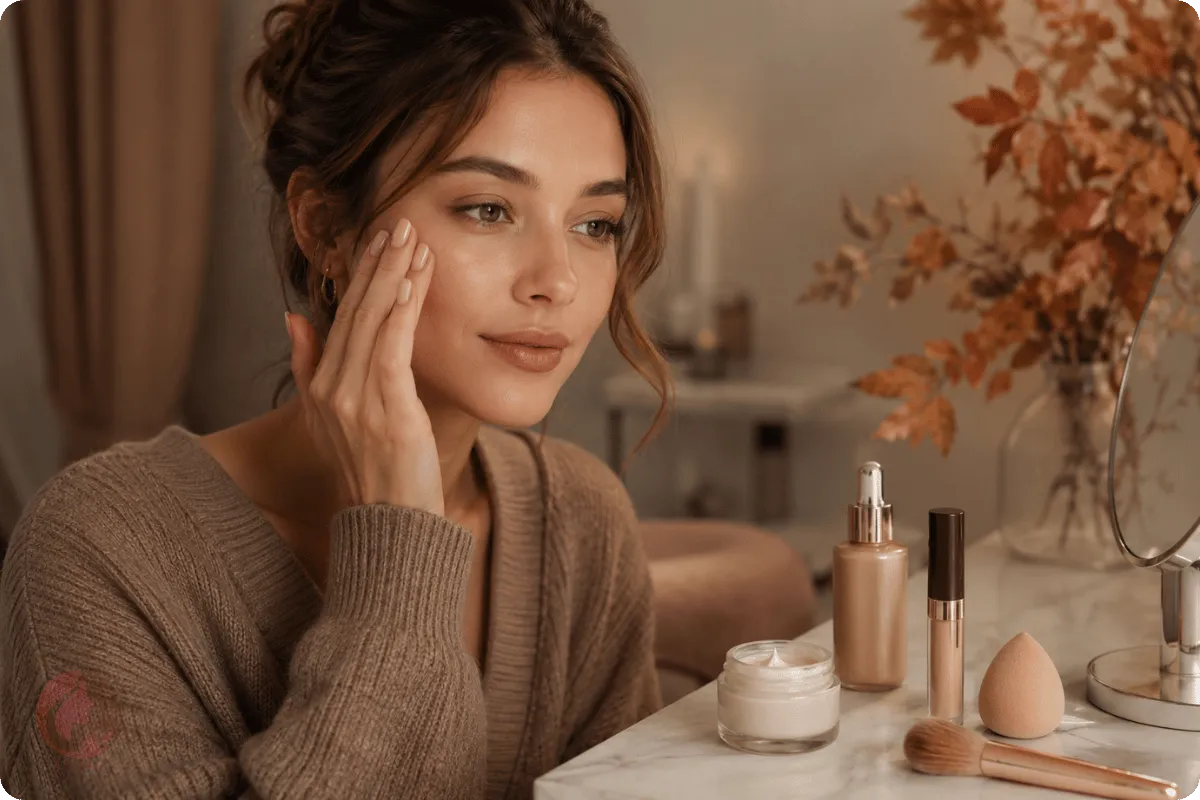
Skin this season is not supposed to be perfectly smooth, poreless, and like an edited image. The goal is to achieve skin that looks healthy, tidy, and balanced while still retaining its real texture. Severe redness, annoying dark spots, or pimples can be covered locally, but there is no need to even out the entire face with high coverage. This method is both more natural and reduces the likelihood of foundation settling into lines and dry areas.
You should choose your base product based on your skin type, not just based on the desired final look. Dry skin usually looks flaky faster with very matte foundations, and oily skin may become slippery throughout the day with very oily products. Acne-prone skin should also pay more attention to texture, ingredients, and how the makeup is removed. The guide to comedogenic and non-comedogenic helps you better understand the concept of products prone to clogging pores.
| Skin type | Proper preparation | Suggested base | Suitable powder | Precautionary note |
|---|---|---|---|---|
| Dry | Hydrating and softening moisturizer | Lightweight and flexible foundation | Only a small amount under the eyes and around the nose | Do not perform intense exfoliation before makeup application |
| Oily | Gel moisturizer and oil-control primer | Lightweight texture with medium longevity | Center of the forehead, nose, and chin | Completely eliminating hydration may worsen the skin’s appearance |
| Combination | Hydration for the entire face and localized oil control | Semi-matte and buildable base | Only shiny areas | Do not use a single method for the entire face |
| Sensitive | Simple and familiar products for the skin | Light base without irritating fragrance | Limited amount with a soft brush | Test new products on a small area first |
Skin preparation; the secret to preventing autumn makeup from caking
Decreased air humidity, wind, and exposure to warm environments can unbalance the skin in autumn. The skin surface may be flaky, yet the forehead and nose might become shiny a few hours later. Adding more foundation usually does not solve this problem and even makes unevenness more visible. Proper preparation should begin with a gentle cleanser, appropriate hydration, and sufficient time for the products to absorb.
After washing, do not rub the skin with a towel; instead, pat it dry gently. Apply a thin layer of hydrator or moisturizer and wait a few minutes until the skin surface is no longer slippery. If you use sunscreen, allow it to settle on the skin before starting your makeup. Starting makeup on a wet and unstable layer increases the likelihood of the foundation pilling or separating.
Some moisturizing and soothing ingredients can help reduce the feeling of skin tightness during cold days. For example, the article What is panthenol and what is it used for? explains the role of this ingredient in skincare products. However, you should not apply several different serums and creams on top of each other right before makeup without knowing their compatibility. A short and predictable routine usually yields more reliable results than heavy layering.
For quick skin preparation before makeup:
- Wash your face with a cleanser that does not cause a feeling of severe tightness after use.
- Choose a moisturizer based on the skin’s needs, not just the season.
- Use a hydrating primer on dry areas and a mattifying primer on oily areas.
- Apply skincare products in thin layers and leave a short interval between them.
- Do not remove lip flakes by picking or harsh exfoliation; a balm and a soft tissue are a better choice.
Natural semi-matte skin; the alternative to glass skin and heavy foundation
The popular final look of this season falls between completely matte skin and very dewy skin. The cheeks and high points of the face can reflect a small amount of light, but it is better for the areas around the nose, forehead, and chin to be more controlled. This balance makes the face look alive in natural light and also prevents the facial features from appearing flat in photos. The secret is using less product and placing each texture only in the area that needs it.
Blend a small amount of foundation from the center of the face outward. Usually, the area around the nose, the center of the cheeks, and the chin need more coverage, while the jawline and temples can remain almost product-free. Apply concealer (spot coverage) on dark spots, redness, or acne scars and blend with a gentle tapping motion. Constantly dragging a sponge or brush over the skin can move the underlying layers and make the coverage uneven.
Setting powder should also not cover the entire face like a chalky layer. Dip a small brush into a small amount of powder, tap off the excess, and apply it only to areas that get oily faster or where product tends to settle into lines. If you are unsure about choosing the type of powder, the article colored or translucent setting powder examines the difference in the application of these two models.
For a highlighter, choose a product with very fine particles and apply it only to the highest part of the cheekbone. A coarse-grained highlighter may make the skin texture more visible on pores or acne scars. On oily skin, keep the shine away from the sides of the nose and the center of the forehead. On dry skin, a cream texture usually looks more natural than a highly shimmery powder.
Cranberry blush and frost-kissed cheeks
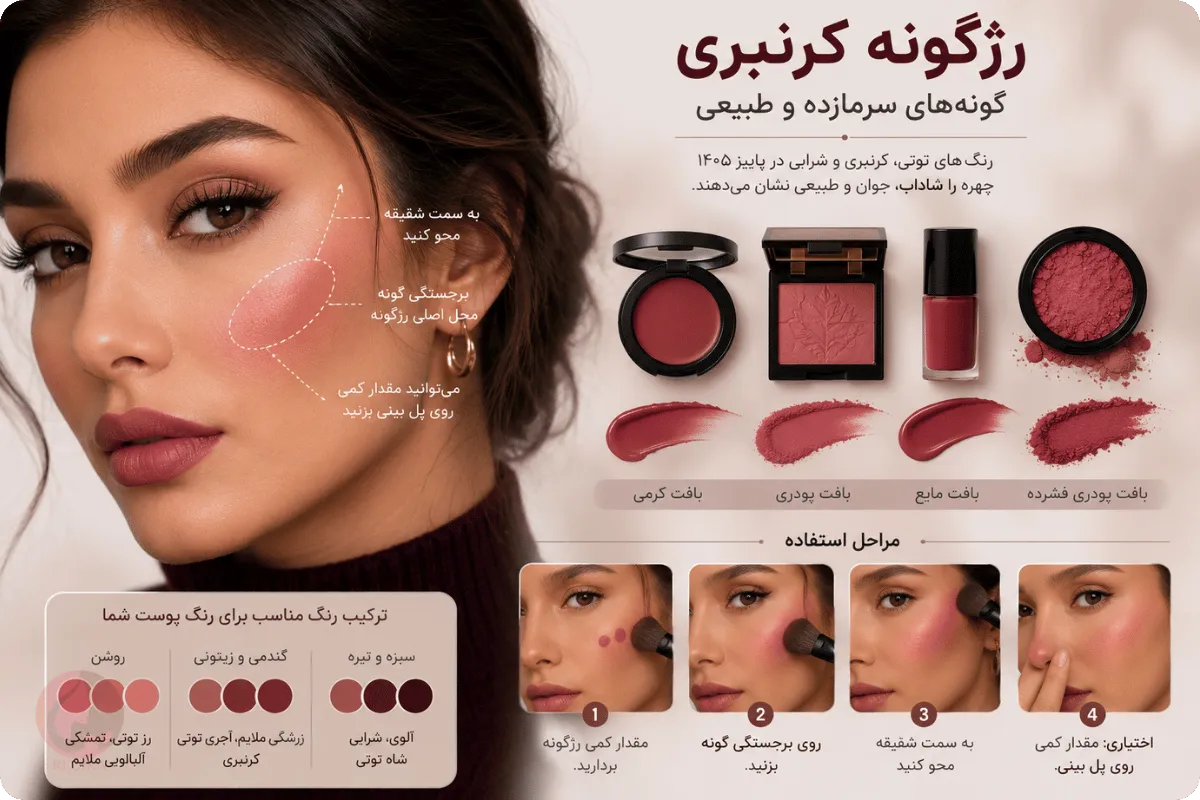
Cranberry blush is one of the most distinct makeup trends of Autumn 2026. This color sits between red, dark pink, and berry, making the cheeks look as if you have flushed slightly in cool weather. Its difference from doll-like pink blush lies in its greater depth and the method of blending the color. The color should melt into the skin and not remain like a separate patch on top of the foundation.
For everyday wear, start with the smallest amount possible. If the product is liquid, apply a small dot to the back of your hand and then pick up a controlled amount with a brush or finger. Place the color on the apples of the cheeks and blend toward the temples. You can touch the bridge of the nose with the very small amount of product remaining, but intense redness next to the nostrils may make the face look inflamed.
When choosing a color, do not just use the name “cranberry” on the packaging as the sole criterion. Light skin usually coordinates better with berry rose and light raspberry, medium skin gets a good result with soft crimson and berry brick, and olive or dark skin can use plum, wine, and blackberry shades. If the color becomes too bold, do not smother it with too much powder. A sponge that has a small amount of base product left on it will correct the edges of the blush more naturally.
Blush must be in harmony with contouring and highlighter. Contouring creates depth, blush brings the color of life back to the face, and highlighter reveals the high points. If all three products are placed in the same spot, the cheek will look cluttered and patchy. To understand the correct placement of each product, the guide Read the blush, contour, and highlighter tutorial.
Fall 2026 Eye Makeup Trends
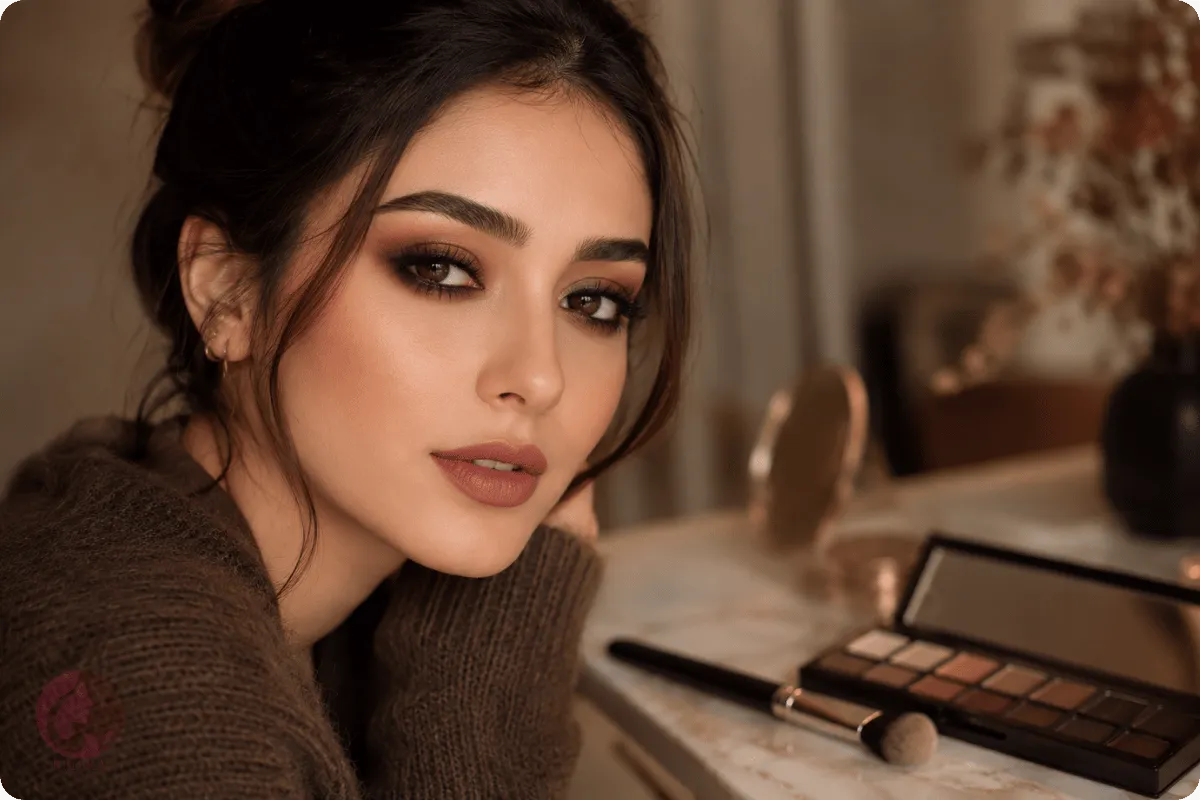
Eye makeup this season shifts between smoky tones and unexpected colors. Chocolate brown, gray, charcoal, and soft black are used for everyday and formal looks, while grayish-blue, navy blue, dark green, and metallic, shimmering shades create a more creative appearance. The common thread in most of these styles is a soft edge and a limited number of colors. You do not need to blend several different shades at once for the eye makeup to look complete.
Eye shape should be considered before color intensity. A dark color applied around the entire small eye may make the eye look more closed, but the same color, if concentrated on the outer third, makes the eye shape look more elongated. For hooded eyelids, it is better to blend the darkness slightly above the natural crease of the eyelid so that it is visible when the eye is open. For large eyes, eyeliner on the waterline can create a smokier result.
Eye makeup is one of the most sensitive parts of the face, and maintaining hygiene is very important. Do not share mascara, eyeliner, or makeup tools with others. A product whose smell, texture, or color has changed should not be used again. If the eye becomes red, swollen, or painful after use, remove the product and do not continue using it.
Brown smoky eye and soft black
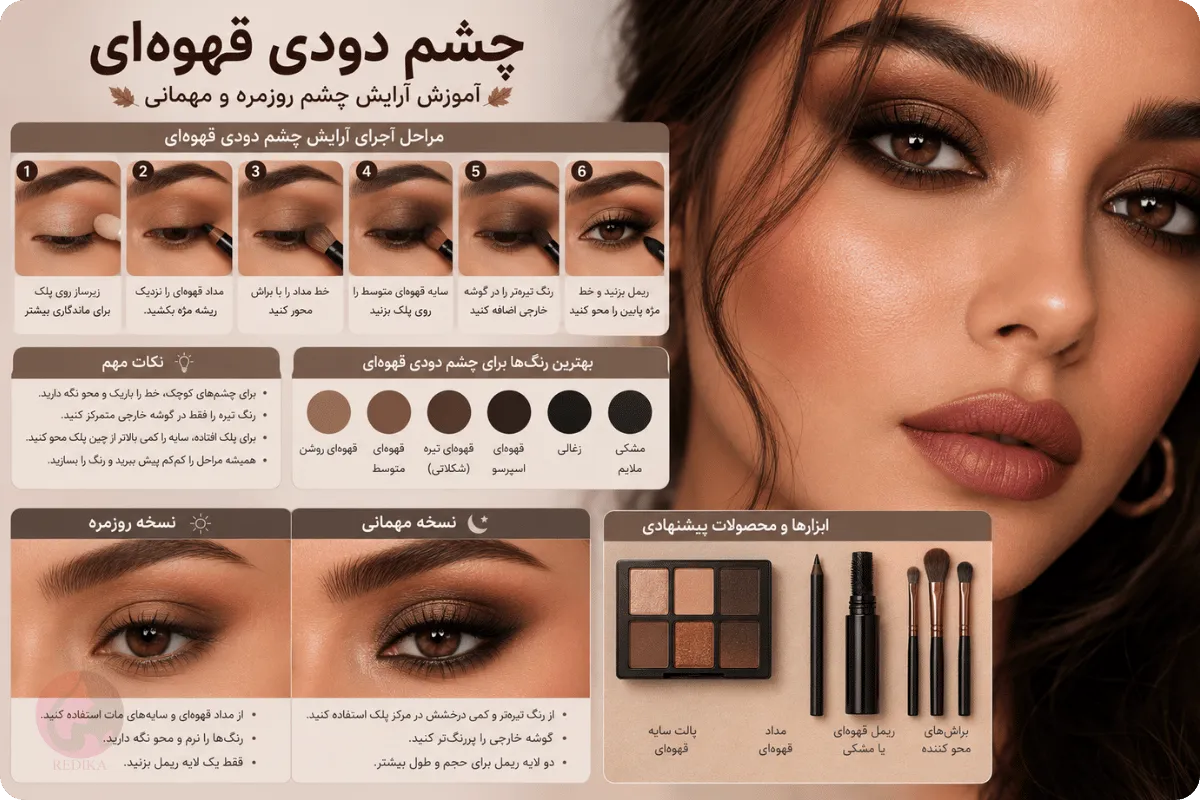
The Fall 2026 smoky eye is not necessarily made of several layers of black eyeshadow. The modern version is more like a pencil applied close to the lash line and then blended with a small brush or fingertip. Espresso brown, chocolate, charcoal, and soft black are the main choices for this style. The result should create depth but not have sharp, strictly geometric edges.
For daily makeup, apply a brown pencil between the roots of the upper lashes. Before the pencil sets, blend it outward with a small round brush and apply a small amount of brown eyeshadow over it. Keep the outer corner slightly darker and do not bring the color to the inner part of the eye. On the lower lash line, only apply shadow to the outer third so the eye does not look tired or closed.
For parties, you can add charcoal shadow to the outer corner and brighten the center of the eyelid with bronze or matte gold. If you have small eyes, do not apply dark pencil around the entire inner line of the eye and keep the inner corner brighter. If you have hooded eyelids, check the makeup with your eyes open; sometimes a shadow that looks beautiful with eyes closed is completely hidden once the eyelid is opened. It is better to add color step-by-step, as it is harder to remove dark shadow than it is to make it darker.
Simple everyday smoky eye formula:
- Apply a small amount of primer or concealer to the eyelid and blend it thoroughly.
- Apply brown pencil close to the root of the upper lashes.
- Blend the line toward the outer corner with a small brush.
- Apply medium brown eyeshadow over the pencil for longer wear.
- Apply a coat of mascara and just groom the eyebrows.
Soft blue, metallic, and monochromatic eyeshadow
Blue eyeshadow will be seen in various forms in the autumn of 2026; from icy blue and light denim to grayish blue and navy. The new version of this color is not necessarily bold, chalky, or sharply defined. Sometimes it is seen only as a thin halo near the lash line, and sometimes a color covers almost the entire eyelid. This monochromatic method is also suitable for beginners, as it does not require blending multiple shades or defining complex boundaries.
For a daytime version, blend grayish-blue eyeshadow onto the eyelid with a soft brush and let it almost fade into the crease. Define the lash line with a brown or gray pencil to make the result more balanced. If light blue makes your face look washed out, navy blue, midnight blue, or a blue with warm reflections is a better choice. Warm and olive skin tones usually harmonize better with deeper blues.
For a party, place a metallic and shimmering shadow only in the center of the eyelid and soften the two sides with brown or gray. You can add a dull gold dot in the inner corner of the eye, but it is not necessary for the entire eyelid and cheek to be shiny at the same time. When the eye is colorful and shimmering, choose blush in a controlled manner and lips in rose-brown or your natural lip color. This balance allows the blue eyeshadow to remain the focal point of the face.
The eyeshadow color can be coordinated with the color of the clothing, but coordination does not mean being completely identical. A brown coat creates an attractive contrast with navy blue eyeshadow, and a crimson dress is better balanced with gray or bronze eyeshadow. If the clothing is patterned and colorful, it is better for the eye makeup to repeat only one of the secondary colors of the clothing. Repeating all the colors of the clothing on the face usually makes the look cluttered.
Crimson Mascara and Colored Eyeliners
Changing the color of mascara or eyeliner is one of the easiest ways to use new trends. Brown, plum, and crimson mascaras look natural from a distance, but in the light, they make the eye color more prominent. These colors are suitable for people who do not want to cover the entire eyelid with colored eyeshadow. A small change in the lashes can make everyday makeup look fresher.
Crimson mascara usually goes well with brown, hazel, and green eyes. If its color is too noticeable for the workplace, first apply a coat of brown mascara and apply the crimson only to the tips of the lashes. Another method is to use crimson mascara on the upper lashes and brown mascara on the lower lashes. To prevent the lashes from sticking together, do not add a large amount of a second coat before the first coat dries.
Forest green, navy blue, crimson, and plum eyeliners can also replace black. For office makeup, keep the line thin and close to the lash root so that the color is only seen from a close distance. For a party, you can make the tail a little longer or apply a matching eyeshadow over the pencil. If you want a smoky look, use a soft pencil and blend the line evenly; half-blending some spots and leaving others sharp makes the result look messy.
Autumn 2026 Lip Trends
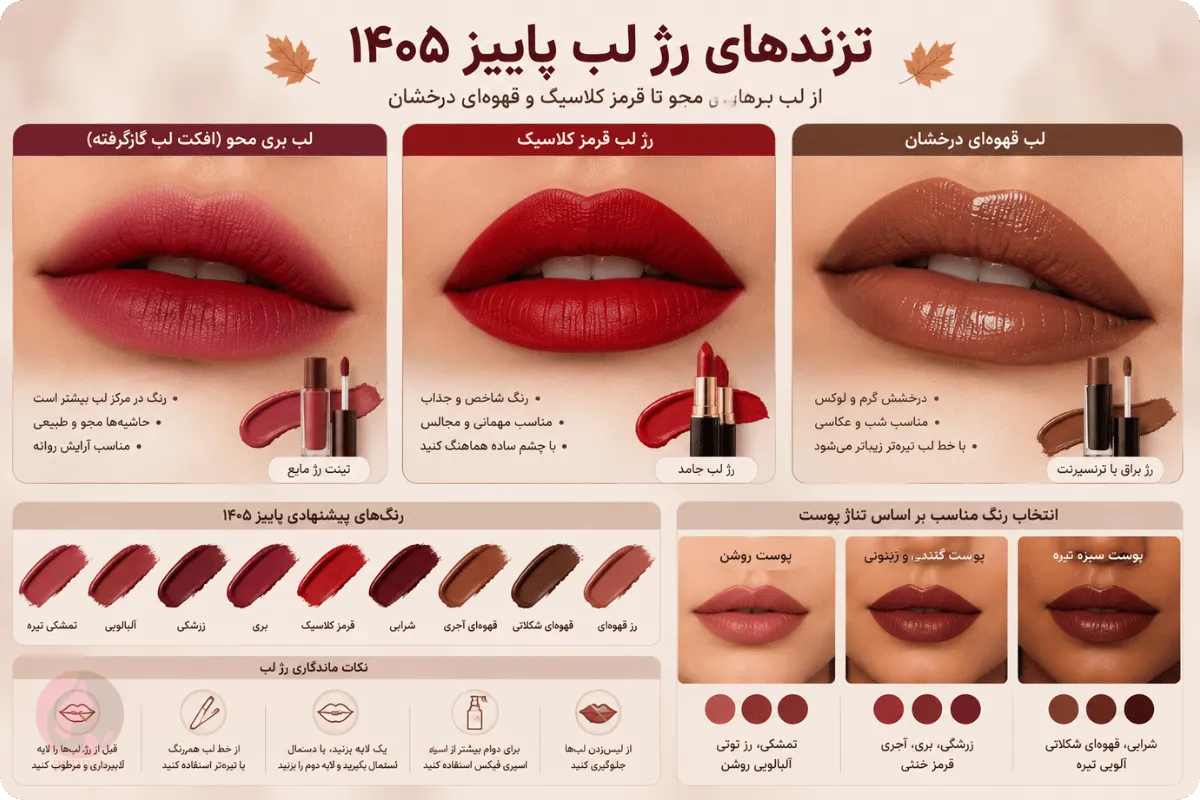 Lips have once again become one of the main focal points of the face in Fall 1405 makeup. Berry, raspberry, crimson, red, brown, and brownish-rose shades have a stronger presence, but textures have moved away from dry and heavy lipsticks. Lip tints, tinted balms, satin lipsticks, and soft matte lipsticks are choices that combine deep color with a more comfortable feel. This change is of great importance for people who have dry lips.
Before choosing a color, prepare the surface of your lips. Apply balm a few minutes before makeup and remove the excess with a soft tissue. If a thick layer of balm remains on the lips, the lip liner and lipstick will migrate, and their longevity will decrease. Do not remove flakes with your hands, as this may cause wounds, bleeding, and further unevenness of the lip surface.
The right color does not depend solely on whether the skin is light or dark. Skin undertone, natural lip color, tooth color, and even clothing color affect the result. For a more precise selection, you can read the guide to choosing lipstick color and texture. It is better to check the color in natural light and directly near the face, not just on the hand.
Blurred lips and bitten lip effect
Blurred lips are one of the most practical choices of the season. In this method, the color is deeper in the center of the lips and becomes less intense as it approaches the lip border. The final look resembles the color left on the lips after eating cherries, raspberries, or blackberries. This style coordinates well with natural skin and flushed blush.
To execute, first correct the redness around the mouth with a very small amount of concealer, but do not cover the entire lip with foundation. Apply the berry color to the center of the upper and lower lips and blend it outward with your ring finger using a tapping motion. The edge should be soft, but the color should not spread around the mouth. If the result becomes too matte, apply a small amount of balm or lip gloss only to the center of the lips.
Light skin can use berry rose, light raspberry, and soft cherry. Wheatish skin coordinates with crimson, brick rose, and berry red, and tan or dark skin can go for blackberry, burgundy, and deep plum. For daily makeup, reduce the color intensity, and for parties, reinforce the center of the lips again. In the party style, clear or plum lip gloss can create more volume and depth.
Blurred does not mean careless. If the color is dragged around the mouth with a stained finger, the lips will look wiped off and messy instead of soft and natural. It is better to pick up a small amount of product each time and check the result after each step. The lip border should be soft, but the original shape of the mouth should remain defined.
Signature and classic red lipstick
Red lipstick in the autumn of 2026 can single-handedly define the structure of an entire makeup look. Its modern version is paired with light skin, natural brows, and minimal eye makeup. This contrast makes the red look more modern and less like heavy, old-fashioned makeup. For daytime, you can smudge the red with your finger, and for parties, you can create a more precise border.
For a clean application, first define the corners of the lips with a pencil and then shape the cupid’s bow. There is no need to draw the line a few millimeters outside the natural border; correcting small asymmetries is enough. Apply one layer of lipstick, blot the excess color with a tissue, and add a second layer. This method increases coverage and durability without creating excessive thickness.
Blue-toned and cherry reds usually make teeth appear brighter, while brick and orange reds add more warmth to the face. Cool fair skin coordinates with cherry and berry tones, medium skin with neutral and brick reds, and olive or dark skin with ruby, wine, and deep red shades. These suggestions are not absolute rules, and the result should be checked in natural light. The natural color of the lips can also alter the lipstick’s undertone.
When choosing red lipstick, limit eye makeup to mascara and beige eyeshadow or a thin eyeliner. Blush should preferably be from a family close to the lipstick, but much paler. Combining brick red lipstick with cool pink blush and bold purple eyeshadow may result in a color mismatch. A limited color palette usually creates a more luxurious and cohesive result.
Frosted brown lips and the warm glow of the nineties
Glossy brown lips are inspired by nineties beauty, but the new version is not cold, gray, or chalky. Chocolate brown, caramel, terracotta, bronze, warm plum, and rose-brown with fine shimmering particles are used. The glow should reflect light subtly, rather than covering the lip surface with coarse particles. This style is very suitable for parties, photography, and warm autumn outfits.
First, choose a lip liner one to two shades darker than your natural lip color. Define the corners and the border of the lips, and smudge the line slightly inward so that no harsh frame remains. Then, apply a satin brown or rose-brown lipstick and place the pearlescent lip gloss only in the center. Focusing the light in the center of the lips, without drawing an exaggerated outer line, creates the appearance of more volume.
Fair skin can use pink-brown, warm rose, and champagne shades. For medium skin, caramel, cinnamon, terracotta, and bronze are safer choices. Olive or dark skin coordinates with chocolate, copper, warm plum, and deep gold. If a light color looks gray on dark lips, apply a chocolate or plum lip liner underneath first.
This lip style coordinates with brown smoky eyes, bronze eyeshadow, or thin eyeliner. If the eyeshadow is also shimmering, reduce the amount of lip gloss so that the two parts of the face do not compete for attention. Berry-brick or pink-brown blush can create a connection between eye and lip colors. Very warm orange contouring may be inconsistent with cool brown lipstick, so check the undertones side by side.
Choosing autumn makeup colors based on skin tone
Two people with almost identical skin colors may get completely different results from the same lipstick or eyeshadow. The reason for this difference is the skin undertone, which can be warm, cool, neutral, or olive. The undertone is a subtle color beneath the skin’s surface and usually does not change completely with the change of seasons or tanning. Recognizing it helps you choose the right version of any trend, rather than abandoning the season’s popular color entirely.
| Skin Undertone | Suitable Lip Color | Suitable eye color | Suggested blush | Color requiring caution |
|---|---|---|---|---|
| Cool | Raspberry, cherry, sour cherry, and cool rose brown | Gray, icy blue, plum, and charcoal | Cranberry rose and plum pink | Very yellow orange |
| Warm | Brick, cinnamon, warm red, and caramel | Bronze, dull gold, brown, and olive green | Berry brick and warm red | Lilac or very chalky blue |
| Neutral | Neutral berry, classic red, and chocolate rose | Neutral brown, navy, and champagne | Balanced cranberry and brick rose | Very gray or very yellow colors |
| Olive | Wine, brick, red-brown, and warm plum | Bronze, forest green, navy, and smoky brown | Deep berry and brick red | Very white pastel pink |
To initially determine your undertone, you can check how your face coordinates with gold and silver jewelry, the color of your wrist veins, and your skin’s reaction to the sun, but these methods are not always definitive. The real test happens when you see the color near your face in daylight. If a product makes your face look gray, overly yellow, or tired, its undertone is likely not compatible with your skin. The yellow light of a store or a mobile phone screen can alter your perception of the color.
This table should not become a limitation. Someone with a warm undertone can also wear blue eyeshadow, but navy blue or blue with golden reflections might be more suitable than white, chalky blue. Someone with cool skin can also use brick lipstick, provided that the amount of red in the color is greater than its yellow. The goal is to personalize the process, not to eliminate the colors you love.
Three practical tutorials for everyday, office, and party makeup
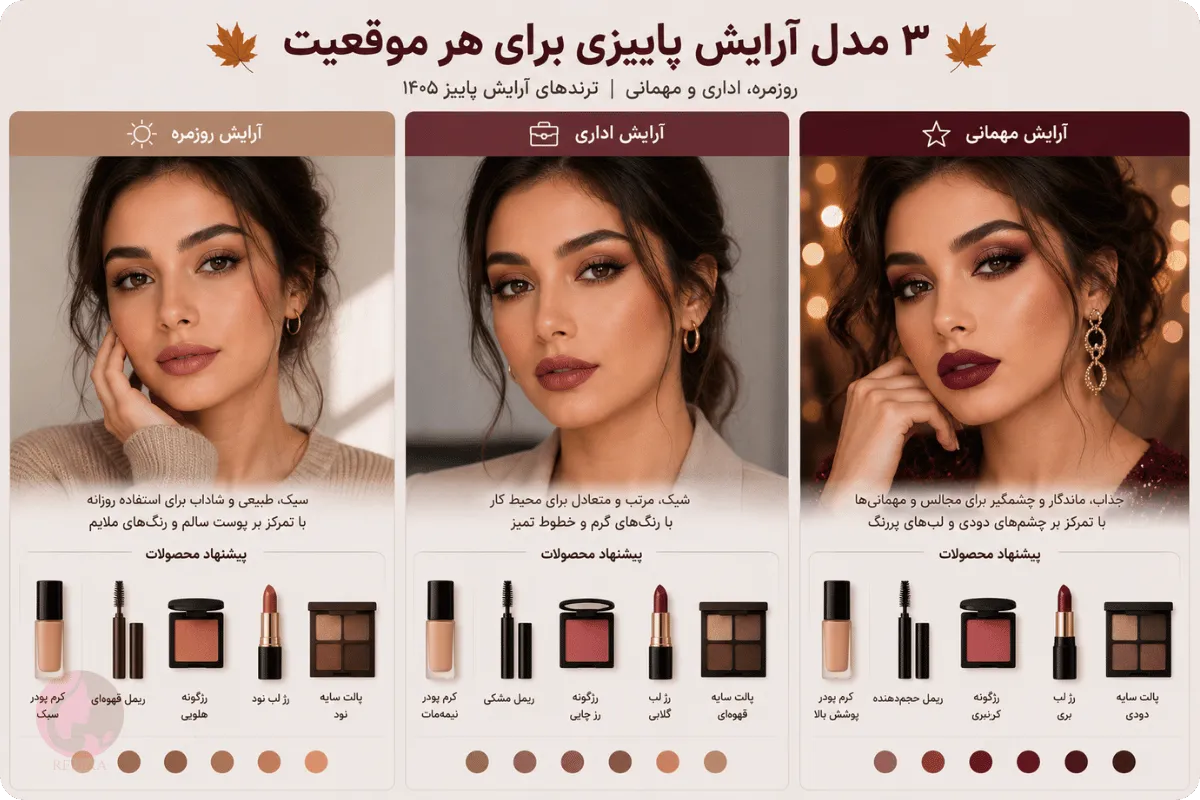
To translate autumn 1405 trends into actual makeup, we have considered three ready-made formulas. Each formula has a focal point and keeps the rest of the face as a complement. The amount of product should be adjusted based on your face shape, ambient light, and your comfort level. You do not need to execute all the steps without changes.
| Makeup type | Skin | Eye | Cheek | Lip | Approximate time |
|---|---|---|---|---|---|
| Everyday | Tinted sunscreen and limited coverage | Smudged brown pencil and one coat of mascara | Very soft berry rose | Faded berry lip color | About 8 to 10 minutes |
| Office | Light semi-matte base | Brown eyeshadow and thin liner | Controlled berry brick | Brown rose or cinnamon | About 15 minutes |
| Party | Medium coverage with limited shimmer | Smoky brown, blue, or bronze | Layered cranberry | Red, burgundy, or shimmering brown | About 25 to 35 minutes |
Everyday Autumn Makeup: After moisturizer and sunscreen, apply concealer only on redness and under-eye darkness. Blend a small amount of berry-rose cream blush on the cheeks and dab the remainder on the bridge of the nose. Apply brown pencil close to the upper lash line and smudge it, then add a coat of brown or burgundy mascara. For the lips, apply a raspberry shade to the center and blend with balm.
Autumn Office Makeup: Keep the skin base semi-matte and controlled, applying powder only to shiny areas. Blend a medium brown eyeshadow on the eyelid and draw a very thin brown or charcoal eyeliner. Groom the eyebrows with clear or tinted gel and blend brick-berry blush toward the temples. For the lips, a brownish rose, muted neutral red, or cinnamon nude is a suitable choice.
Autumn Party Makeup: First, hydrate the skin and create a satin base with medium coverage. Shape the eye with smoky brown or charcoal and use dull gold, bronze, or shimmering blue on the center of the eyelid. Apply cranberry blush in stages and place highlighter only on the top of the cheekbones. For the lips, choose only one option among classic red, deep berry, and shimmering brown, depending on the intensity of the eyes.
Increasing Autumn Makeup Longevity and Mistakes We Should Abandon
Makeup longevity depends more on compatibility and thin layers than on the number of products. Very oily moisturizer, multiple serums, heavy primer, and thick foundation may slide over each other and separate from the skin. Apply each layer thinly and allow a short time for absorption before the next step. Setting spray cannot completely fix an incorrect base.
One common mistake is using too much powder to prevent shine. Excessive powder on dry skin highlights lines and flakes, and on oily skin, it may turn into a heavy texture a few hours later. Use a small brush and apply powder only under the eyes, around the nose, the center of the forehead, and the chin. On most skin types, the cheeks do not need heavy powder.
The second mistake is executing all trends simultaneously. Intense cranberry blush, shimmering blue eyeshadow, smoky eyeliner, and burgundy lips can be beautiful separately, but together they destroy the focus of the face. Consider one element as the main feature and the other two as supporting. Successful makeup is like a musical band; all instruments are present, but they are not meant to be played at the loudest volume at the same time.
To increase longevity, the following methods are more practical than adding heavy layers:
- Set cream eyeliner with a small amount of matching eyeshadow.
- Set liquid blush with a very thin layer of a matching powder blush.
- After the first layer of lipstick, blot the excess color with a tissue and apply the second layer.
- Instead of powdering the entire face, use oil-absorbing sheets throughout the day.
- Apply setting spray from an appropriate distance and do not touch your face until it is completely dry.
Beyond technique, product hygiene is also part of the longevity and safety of your makeup. A dirty brush applies color patchily, and a damp sponge that has not been dried properly is not a suitable choice for continuous use. Wash your tools regularly and let them dry in a well-ventilated area. Also, keep in mind the opening date of your mascara and eye products, and do not use a product that has changed, even if it is still inside the package.
Conclusion; Do not copy the trend, personalize it
Autumn 2026 makeup is about the return of color, texture, and personal identity. Natural semi-matte skin, cranberry blush, brown smoky eyes, blue eyeshadow, burgundy mascara, and berry, red, or brown lips are the most important paths of the season. You do not need to put all these elements together in one makeup look. Choosing one main feature and coordinating the rest of the face with it creates a more stylish and wearable result.
Before buying new products, check your makeup bag. You might have a burgundy lipstick, brown pencil, bronze eyeshadow, or berry blush that looks completely modern just by using a different application method. The most important skill this season is not buying more, but controlling the amount, recognizing the right color, and choosing a focal point. A good trend should complete your face, not change its identity.
If you have sensitive skin or eyes, color and beauty should not take priority over safety. Test a new product on a small area first, do not share cosmetics, and stop using them if you experience unusual irritation. No color or trend produces the same result for everyone. The right version for you is the one that is in harmony with your skin type, face shape, lifestyle, and level of comfort.
1. What is the most important lipstick color for Autumn 2026?
Berry, raspberry, burgundy, classic red, warm brown, and brownish-rose are among the most important options. For daily makeup, a faded berry or brownish-rose lip color is more practical, while for parties, burgundy, red, or shimmering brown are more commonly used.
2. How should autumn eye makeup be for daily use?
Apply a brown pencil close to the lash line and blend it with a small brush. Then, apply a small amount of light brown eyeshadow and a layer of brown or burgundy mascara. This combination creates a soft depth without weighing down the eyes.
3. Is blue eyeshadow suitable for Autumn 2026?
Yes; grayish blue, light denim, navy blue, and midnight blue are usable options. For the day, limit the color to a thin halo or eyeliner, and for parties, you can use a shimmering texture in the center of the eyelid.
4. What should we do to prevent foundation from caking in autumn?
Prepare the skin with a suitable hydrator and moisturizer, allow time for the products to absorb, and apply foundation in thin layers. Also, apply powder only on oily spots or areas prone to product buildup.
5. What skin tone is cranberry blush suitable for?
Almost all skin tones can use a version of the cranberry family. Light skin is more in harmony with berry-rose, medium skin with burgundy and berry-brick, and olive or dark skin with plum, wine, and blackberry tones.