


Article Summary Video
“One day we catch the scent of saffron and rose water in Middle Eastern markets, and the next day we see that same signature on luxury shelves in London; where “Saffron + Oud” and “Rose + Oud” are no longer just local traditions, but a global language in perfumery. Even in stores like Selfridges, combinations like Saffron & Oud are seen as a common choice alongside niche perfumes.
Roots of local Middle Eastern scents in culture-inspired perfumes
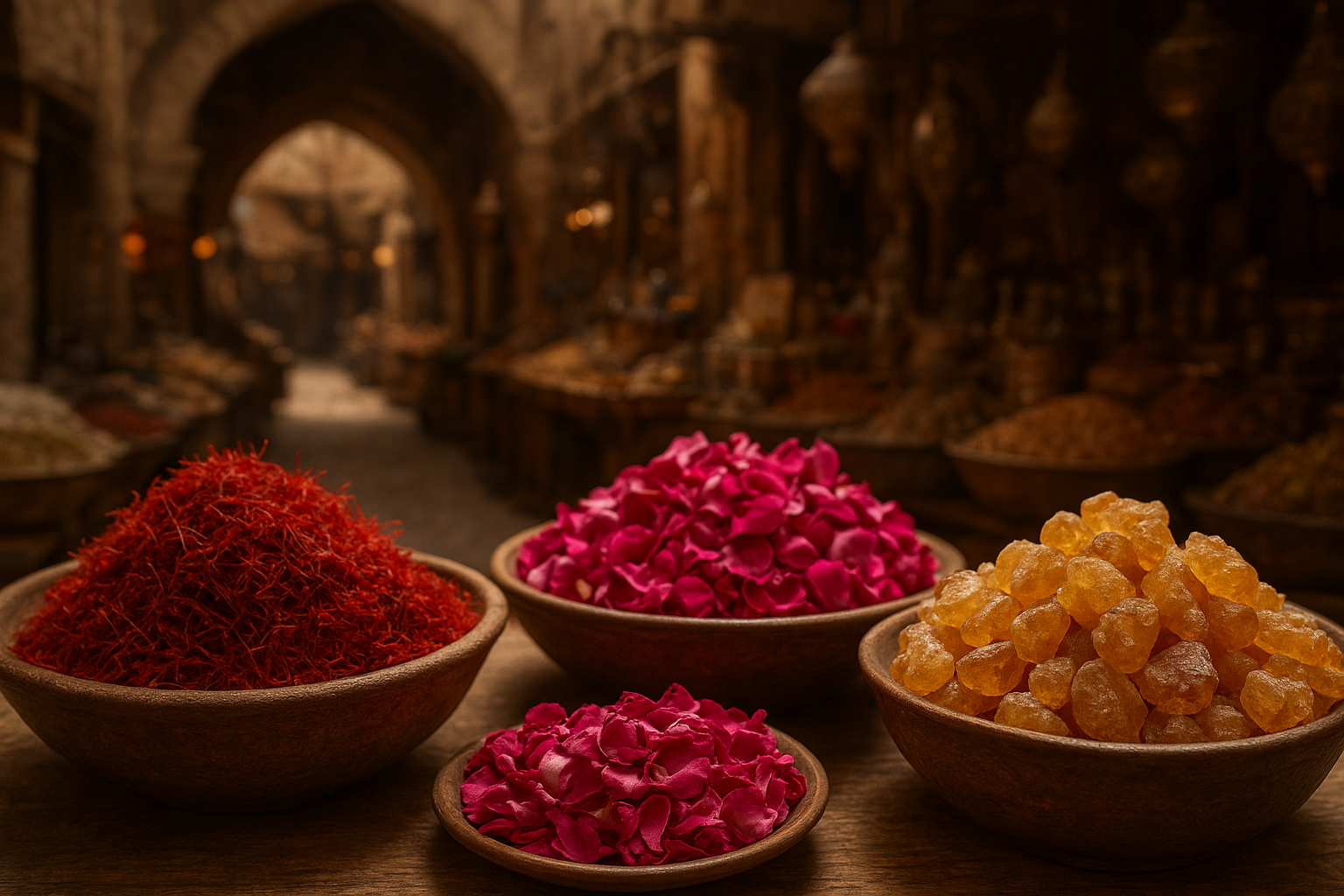
The Middle East is not just a consumer of perfume; the culture of “oud, rose, spices, and amber accords” in this region has influenced global taste, and even specialized perfume media explain how this market has changed global consumer habits.
Saffron and rose water notes: Natural jewels of the Middle East
Saffron, due to its difficult harvesting and high price, is considered one of the expensive ingredients in the world of perfume, and when it appears in a fragrance, it often creates a “warm, spicy, and luxurious” feeling. Rose/rose water is also tied to the ritualistic spaces and hospitality of the region, and in modern perfumes, it plays the role of the “heart”; the very place where a perfume turns from a simple scent into an emotional narrative.
These notes create “distinction” in the global market because they offer a familiar yet non-clichéd scent. Instead of building numbers, it is better to express the effect this way: the market for Middle Eastern scents is growing, and industry reports speak of the multi-year growth of this market and its influence on global taste.
Amber and oriental spices: Depth and heat of the desert
In perfume literature, we have two types of “amber”: one is ambergris, which was valued in the past for the longevity of perfume, and the other is amber accord, which is a warm, sweet-resinous composition usually made from ingredients like vanilla, labdanum, and benzoin. When this warmth is placed next to spices like cardamom and cinnamon, that deep oriental signature is formed, which global brands love.
Oriental spices, from ginger to black pepper, add layers of heat to the perfume and turn local Middle Eastern scents into something more than just a smell. These notes, which are rooted in traditional Arabic perfumes, now play a key role in the fusion of East and West in perfumery, taking consumers on a sensory journey.
| Local Scent | Origin | International Brands | Perfume Example |
|---|---|---|---|
| Saffron | Iran | Maison Francis Kurkdjian | Baccarat Rouge 540 |
| Rose Water | Turkey/Iran | MFK | Oud Satin Mood |
| Amber | Saudi Arabia | Abdul Samad Al Qurashi | Oud Rose |
| Oud | Middle East | Ahmed Al Maghribi | Pearl Oud |
This table shows how local scents are integrated into global brands and emphasizes how culture-inspired perfume builds a bridge between tradition and modern commerce.
Why do global brands take inspiration from local scents?
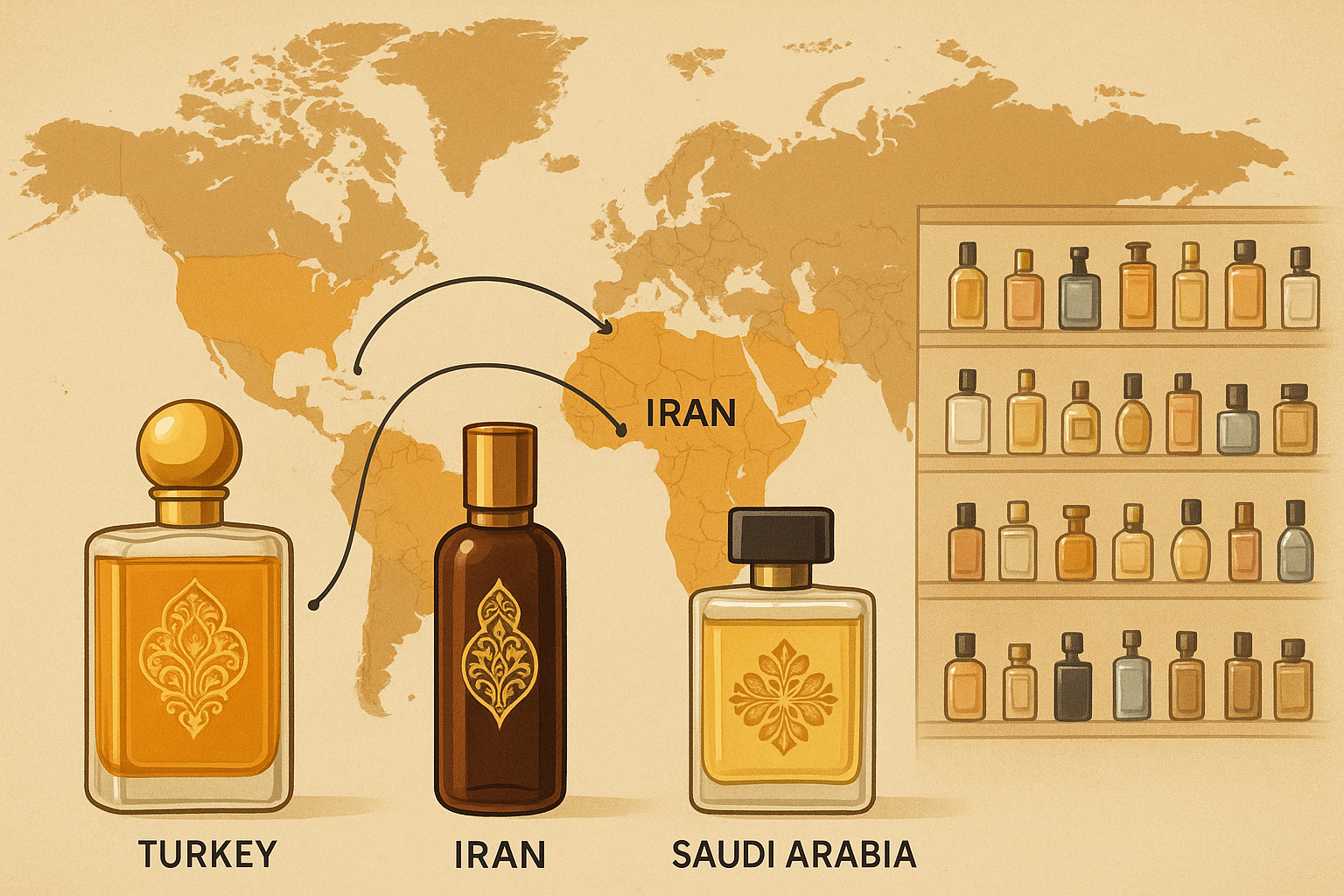
Global brands go for these notes because they want two things: scent distinction and storytelling. Even credible analyses say that Western luxury houses have long used notes like oud to attract Middle Eastern audiences as well as the global market; because these notes have both identity and a lasting signature.
Exotic appeal and the story of travel in perfume
The power of these scents lies in “sensory storytelling”: saffron and spices give a sense of travel and warmth, rose gives a sense of ritual and elegance, and amber accords give a sense of depth and longevity. This very combination of emotion + identity is the reason for the popularity of Middle Eastern-inspired perfumes in the niche and luxury market.
In today’s fast-paced world, perfumes that have a story are more lasting. Cologne inspired by Iran/Turkey/Saudi Arabia, by combining local elements, allows consumers to experience a part of distant cultures, and this increases sales.
Exotic perfume trends and market innovation
Innovation is the key to the success of global brands. Local Middle Eastern scents, with their complexity, help brands stand out from competitors. For example, using amber and rose water in modern perfumes creates longer longevity, which is a competitive advantage in the Western market. Furthermore, this trend has strengthened the niche market and brought small brands to the global stage. The fusion of East and West in perfume not only increases sales but also helps preserve local traditions.
One of the signs of the influence of this style is the growth of unisex and niche perfumes; where oud and spices go from “heavy and traditional” to “creative and even fruity combinations” and become more wearable for the new generation.
Combining modern urban style with traditional scent
Fusion of East and West today means: oud/rose/amber, but with a more urban and cleaner execution. You see this in luxury retail as well; for example, perfumes with “saffron + oud + rose” that are designed exactly for urban life, not just for ritual or traditional spaces.
Fusion of East and West in everyday perfumes
The common formula for “urbanizing the oriental scent” is usually this:
(Bright note for the start) + (Rose or spice for the heart) + (Oud/amber for the signature).
The result is a perfume that is both usable for everyday life and retains its oriental signature.
Perfume in contemporary urban life
In modern cities, the oriental scent plays more of an “signature” role than a “traditional expression”. Oud (agarwood) is originally obtained from agarwood trees and is used today as one of the most precious signatures in luxury perfume; something that can give character even in the hustle and bustle of the city.
This integration represents the evolution of perfume; from heavy traditional scents to lighter versions that align with modern life, without losing cultural depth.
The appeal of Middle Eastern-inspired perfumes in domestic and global markets
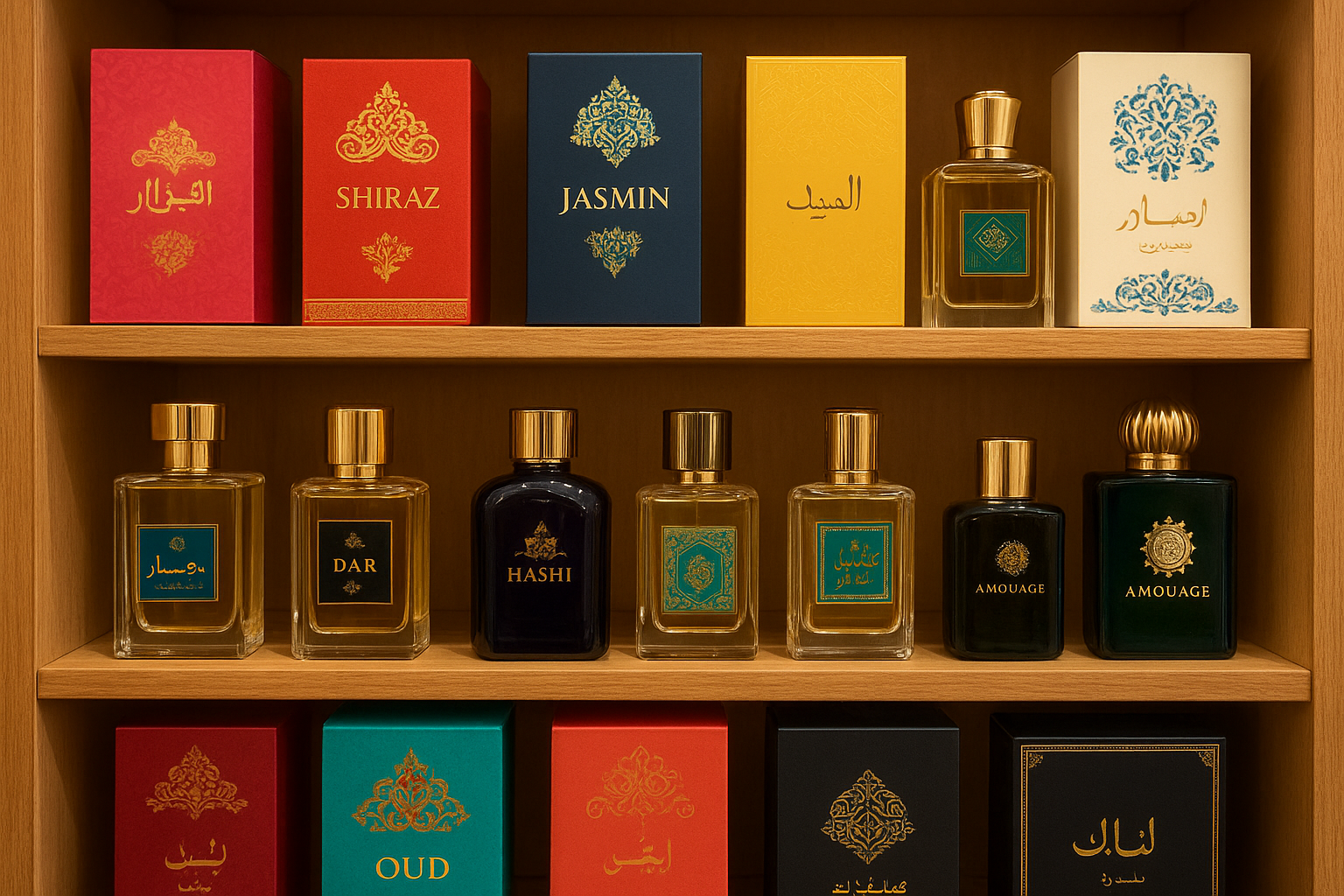
This trend is not just for export; it is also attractive to the domestic audience, because it has both nostalgia and identity, and offers a more modern and wearable version.
Examples of successful Middle Eastern-inspired perfumes
To see successful examples, it is enough to look at a few prominent perfumes:
Baccarat Rouge 540 with a saffron signature at the start of the scent
Oud Satin Mood with a combination of rose and oud in a luxurious and modern execution
Ambre Sultan as a spicy amber-resinous scent that has globalized the oriental vibe »
These perfumes, with high longevity, are ideal for the hot markets of the Middle East and convey the cultural story to domestic consumers.
Iranian brands and the domestic market
Alongside large brands, regional brands also play a significant role in the globalization of this style. For example, Kajal – Jihan with a saffron opening and an oud/rose signature, is an example of this bridge between oriental spice and niche execution (both in reference databases and in the brand’s official description).
These brands, by focusing on local raw materials, create a dual appeal for domestic and export markets and promise a bright future.
Conclusion: From city alleys to global shelves
Middle Eastern scents have reached from a “local identity” to a “global language” today; saffron for a luxury signature, rose for emotional narrative, and oud/amber for depth and longevity. If you are looking for a perfume that has both a story and a signature, this trend is exactly the starting point.
Frequently Asked Questions
1) What is the difference between “Ambergris”, “Amber accord”, and “Oud”?
Ambergris is a natural waxy substance that originates from the sperm whale and has historically been used in perfumery as a fixative (helping the scent last). But “amber” in perfumery is usually an imaginary/constructed accord (warm and resinous) made by combining ingredients like vanilla, labdanum, and benzoin. “Oud” is also obtained from the resinous wood of the Aquilaria tree and gives a deep, smoky-woody signature.
2) Why are saffron, rose, and oud notes seen so much in global luxury perfumes?
Because these notes both create a “signature” (meaning a distinct and recognizable scent) and have the capacity for storytelling. For example, in the official description of Baccarat Rouge 540, it explicitly mentions the “radiance of saffron in the top notes,” and this type of use has made East-inspired accords very acceptable in the Western luxury market as well.
3) If I want a Middle Eastern perfume that is “urban and everyday”, what formula should I look for?
Three simple pieces: Bright start (e.g., citrus/mild spice) + Rose/spice heart + Soft oud or amber base. When buying, look for cleaner and lighter versions (not too smoky or too sweet) and be sure to get a sample/decant first to make sure it doesn’t feel heavy on your skin.
4) Where does oud exactly come from and why are some ouds very expensive?
Oud is obtained from the resinous wood of the Aquilaria tree; the resin forms when the tree is damaged/infected and produces aromatic resin as a defensive reaction. This scarcity and complexity of production/harvesting drives up the price of natural oud, which is why many brands also use “reconstructed oud” accords.
5) How do I know if a perfume really has “cultural inspiration” and isn’t just a marketing cliché?
Three important signs: (1) Transparent explanation of notes and the logic of the composition (not just orientalist slogans) (2) Real reference to ingredients/accords and style of use (urban/ritual/luxury) (3) Brand/market backing and presence in reputable channels. When specialized media talk about the influence of the Middle Eastern market on global consumption habits and its growth, it means this wave is real and serious brands usually narrate more transparently.
“